
In This Article
Walk into most modern apartments and you’ll spot the same problem: an 8-foot ceiling with a clunky light fixture dangling precariously low. Your tall friend bumps their head, kids whack it during pillow fights, and the whole room feels cramped. The solution isn’t expensive — it’s just mounted wrong.
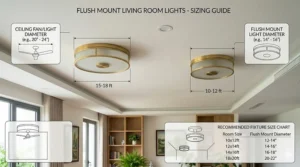
Flush mount living room lights solve this exact frustration. They sit directly against the ceiling surface with zero drop, making them the ultimate choice for spaces where every inch of vertical clearance matters. Unlike semi-flush mounts that dangle 4-8 inches down or chandeliers that command 10+ feet of ceiling height, these fixtures disappear into the architecture while flooding your space with light.
What most buyers overlook is how flush mounts have evolved beyond those boring contractor-grade dome lights from the 90s. Today’s models pack smart features, designer aesthetics, and LED technology that delivers 50,000+ hour lifespans. You’re looking at fixtures that cost the same as dinner for two but transform how your living room feels for the next decade.
The key distinction worth understanding: flush mount fixtures attach directly to the ceiling with no visible gap, while semi-flush options hang slightly below. For rooms under 8 feet tall, flush is the only move that makes sense — anything else eats precious headroom and creates collision risks.
Quick Comparison: 7 Top Flush Mount Living Room Lights
| Product | Lumens | Color Temp | Smart Features | Best For | Price Range |
|---|---|---|---|---|---|
| Govee Smart 12″ | 2400 | 2200-6500K | Alexa, RGBIC | Tech enthusiasts | $50-$70 |
| Kira Home Maxine 15″ | 1600 | 3000K | None | Modern elegance | $70-$90 |
| Cloudy Bay 10″ | 1050 | 3000K | Dimmable | Budget buyers | $25-$35 |
| Lithonia FMLSDL 20″ | 4000 | 4000K | Dimmable | Large rooms | $90-$120 |
| Kira Home Walker 20″ | N/A (3-bulb) | Variable | None | Mid-century style | $80-$100 |
| LeonLite 12″ LED | 1600 | 3000K | Dimmable | Energy savers | $40-$55 |
| Govee Ceiling Light Pro 18″ | 4800 | 2700-6500K | Matter, RGBICWW | Smart home power users | $110-$140 |
Looking at this comparison, the Govee Smart 12″ delivers unbeatable value under $70 if you want smart features without sacrificing brightness. But if your ceiling height allows for a larger fixture, the Lithonia 20″ unit’s 4000 lumens will properly illuminate a 300+ square foot living room where smaller models would leave corners dim. Budget-conscious renovators should note the Cloudy Bay saves $20-40 versus competitors while maintaining respectable CRI90+ color rendering — not bad for basic lighting needs.
💬 Just one click — help others make better buying decisions too! 😊
Top 7 Flush Mount Living Room Lights — Expert Analysis
1. Govee Smart Ceiling Light 12 Inch
The Govee Smart 12″ redefines what a flush mount can do in 2026, packing RGBIC technology that lets you paint your ceiling with 16 million colors while still delivering 2400 lumens of functional white light. The main light runs RGB+WW (warm white) while the backlight uses RGBIC for independent segment control — meaning you can create gradient effects that flow across the fixture rather than just solid colors.
In real-world use, the 2200-6500K adjustable color temperature means you’re getting true warm lighting (2200K feels like candlelight) for movie nights and crisp daylight (6500K) for daytime productivity. The spec sheet won’t tell you this, but the difference between budget smart lights at 3000-5000K range and Govee’s extended spectrum is noticeable when you’re trying to create atmosphere. The fixture dims smoothly from 1-100% via app or voice, and unlike cheaper models that flicker below 20%, this holds steady even at 1%.
Expert perspective: This fixture targets the growing segment of buyers who want their ceiling light to do more than just… light things. The 71 preset scene modes include options synced to holidays, parties, and daily routines. Music sync mode reads ambient sound and pulses colors to the beat — genuinely impressive for parties but gimmicky for daily use.
Customer feedback: Buyers consistently praise the installation simplicity (5-step process takes under 20 minutes) and Matter compatibility, which means it integrates with Apple HomeKit, Google Home, and Alexa without picking sides. Common complaint: the backlight and main WW light can’t run simultaneously, forcing you to choose between functional lighting or ambiance.
✅ Pros:
- RGBIC segmented color control for dynamic effects
- Matter-certified works with all major smart home platforms
- Wide 2200-6500K temperature range beats competitors
❌ Cons:
- Backlight + main white light can’t operate together
- 2400 lumens insufficient for rooms over 220 sq ft
Best for: Tech-forward homeowners in 15-20㎡ (160-215 sq ft) living rooms who want a light that doubles as a conversation piece. At around $60-70, it’s positioned perfectly between basic smart bulbs and premium Philips Hue setups.
2. Kira Home Maxine 15″ Flush Mount
The Kira Home Maxine takes a different approach — zero smart features, just timeless elegance wrapped in a 15-inch diameter drum. The clear acrylic crystal-style shade catches light like a disco ball (in a classy way), creating prismatic reflections that add depth to plain white ceilings. Underneath sits integrated 20W LED chips delivering 1600 lumens at 3000K warm white — the equivalent output of a traditional 120W incandescent bulb while consuming 83% less power.
What sets this apart from generic crystal flush mounts is build quality. The shade uses durable acrylic rather than cheap plastic, so it maintains clarity without yellowing over 25,000+ hours. Paired with a frosted glass diffuser, it eliminates the harsh glare you’d get from bare LEDs. In practice, this creates soft, even illumination perfect for living rooms where you want ambient lighting rather than spotlight intensity.
Expert opinion: The Maxine works in spaces where aesthetics matter as much as function. The low-profile design (sitting roughly 5 inches below ceiling) makes it suitable for 8-foot ceilings while the crystal shade adds visual interest that basic dome lights simply can’t match. ETL certification for damp locations means you could theoretically install this in bathrooms or covered outdoor areas, though it shines brightest (pun intended) in living rooms and entryways.
Customer summary: Buyers love how the crystal shade elevates what could be a boring ceiling fixture into a design element. The integrated LED means no bulb replacements for years, though that’s also a limitation — when the LEDs eventually fail (Kira rates them at 50,000 hours), you’re replacing the entire fixture rather than a bulb. Most reviewers installing this in 150-200 sq ft rooms report adequate brightness.
✅ Pros:
- Crystal-style shade creates designer aesthetic at mid-range price
- Integrated 20W LED eliminates bulb replacement hassles
- ETL-certified damp rating expands installation flexibility
❌ Cons:
- Non-replaceable LED means full fixture replacement when it dies
- 1600 lumens on lower end for larger living rooms
Best for: Style-conscious buyers furnishing condos, apartments, or guest bedrooms who want something more sophisticated than builder-grade lighting. The $75-90 range positions it as affordable luxury — not cheap enough to feel disposable, not expensive enough to require budget approval from your partner.
3. Cloudy Bay LED Flush Mount 10 Inch
The Cloudy Bay 10″ is what happens when a manufacturer strips away every non-essential feature and focuses on one thing: reliable, affordable lighting. This 17W LED fixture pushes 1050 lumens at 3000K warm white through an oil rubbed bronze housing, creating the kind of understated look that contractors love for hallways and small spaces. The CRI90+ rating means colors appear accurate rather than washed out under that yellowish tint cheap LEDs produce.
In real-world terms, 1050 lumens adequately lights a 100-120 sq ft space — think a cozy living room in a studio apartment or a reading nook. Pair it with the right dimmer (Cloudy Bay recommends their CBLD001WHA model) and you get smooth 10-100% dimming range. What most buyers miss is that “dimmable” doesn’t mean automatic compatibility — you need an LED-compatible dimmer, not the old incandescent ones hiding in your wall switch.
Expert take: This fixture succeeds by knowing exactly what it is. You’re not getting smart features, color changing LEDs, or designer crystal shades. You’re getting proven LED technology wrapped in a bronze finish that hides dust better than white alternatives, all for around $30. The low 2-inch profile makes it genuinely flush against the ceiling — crucial for 7.5-foot ceilings where even 3-4 inches feels intrusive.
Customer perspective: Reviews consistently mention easy installation (direct mount to standard junction box, included mounting hardware fits both 2″ and 3.5″ screw hole spacing). Complaints center on the 10-inch size being smaller than expected — many buyers assumed it would fill more visual space. The best illuminating area is rooms no larger than 3m x 3m (roughly 10ft x 10ft), requiring multiple fixtures for larger living rooms.
✅ Pros:
- CRI90+ delivers accurate color rendering for under $35
- Oil rubbed bronze hides fingerprints and dust better than white finishes
- ETL certified with 5-year warranty exceeds budget category standards
❌ Cons:
- 10-inch diameter feels undersized in large rooms
- Requires specific LED dimmer for flicker-free dimming
Best for: Budget-conscious renovators tackling hallways, closets, or small living spaces who need functional lighting without the markup. At around $28-35, you’re saving $15-40 versus name brands while getting 82% lower power consumption than traditional incandescent alternatives.
4. Lithonia Lighting FMLSDL 20 Inch Square
The Lithonia FMLSDL 20″ is a workhorse designed for spaces that need serious illumination — we’re talking 4,000 lumens at 4000K cool white, enough to properly light a 300-400 sq ft living room without dark corners. This square 20-inch fixture uses an acrylic diffuser with hidden cam-latches, making maintenance easier than competitors where you’re unscrewing tiny bolts or prying plastic clips.
At 44 watts, it matches the output of old-school fluorescent tubes while consuming half the energy and eliminating that annoying flicker and buzz. The 50,000-hour rated lifespan translates to roughly 17 years at 8 hours daily use — install it today and you won’t touch it again until 2041. That longevity matters in vaulted ceilings or spaces where ladder access is a hassle.
Expert analysis: Lithonia built their reputation on commercial-grade reliability, and the FMLSDL series delivers. The dimmable driver works with standard 0-10V controls from Leviton and Lutron, giving you professional-level dimming performance rather than the flickery mess you get with cheap LED fixtures. Cool white (4000K) provides task-oriented lighting ideal for living rooms that double as work-from-home offices — though some may find it too clinical for evening relaxation compared to warmer 3000K alternatives.
Customer insights: Buyers installing this in large living rooms, kitchens, or home offices appreciate how evenly it distributes light across the space. The square design fits modern aesthetics better than round options in contemporary homes. Main criticism: the industrial appearance won’t win design awards. This is function-over-form lighting, and Lithonia doesn’t pretend otherwise.
✅ Pros:
- 4000 lumens properly illuminates 300-400 sq ft without supplemental lighting
- 50,000-hour lifespan means install-and-forget durability
- Hidden cam-latch design simplifies diffuser removal for occasional cleaning
❌ Cons:
- 4000K cool white too stark for cozy evening ambiance
- Utilitarian appearance lacks decorative appeal
Best for: Practical homeowners prioritizing brightness and reliability over aesthetics, especially those with large living rooms or home office setups requiring task lighting. The $95-120 price range reflects commercial-grade construction that justifies the premium over residential competitors.
5. Kira Home Walker 20″ Mid-Century Modern
The Kira Home Walker 20″ nails mid-century aesthetic with a white linen drum shade suspended inside a cool brass ring, paired with a frosted glass diffuser that softens the light from three 60W-equivalent bulbs. Unlike integrated LED competitors, this fixture uses standard E26 candelabra base bulbs, giving you control over brightness, color temperature, and even the option to install vintage Edison bulbs for that industrial-chic look.
In practice, the 20-inch diameter provides substantial visual presence without overwhelming rooms with 8-9 foot ceilings. The brass finish sits somewhere between shiny gold and aged patina — what Kira calls “cool brass” — splitting the difference for broader appeal. The fabric shade adds texture that flat acrylic or metal alternatives can’t match, creating warmth that feels more living room than office.
Expert perspective: The modular bulb design is both advantage and maintenance consideration. You can mix color temperatures (warm 2700K bulbs for ambiance, daylight 5000K for task lighting) or upgrade to smart bulbs for Alexa control without replacing the entire fixture. The tradeoff is eventual bulb replacement — though that’s a $10 fix rather than the $80-100 fixture replacement required when integrated LEDs fail. Dimmable when paired with compatible bulbs and standard dimmer switches.
Customer feedback: Reviewers installing this over dining tables, in living rooms, or lining hallways appreciate the transitional style that bridges modern and traditional decor. The white linen shade shows its versatility — works with both Scandinavian minimalism and farmhouse aesthetics. Complaints focus on bulbs being sold separately, an annoying surprise when you’re excited to install your new light.
✅ Pros:
- Standard E26 bulbs allow customization of brightness and color temperature
- Linen fabric shade adds textural warmth metal fixtures lack
- 20-inch diameter creates visual impact suitable for larger rooms
❌ Cons:
- Requires three separate bulb purchases (not included)
- Fabric shade requires occasional dusting unlike solid alternatives
Best for: Design-focused homeowners wanting mid-century or transitional style flexibility, especially those who value the ability to customize lighting characteristics by swapping bulbs. Around $85-100 lands it in sweet spot between budget basics and luxury lighting.
6. LeonLite LED 12″ Flush Mount (2-Pack)
The LeonLite 12″ LED comes as a 2-pack, making it the go-to option for buyers lighting multiple rooms or creating uniform illumination down long hallways. Each fixture packs 16W LED chips producing 1600 lumens at 3000K warm white — equivalent to an 86W fluorescent tube while consuming 82% less electricity. The dimmable range spans 5-100%, giving you proper control from night-light levels to full brightness.
What separates LeonLite from generic Amazon brands is attention to thermal management. The aluminum housing actively dissipates heat rather than trapping it, which explains why these fixtures maintain consistent brightness and color temperature over their 50,000-hour rated lifespan while cheaper competitors start flickering or color-shifting after 5,000 hours. The frosted diffuser eliminates LED hotspots — that annoying visible pattern of individual diodes that screams “cheap fixture.”
Expert opinion: The 2-pack strategy makes sense for most installations. Few people need just one ceiling light, and LeonLite priced these at roughly $45-55 for both units — essentially matching the per-fixture cost of singles from other brands while simplifying your shopping cart. ETL certification matters more than buyers realize: it’s third-party verification that the fixture meets safety standards, unlike those uncertified fixtures flooding marketplaces from overseas sellers.
Customer summary: Buyers appreciate receiving two fixtures ready for installation, especially those renovating entire apartments or updating multiple rooms simultaneously. The 12-inch size hits a sweet spot for 120-150 sq ft spaces — bedrooms, home offices, smaller living rooms. Common praise: installation takes under 15 minutes per fixture even for novice DIYers. The included mounting bracket accommodates both old and new junction boxes.
✅ Pros:
- 2-pack pricing delivers $20-30 savings versus buying singles
- Aluminum construction provides better heat dissipation than plastic alternatives
- Wide 5-100% dimming range spans night-light to full brightness
❌ Cons:
- 1600 lumens per fixture requires multiple units for large rooms
- White finish shows dust more visibly than bronze or black options
Best for: Cost-conscious homeowners renovating multiple rooms who want matching fixtures throughout. The $45-55 for two units makes it hard to beat on price-per-lumen basis while maintaining respectable build quality.
7. Govee Smart Ceiling Light Pro 18 Inch
The Govee Ceiling Light Pro 18″ is the flagship model for buyers who want their ceiling fixture to function as both primary illumination and interactive art installation. At 4800 lumens, this fixture delivers 80% more brightness than Govee’s standard 12″ model, making it suitable for 20-30㎡ (215-323 sq ft) living rooms where proper illumination matters. The adjustable 2700-6500K white light provides CRI 95 at 2700K warm white — professional-grade color accuracy that makes reds look red and whites look white rather than slightly blue or yellow.
The standout feature is the layered design with separate main light and backlight controls. Main light delivers task-oriented downward illumination while RGBICWW backlight creates ambient glow, letting you run bright white overhead while soft colored light washes the ceiling. This dual-zone approach solves the compromise other smart lights force: functional lighting OR atmosphere, not both simultaneously.
Expert take: With 200 LEDs spread across 18 inches, this fixture creates smoother color gradients than competitors cramming 100 LEDs into 12 inches. The app supports pixel-precise customization — you can literally finger-paint patterns that display on your ceiling. Practical? Questionable. Impressive at parties? Absolutely. Matter compatibility future-proofs it for whatever smart home standard wins the 2026 format wars.
Customer perspective: Reviews split between “this is amazing” enthusiasts and “this is overkill” pragmatists. The 100+ preset lighting effects and music sync modes appeal to early adopters who want smart home showcase features. Skeptics note you’re paying $110-140 for capabilities most people use once then forget about, making the standard model better value for typical buyers. Installation remains simple despite advanced features — same 5-step process as cheaper Govee models.
✅ Pros:
- 4800 lumens properly illuminates 300+ sq ft living rooms
- Dual-zone design allows task lighting + ambient effects simultaneously
- CRI 95 at 2700K delivers professional color accuracy
❌ Cons:
- $110-140 price targets enthusiasts rather than budget buyers
- Advanced features require smartphone dependency for control
Best for: Smart home power users with 20-30㎡ living rooms who want a centerpiece fixture showcasing what’s possible with 2026 lighting technology. The premium pricing reflects cutting-edge capabilities that extend beyond basic “turn on/off” functionality.
Your Living Room’s First 30 Days: Setup Success Guide
Most flush mount failures happen during installation or that crucial first month when you’re still figuring out optimal settings. Here’s how to get it right from day one.
Pre-Installation Reality Check
Before removing your old fixture, photograph the existing wiring. Those wire colors matter: black (hot), white (neutral), copper/green (ground). If your junction box wires are discolored, frayed, or feel brittle, stop — you need an electrician. DIY ends where safety begins.
Measure your room’s square footage before ordering. The industry rule: you need 20 lumens per square foot for living rooms. A 150 sq ft space requires 3,000 lumens total. If your ceiling fixture only delivers 1,500 lumens, plan for supplemental table lamps rather than expecting one light to do everything.
Installation Day Priorities
Turn off power at the circuit breaker, not just the wall switch. Test with a voltage detector ($15 at hardware stores) before touching wires — wall switches can fail without you knowing. Mount the bracket securely to the junction box using provided screws. Loose mounting leads to vibration noise and eventual fixture wobble.
When connecting wires, match colors precisely and twist wire nuts clockwise until tight. Give each wire a gentle tug — if it pulls free, you didn’t secure it properly. Most flush mounts fail because of loose connections causing intermittent power or arcing.
Week One Optimization
Smart lights need WiFi setup within 24 hours or they’ll default to bright white settings that defeat the purpose. Download the manufacturer app, enable Bluetooth, and complete pairing while standing directly under the fixture. Once connected, test voice commands before assuming everything works.
For dimmable fixtures, test your dimmer compatibility on Day 1. Incompatible dimmers cause flickering, buzzing, or limited range. If your light won’t dim below 40% smoothly, replace the dimmer switch with an LED-compatible model (Lutron Diva DVELV-300P is reliable).
Month One Adjustments
Your eyes need roughly two weeks to adjust to new color temperatures. That 4000K cool white that feels too harsh on Day 3 might feel perfectly normal by Day 14. Give it time before swapping fixtures. If it still feels off after two weeks, the color temperature genuinely doesn’t match your preference.
Clean the diffuser after 30 days. Dust accumulation during installation reduces light output by 10-15%. Wipe with a microfiber cloth — no harsh cleaners that can damage acrylic or plastic.
The Smart Home Dilemma: Matching Fixtures to Your Setup
Smart flush mounts promise voice-controlled ambiance, but most buyers overlook ecosystem compatibility until after purchase when their Google Home can’t find their Alexa-only light. Here’s the real breakdown of what works with what in 2026.
Matter Changes Everything (Almost)
Matter-certified fixtures like the Govee Ceiling Light Pro theoretically work with Apple HomeKit, Google Home, Alexa, and SmartThings simultaneously. Reality is messier: Matter support launched incomplete, with some features working on one platform but not others. Voice control works universally, but advanced color scenes may require the manufacturer’s app regardless of Matter certification.
The practical advantage: you’re not locked into one ecosystem. Bought an iPhone but your partner uses Android? Matter fixtures bridge that gap. Planning to switch from Alexa to Google Assistant? Matter fixtures don’t force re-setup.
WiFi vs Zigbee vs Bluetooth
Most smart flush mounts use WiFi direct connection (device → router → cloud → app). This maxes out your router’s device limit faster than Zigbee/Matter alternatives that use hub architecture. If you already have 40+ WiFi devices (phones, laptops, cameras, smart speakers), adding WiFi lights strains your network. You’ll notice sluggish response times or random disconnections.
Zigbee requires a hub (Amazon Echo Plus, Philips Hue Bridge) but handles unlimited devices without router congestion. Trade-off: one more box plugged in and yet another app to manage.
Voice Control Reality Check
“Alexa, dim the living room to 30%” sounds futuristic until you’re shouting at your ceiling three times because Alexa misheard “living room” as “bedroom.” Voice works great for on/off commands and brightness adjustments. It struggles with specific color scenes or complex multi-zone controls where the app remains faster.
The sweet spot: use voice for common tasks (lights on/off, 50% brightness, warm white), rely on app for occasional color scenes and scheduling.
Size Math: Choosing Diameter for Your Ceiling Height
The furniture industry has proportions figured out — sofas are roughly 36 inches tall because that’s what works with standard coffee table heights. Ceiling lights follow similar math, but most buyers guess incorrectly.
The Industry Formula
Add your room’s length and width in feet, convert that sum to inches, and you’ve got your ideal fixture diameter. A 12ft × 15ft living room (27 total) points toward a 27-inch fixture. That’s the ideal maximum — going larger overwhelms the space visually.
The floor most buyers miss: ceiling height modifies this formula. Rooms under 8 feet need fixtures 15-20% smaller than the formula suggests to avoid the fixture dominating sight lines. An 8-foot ceiling with a 20-inch flush mount feels balanced; a 24-inch fixture feels oppressive even if the math says it fits.
Visual Weight Considerations
Drum fixtures with fabric shades feel lighter visually than solid metal designs of identical dimensions. Crystal or lattice patterns create airiness, while solid opaque fixtures feel heavier. If your living room has dark walls or heavy furniture, choose fixtures with visual “breathing room” — open drum designs or translucent shades rather than solid covers.
Conversely, minimalist rooms with white walls and sparse furniture can handle bolder, larger fixtures as focal points without overwhelming the space.
Multi-Fixture Strategies
Rooms exceeding 250 sq ft often benefit from two smaller fixtures rather than one massive light. A 15ft × 18ft living room (270 sq ft) could use either a single 33-inch behemoth or two 15-16 inch fixtures positioned strategically. The dual-fixture approach provides better light distribution and costs less than premium oversized alternatives.
Color Temperature Decoded: What Those Kelvin Numbers Actually Mean
Lighting stores throw around numbers like “3000K” and “5000K” assuming buyers understand the difference. Most don’t. Here’s what you’re actually choosing.
The Warmth Spectrum
2700K mimics old incandescent bulbs — that yellowish glow you remember from childhood homes. It feels cozy and intimate, perfect for evening relaxation when you want your living room to feel like a retreat. The downside: everything looks slightly yellow-orange, making it terrible for activities requiring color accuracy (painting, crafting, choosing outfit colors).
3000K is “warm white” — slightly less yellow than 2700K, offering a middle ground between cozy ambiance and functional lighting. Most living rooms land here because it works morning through evening without feeling too clinical or too dim.
4000K enters “neutral white” or “cool white” territory. This is office lighting, hospital lighting, the bright white that makes colors pop but feels sterile for living spaces. Use this if your living room doubles as home office where document review or video calls require accurate color rendering.
5000K+ is daylight territory — the blue-white light of an overcast afternoon. Circadian rhythm research links this spectrum to alertness and productivity. Great for morning routines, terrible for unwinding before bed when you’re trying to signal your brain that it’s sleep time.
Adjustable Color Temperature: Worth It?
Fixtures offering 2700-6500K adjustability cost $30-60 more than single-temperature alternatives. The value proposition: one fixture adapts to different times of day and activities. Warm lighting (2700K) for movie nights, cool lighting (5000K) for daytime cleaning or video calls, neutral (3500K) for general evening use.
The reality: most buyers set a preference within the first week and never adjust again. Unless you actively use different lighting modes for specific activities, fixed color temperature saves money without sacrificing satisfaction.
CRI: The Number Nobody Mentions
Color Rendering Index (CRI) measures how accurately colors appear under artificial light, with 100 being perfect. Most budget LEDs sit at CRI 80, meaning reds look slightly orange, whites appear bluish. Fixtures rated CRI 90+ deliver accuracy indistinguishable from natural daylight.
The practical difference: CRI matters enormously if you’re decorating, selecting paint colors, or photographing in your living room. For watching TV and casual hanging out? CRI 80 suffices. CRI 90+ costs $10-20 more — worthwhile for design-conscious buyers, unnecessary for most.
Common Mistakes When Buying Flush Mounts (And How to Avoid Them)
Mistake #1: Assuming “Dimmable” Means Universal Compatibility
Seeing “dimmable” in product specs doesn’t guarantee it works with your existing dimmer switch. LED fixtures require specific dimmer types (ELV or TRIAC), while old incandescent dimmers cause flickering, buzzing, or limited range (often stuck at 40-100% instead of 0-100%).
Fix: Check if your current dimmer has “CL” or “LED” markings. If not, budget $25-40 for an LED-compatible replacement like Lutron Diva or Leviton SureSlide.
Mistake #2: Buying Based on Watts Instead of Lumens
Old habits die hard. Pre-LED, we bought “60-watt” or “100-watt” bulbs knowing roughly how bright they’d be. LEDs shattered that relationship — an 8-watt LED can outshine a 60-watt incandescent. Lumens measure light output, watts measure energy consumption.
Fix: Calculate needed lumens (square footage × 20 for living rooms) before shopping. A 200 sq ft living room needs 4,000 lumens minimum — one 1,500-lumen fixture leaves it dim regardless of wattage.
Mistake #3: Forgetting About Ceiling Height When Choosing Size
That 20-inch fixture looks perfect in the 10-foot showroom ceiling. Install it on your 7.5-foot ceiling and suddenly it feels like a spaceship hovering in your peripheral vision. Low ceilings require proportionally smaller fixtures to maintain visual balance.
Fix: Subtract 1-2 inches from the recommended diameter for every foot below 8 feet ceiling height. A 7-foot ceiling with 12-inch fixture looks better than forcing a 16-inch model.
Mistake #4: Choosing Style Before Function
Instagram is full of gorgeous fixtures that photograph beautifully but provide terrible actual lighting. That trendy black metal cage design might deliver stunning shadows but insufficient lumens for reading or detailed tasks.
Fix: Define required brightness first, then filter by style within products meeting functional needs. Beauty that leaves you squinting isn’t beautiful.
Mistake #5: Ignoring Junction Box Compatibility
Most modern flush mounts weigh under 10 pounds and mount to standard junction boxes. But if you’re replacing a heavy chandelier with a lightweight flush mount, that old heavy-duty ceiling box might have screw spacing incompatible with your new fixture’s bracket. You’ll discover this with the power off, old fixture down, and no way to install the new one.
Fix: Photograph your existing junction box screw spacing before ordering. Standard spacing is 2″, 2-3/4″, or 3.5″ center-to-center. Quality fixtures include adjustable brackets accommodating multiple patterns.
Installation Gotchas: What the Manual Doesn’t Tell You
The Junction Box Jigsaw
Standard round junction boxes mount with two screws spaced 3.5 inches apart. Octagonal boxes use 2-inch spacing. Your new fixture’s mounting bracket must match — but manufacturers rarely specify which they’re designed for. The solution: look for “universal mounting bracket” in product specs, which include adjustment slots accommodating both patterns.
If your ceiling has an old work box (the kind retrofitters install in existing ceilings), verify it’s rated for fixture weight. Most support 5 pounds; heavier fixtures need fan-rated boxes supporting 50+ pounds.
Wire Gauge Surprises
House wiring typically uses 12-gauge or 14-gauge wire. Fixture leads often use thinner 18-gauge wire. When connecting, twist the fixture’s thinner wire clockwise around the house’s thicker wire, then secure with wire nut. Reversing this (twisting thick around thin) creates loose connections that fail under vibration.
Ground wires deserve extra attention. If your junction box has a green ground screw, connect both fixture ground and house ground to it. If there’s no ground screw, twist all grounds together with wire nut. Never skip grounding — it’s your protection against shocks if something fails.
Diffuser Alignment
Many flush mounts use bayonet-style diffusers that twist-lock into place. The trick: you must align the diffuser’s tabs with the fixture’s slots while holding it overhead. Miss by 2mm and it won’t engage. The solution: mark alignment with a pencil dot on both fixture rim and diffuser edge during initial assembly, so subsequent reinstalls (for bulb changes or cleaning) happen first try.
Long-Term Cost Reality: LED vs Traditional Bulbs
The sticker price tells half the story. Let’s break down true cost over 10 years for a living room needing 2,000 lumens.
Traditional Incandescent Path
You’d need roughly three 60W bulbs producing ~2,700 lumens total. At $1 per bulb lasting 1,000 hours, running 4 hours daily means replacing bulbs every 250 days (roughly every 8 months). Over 10 years: 45 bulb replacements costing $45.
Electricity: 180W × 4 hours daily × 365 days × 10 years = 2,628 kWh. At US average $0.16/kWh, that’s $420 in electricity.
Total 10-year cost: $465 ($45 bulbs + $420 electricity)
LED Integrated Fixture Path
One 20W integrated LED flush mount delivers 2,000 lumens for around $60. Rated 50,000 hours means it outlasts your 10-year timeframe with zero replacements.
Electricity: 20W × 4 hours daily × 365 days × 10 years = 292 kWh. At $0.16/kWh, that’s $47 in electricity.
Total 10-year cost: $107 ($60 fixture + $47 electricity)
Savings: $358 over 10 years, plus eliminating the hassle of 45 bulb replacements. LED’s higher upfront cost pays back within 18 months of daily use.
LED Bulb Socket Fixture Path
A fixture using standard E26 LED bulbs costs around $40 plus three 9W LED bulbs at $8 each ($64 total initial). LED bulbs rated 25,000 hours last the entire 10 years.
Electricity: 27W × 4 hours daily × 365 days × 10 years = 394 kWh = $63 electricity.
Total 10-year cost: $127
The sweet spot for buyers wanting bulb replaceability without incandescent costs.
FAQ: Your Top Questions Answered
❓ Can flush mount living room lights work on sloped ceilings?
❓ How many lumens do I need for a 300 square foot living room?
❓ Do smart flush mount lights work without WiFi or a hub?
❓ Can I replace a semi-flush mount with a flush mount without rewiring?
❓ Are flush mount living room lights suitable for 10-foot ceilings?
Conclusion: Finding Your Perfect Ceiling Light Match
Flush mount living room lights have evolved far beyond those depressing contractor-special dome lights that defined apartment living in the 90s. Today’s options span from budget-friendly workhorse LEDs like the Cloudy Bay at $30 to smart home showpieces like the Govee Pro at $140 — each serving specific needs rather than competing head-to-head.
The key insight: your ceiling height, room size, and existing decor should drive the decision before you even look at prices. Low ceilings under 8 feet absolutely demand flush mounts, while 9-10 foot ceilings might benefit from semi-flush alternatives offering more visual presence. Similarly, a 300 sq ft open-plan living room needs different illumination strategy (likely multiple fixtures or high-lumen models) than a cozy 120 sq ft apartment living space.
Smart features command $30-80 premiums over basic models, justified only if you’ll actively use color-changing effects, voice control, or automated scheduling. For most buyers, a quality dimmable LED flush mount with appropriate lumens and appealing aesthetics serves better than an underutilized smart fixture that you end up controlling via wall switch anyway.
The winners by category break down clearly: Cloudy Bay 10″ owns the budget segment under $35. Kira Home Walker 20″ captures mid-range style at $80-100. Govee Ceiling Light Pro 18″ defines premium smart lighting at $110-140. Match your priorities (price/style/features) to the appropriate category rather than forcing budget fixtures into high-end roles or overspending on capabilities you’ll never use.
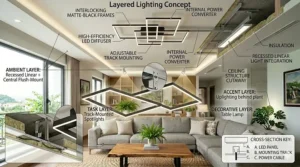
One final reality check: no single ceiling fixture transforms a living room alone. Proper layered lighting combines ambient ceiling fixtures with task lamps for reading zones and accent lights for visual interest. Your flush mount provides foundational illumination — the essential first layer upon which complete lighting design builds.
Recommended for You
- 7 Best Modern Farmhouse Chandeliers 2026
- 7 Best Rustic Wagon Wheel Chandeliers Transform Your Home (2026)
- 7 Best Wrought Iron Chandelier Rustic That Transform Your Home (2026)
Disclaimer: This article contains affiliate links. As an Amazon Associate, I earn from qualifying purchases. If you purchase products through these links, we may earn a small commission at no additional cost to you.
✨ Found this helpful? Share it with your friends! 💬🤗
