
In This Article
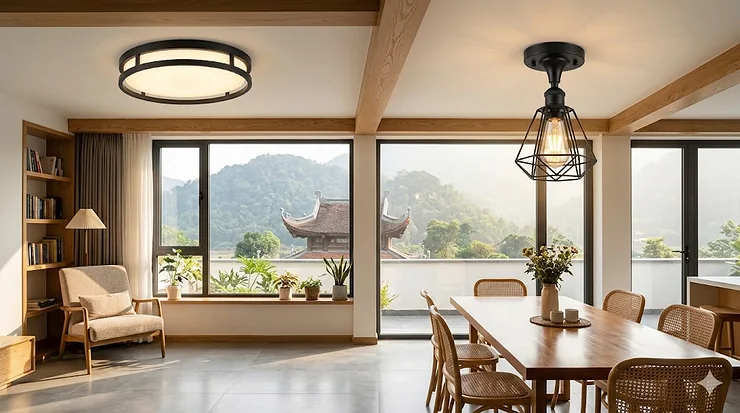
Staring at your ceiling trying to decide between flush mount vs semi-flush mount lighting? You’re not alone. This seemingly simple decision affects everything from your room’s perceived height to your electricity bill, and honestly, most people get it wrong on their first try.
The difference between these two ceiling light styles goes way beyond the few inches of drop height. I’ve walked through countless homes where a flush mount fixture made an 8-foot ceiling feel like a cave, or where a semi-flush mount bumped heads in a hallway. What most buyers overlook is how dramatically these fixtures shape light distribution, visual depth, and even resale appeal. According to lighting design experts, proper fixture selection is crucial for achieving both energy efficiency and adequate illumination in residential spaces.
Here’s what the spec sheets won’t tell you: flush mount vs semi-flush mount isn’t just about aesthetics—it’s about matching fixture behavior to ceiling clearance needs, room function, and the specific way your family uses each space. A bedroom needs different light behavior than a kitchen. A rental property has different installation requirements than your forever home. And choosing ceiling light style without considering drop distance differences will leave you with buyer’s remorse.
In this guide, I’m breaking down seven real products currently on Amazon—from budget-friendly LED disks to designer-grade fixtures—with the kind of practical commentary that Amazon listings simply can’t provide. You’ll learn exactly when installation requirements favor one style over another, how ceiling clearance needs dictate your options, and which models deliver the best value for specific scenarios.
Quick Comparison: Flush Mount vs Semi-Flush Mount at a Glance
| Feature | Flush Mount | Semi-Flush Mount |
|---|---|---|
| Drop Distance | 0-2 inches (sits against ceiling) | 4-8 inches below ceiling |
| Best Ceiling Height | 7-8 feet (low ceilings) | 8-10+ feet (standard/high) |
| Visual Impact | Minimal, streamlined | More decorative depth |
| Light Distribution | Even, downward-focused | Broader, some upward glow |
| Installation Complexity | Simpler (direct mount) | Slightly more complex (stem/chain) |
| Typical Price Range | $30-$150 | $60-$300+ |
| Best For | Hallways, bathrooms, closets | Dining rooms, entryways, bedrooms |
Looking at this comparison, the value proposition becomes clear: if you’re working with ceilings under 8 feet or prioritize absolute simplicity, flush mounts win on both cost and practicality. But if you’ve got the vertical clearance and want the fixture to add visual interest rather than disappear into the ceiling plane, semi-flush mounts justify their higher price point by doing more design work. The $30-50 price gap between categories reflects material differences—semi-flush fixtures need that stem hardware and typically feature more elaborate shades to justify the dimensional showcase.
💬 Just one click — help others make better buying decisions too! 😊
Top 7 Ceiling Lights: Expert Analysis of Flush Mount vs Semi-Flush Mount Models
1. Hykolity 13 Inch Flush Mount LED Ceiling Light Fixture
This Hykolity 13 inch model represents the sweet spot where budget meets performance in the flush mount category. The fixture delivers 1300 lumens from just 20W—equivalent to a 160W incandescent—while the 5CCT adjustable feature lets you switch between 2700K warm white and 5000K daylight without replacing bulbs.
What the spec sheet doesn’t emphasize: that color temperature flexibility means one fixture works for a cozy bedroom (2700K) or task-focused kitchen (5000K) without buying separate units. The brushed nickel or oil rubbed bronze finishes blend with most hardware, and the low-profile Saturn design sits about 0.9 inches from the ceiling—perfect for spaces where even 2 inches would create head-bump hazards.
Customer feedback consistently praises the even light distribution and absence of dark spots, though some note the plastic diffuser feels less premium than glass alternatives. For buyers prioritizing function over showroom aesthetics, this trade-off makes sense at this price point.
✅ Pros: 5CCT flexibility, energy-efficient (saves ~$120/year vs incandescent), dimmable with TRIAC dimmer, ETL safety certified
✅ Pros: Zero ceiling clearance needed, installs in 15-20 minutes
✅ Pros: Suitable for damp locations (bathrooms, laundry rooms)
❌ Cons: Plastic diffuser lacks premium feel of glass models
❌ Cons: Requires TRIAC dimmer (not included) for dimming functionality
Who should buy this: Landlords outfitting rental units, homeowners replacing multiple fixtures with different color needs, or anyone with sub-8-foot ceilings requiring versatile overhead lighting. At around $35-50 depending on finish, it delivers commercial-grade performance at residential pricing.
2. Kichler 8406NI Three Light Semi-Flush Mount
The Kichler 8406NI brings a decidedly European sensibility to the semi-flush mount category. This three-bulb fixture features a hand-formed Brushed Nickel frame paired with satin-etched white glass, creating the kind of refined profile that elevates contemporary interiors without screaming for attention.
Here’s what matters beyond the looks: the 7.75-inch drop positions this squarely in semi-flush territory, providing enough visual depth to add dimension while keeping clearance safe for standard 8-9 foot ceilings. Each socket accommodates up to 60W bulbs (LED, incandescent, or CFL compatible), giving you control over light color and intensity that integrated LED fixtures can’t match.
The trade-off? You’re buying bulbs separately and paying more up front—typically in the $85-120 range. But what you’re really paying for is design longevity. While budget fixtures often look dated in 3-5 years, Kichler’s transitional styling tends to age gracefully, making this a smarter investment for homes you plan to keep long-term.
Users consistently highlight the quality of materials and the way the etched glass diffuses light without glare, though a few note that assembly requires attention to the instruction manual—this isn’t a 10-minute install like simpler flush mounts.
✅ Pros: Timeless European design holds resale value
✅ Pros: Bulb choice flexibility (LED/incandescent/CFL)
✅ Pros: Hand-formed frame with premium finish quality
❌ Cons: Bulbs sold separately adds to total cost
❌ Cons: More complex assembly than single-piece flush mounts
Who should buy this: Homeowners staging for resale in upper-middle-class markets, design-conscious buyers who view lighting as decor (not just function), or anyone renovating a dining room or primary bedroom where the fixture becomes a visual focal point. The price premium makes sense when amortized over 10-15 years of use.
3. Hykolity 10 Inch Flush Mount LED Ceiling Light
Think of the Hykolity 10 inch as the 13-inch model’s more compact sibling, optimized for smaller spaces where a 13-inch fixture would visually overwhelm. It outputs 1100 lumens from 17W—still equivalent to a 120W incandescent—with the same 5CCT flexibility (2700K-5000K).
The real-world difference that matters: in a 7×9 foot hallway or walk-in closet, this 10-inch diameter prevents the “flying saucer” look you get when oversizing fixtures. The lower lumen output might sound limiting, but for spaces under 80 square feet, it’s actually ideal—enough illumination without the harsh glare of oversized commercial-grade fixtures.
I’ve recommended this model specifically for closets and powder rooms, where the compact profile ensures door clearance and the dimmable feature lets you drop to 20% brightness for middle-of-the-night bathroom trips. At around $25-40 (often sold in 2-packs), it’s priced for multi-room projects.
Customer reviews skew positive on ease of installation, though several buyers initially over-tightened the mounting screws and had to back off slightly—the white plastic diffuser has less give than metal housings.
✅ Pros: Right-sized for small spaces (hallways, closets, bathrooms)
✅ Pros: Same 5CCT flexibility as larger models
✅ Pros: Often bundled in 2-packs for project savings
❌ Cons: Insufficient for rooms over 100 sq ft
❌ Cons: Plastic housing requires gentle handling during install
Who should buy this: Builders finishing spec homes with multiple small bathrooms, apartment dwellers updating closet lighting, or anyone tackling a whole-house lighting refresh where 3-4 fixtures are needed. The 2-pack pricing drops per-unit cost below $20 during sales, making it a no-brainer for standardized installations.
4. VONLUCE Industrial Semi Flush Mount Ceiling Light (13.8″)
The VONLUCE 13.8″ model embodies the modern farmhouse aesthetic that’s dominated Pinterest for the last five years—and for good reason. The clear glass shade paired with matte black or brushed gold canopy delivers that airy, industrial-chic look while remaining functional enough for everyday use.
What sets this apart from cheaper farmhouse knockoffs: the ceramic E26 bases handle up to 60W per socket (3 sockets total) and work with dimmer switches, giving you 2400 lumens of maximum output when you need task lighting and the ability to dial down to 10% for ambient mood. The clear glass doesn’t filter light like frosted alternatives, so you get maximum lumens-per-watt efficiency.
The 11-inch drop situates this firmly in semi-flush territory, best suited for 9-foot ceilings or higher. At around $45-65, it undercuts designer farmhouse fixtures by $100+ while delivering comparable visual impact. Customer feedback loves the “expensive look on a budget,” though some note the glass shade shows dust more readily than frosted glass—plan on wiping it down monthly.
Installation runs 20-30 minutes with clear instructions, though the fixture requires junction box access from above or below—not ideal for ceiling-only access points.
✅ Pros: Designer aesthetic at mid-tier pricing
✅ Pros: Clear glass maximizes light output
✅ Pros: Matte black or brushed gold finish options match popular hardware trends
❌ Cons: Clear glass requires more frequent cleaning
❌ Cons: 11-inch drop limits use to 9+ foot ceilings
Who should buy this: Homeowners embracing farmhouse or industrial styles, staging professionals updating rental properties for Airbnb appeal, or anyone who wants Instagram-worthy lighting that still functions well in kitchens and dining areas. If you’re decorating to a trend rather than for decades, this price point makes sense.
5. Kichler Alkire 44086NI Semi Flush Mount (22″)
The Kichler Alkire 22″ represents the upper tier of residential semi-flush mounts, designed for spaces where the fixture becomes a statement piece rather than background utility. This 4-light model spans 22 inches and drops 11 inches from ceiling to bottom, creating substantial visual presence.
Here’s the practical implication: in a 12×14 foot dining room or primary bedroom, this fixture provides the scale needed to properly fill the ceiling plane without resorting to a full chandelier. The satin etched white glass delivers glare-free diffusion across 240 watts of potential output (4 x 60W sockets), easily lighting 150-200 square feet.
You’re paying $140-180 for Kichler’s transitional design expertise—this fixture reads equally well in traditional and contemporary settings, a rare feat that extends its useful design life. The brushed nickel finish complements the current gray/silver trend while remaining neutral enough to survive the next color cycle.
User reviews consistently rank this as “worth the money” for higher-end renovations, though several note that the 22-inch width requires careful measurement—in rooms under 10 feet wide, it can visually dominate. The 11-inch drop also mandates 9-10 foot ceilings minimum.
✅ Pros: Statement-scale fixture without chandelier complexity
✅ Pros: Transitional design works across multiple decor styles
✅ Pros: High wattage capacity for large room illumination
❌ Cons: Requires 9-10 foot minimum ceiling height
❌ Cons: 22″ width can overwhelm smaller rooms
Who should buy this: Homeowners renovating dining rooms or primary bedrooms in homes built 2000+, staging consultants working with move-up buyers, or anyone replacing outdated chandeliers with something lower-profile but still substantial. The investment makes sense in homes valued above $400K where lighting is viewed as permanent architecture.
6. Globe Electric 65904 Three Light Semi-Flush Mount
The Globe Electric 65904 delivers industrial charm at entry-level pricing, typically available around $35-50. The oil-rubbed bronze finish paired with seeded glass shades creates vintage appeal that punches above its price class, particularly popular in urban loft conversions and farmhouse kitchens.
What makes this work at this price: the 3-light design with E26 sockets lets you control total output based on bulb choice. Install 800-lumen LED bulbs for 2400 total lumens, or dial back to 400-lumen bulbs for mood lighting. The seeded glass texture hides the bulbs themselves while creating interesting light patterns on ceilings.
The catch is build quality. At this price point, you’re getting stamped metal rather than hand-formed frames, and the bronze finish can show wear in high-traffic areas within 3-4 years. But for renters, flippers, or anyone operating on strict budgets, it delivers 80% of the VONLUCE aesthetic at 60% of the cost.
Customers report easy 15-minute installations and appreciate the vintage Edison bulb compatibility, though several note the seeded glass is thinner than expected—handle carefully during setup.
✅ Pros: Industrial styling at budget pricing
✅ Pros: LED, incandescent, and halogen bulb compatible
✅ Pros: Seeded glass creates decorative light patterns
❌ Cons: Stamped metal construction vs. hand-formed alternatives
❌ Cons: Bronze finish quality varies batch to batch
Who should buy this: First-time homebuyers furnishing on tight budgets, landlords updating rental units for modern appeal, or DIYers staging homes for quick sale. At this price, it makes sense to replace rather than repair if issues arise after 3-5 years.
7. Sunco Lighting 6 Inch LED Disk Flush Mount (Selectable CCT)
The Sunco 6 Inch LED Disk takes minimalism to its logical endpoint—a completely flush, ultra-low-profile fixture that disappears into the ceiling while delivering commercial-grade illumination. At just 1 inch thick, it’s the answer when you need light without any fixture presence whatsoever.
The killer feature here: 1050 lumens from 15W with 5CCT selectability (3000K/4000K/5000K/6000K/6500K), plus dimmable performance. That’s enough light for a 100-square-foot bathroom or hallway while consuming 85% less power than the incandescent it replaces. The junction box or recessed can compatibility means it retrofits existing installations without drywall surgery.
At around $15-20 per fixture (often sold in bulk packs of 12-24), this is the most cost-effective solution for whole-house updates or new construction with dozens of ceiling light locations. Contractors love the standardized installation and 5-year warranty that outlasts most builder-grade fixtures.
The trade-off is purely aesthetic—there’s zero decorative value here. This is function-first lighting for spaces where you want illumination to disappear when not actively in use. Customer reviews praise reliability and light quality, with complaints limited to the lack of style (which is kind of the point).
✅ Pros: Ultra-low 1-inch profile for maximum ceiling clearance
✅ Pros: Bulk pricing drops to $12-15 per unit
✅ Pros: 5-year warranty exceeds most residential fixtures
❌ Cons: Zero decorative appeal—purely functional
❌ Cons: 6-inch diameter may be too small for large rooms
Who should buy this: Builders standardizing new construction lighting packages, homeowners with extensive recessed can layouts needing LED upgrades, or anyone prioritizing invisible illumination over fixture aesthetics. The bulk purchase model (12-pack around $180-220) makes this unbeatable for high-volume applications.
When Low Ceilings Demand Flush Mount Solutions
If you’re working with 7.5-foot ceilings or lower—common in basements, older ranch homes, and many apartments—flush mount vs semi-flush mount isn’t even a debate. Physics wins. A semi-flush mount’s 4-8 inch drop eats ceiling height you simply cannot afford to lose.
I’ve measured dozens of homes where ceiling fans or semi-flush fixtures create anxiety for anyone over 6 feet tall. The solution? Embrace the flush mount’s superpower: providing necessary illumination while adding zero vertical intrusion. The Hykolity 10 inch or Sunco disk models prove you don’t sacrifice light quality—you’re just prioritizing spatial efficiency.
The counterintuitive benefit of this constraint: flush mounts force you to layer lighting more thoughtfully. Instead of relying on one dominant ceiling fixture, you’ll add table lamps, wall sconces, or under-cabinet strips that create more interesting light than any single ceiling source could deliver.
For rooms with 7-foot ceilings specifically, calculate fixture diameter at 1/8 to 1/6 of room width. A 12-foot-wide bedroom gets a 16-20 inch flush mount; smaller risks looking undersized, larger overwhelms the space.
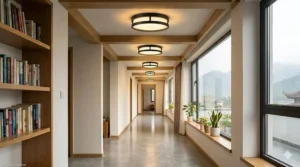
The Semi-Flush Sweet Spot: 9-10 Foot Ceilings
Here’s where semi-flush mount fixtures earn their premium: in homes with 9-10 foot ceilings (increasingly standard in construction built after 2010), that 4-8 inch drop transforms from liability to asset. The gap between fixture and ceiling creates visual depth that makes tall ceilings feel intentional rather than cavernous. According to industry lighting guides, semi-flush fixtures sit in a unique category between purely functional flush mounts and decorative pendant lights.
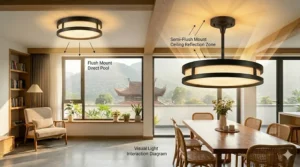
What most buyers miss: semi-flush mounts redirect some light upward toward the ceiling, creating ambient glow that softens the room. Flush mounts send nearly all output downward, which can feel harsh in rooms with lots of vertical space. The VONLUCE 13.8″ or Kichler Alkire demonstrate this effect—light bounces off the ceiling, effectively creating two light sources from one fixture.
This upward component has practical implications for paint sheen selection. If you’re installing semi-flush mounts, ceiling paint should be flat or eggshell to avoid hot spots. Flush mounts are more forgiving with satin or semi-gloss ceiling finishes.
For dining rooms specifically, semi-flush mounts solve the “too low for standing/too high when seated” chandelier problem. Position the bottom of the fixture 30-36 inches above the table surface, and you get adequate clearance without the fixture disappearing visually.
Installation Requirements: What the Instructions Won’t Tell You
Standard flush mount installations require a ceiling junction box rated for the fixture weight (typically 10-15 pounds for LED models). Most take 15-25 minutes for a moderately handy homeowner:
Critical step most people skip: Before mounting the canopy, test-fit the fixture with power on to verify proper operation. Once the canopy’s screwed tight against the ceiling, troubleshooting becomes exponentially harder. The Hykolity models especially benefit from this pre-check given the CCT selector switch location.
Semi-flush mount installations add complexity through the stem or chain connection. The Kichler 8406NI and VONLUCE require:
- Stem assembly before lifting the fixture to the ceiling (assembling overhead is miserable)
- Wire management inside the canopy—more wire length requires more careful tucking
- Leveling checks since the drop amplifies any tilt (1-degree off-level becomes obvious)
The installation time jumps to 30-45 minutes for first-timers. If your junction box has limited depth or tight wire routing, budget an extra 15 minutes for frustration.
One hack nobody mentions: For semi-flush installs in new construction, have electricians install a 4-inch deep junction box instead of the standard 2-inch pancake box. The extra depth provides more wire management space and reduces the chance of forcing wires into positions that create bulges behind the canopy.
How to Choose Between Flush Mount or Semi-Flush Based on Room Function
Hallways: Flush mount, always. The 36-48 inch width of most hallways can’t accommodate semi-flush drops without creating head-bump zones. The Hykolity 10 inch installed every 8-10 feet provides even coverage without spatial penalties.
Kitchens: Depends on layout. Galley kitchens with low ceilings need flush mounts like the Sunco disks. Open-concept kitchens with 9+ foot ceilings benefit from a central semi-flush mount (VONLUCE Industrial) supplemented by under-cabinet task lighting.
Bedrooms: Semi-flush unless ceiling height mandates otherwise. The Kichler 8406NI provides enough ambient light for getting dressed while being dimmable for evening reading. Pair with bedside lamps for layered lighting.
Bathrooms: Flush mount for powder rooms and standard bathrooms under 60 square feet. Semi-flush makes sense in primary bathrooms over 100 square feet, but position carefully to avoid shower steam exposure even in “damp-rated” fixtures.
Dining Rooms: Semi-flush over the table (Kichler Alkire for larger rooms) unless you’re going full chandelier. The visual weight of a semi-flush balances the dining table below, creating compositional logic that flush mounts struggle to achieve.
Living Rooms: Controversial take—in most living rooms, ceiling fixtures shouldn’t be the primary light source at all. Use floor lamps, table lamps, and wall sconces for human-scale lighting. Install a flush mount (Hykolity 13 inch) only for general illumination when cleaning or finding lost items.
Common Mistakes When Choosing Ceiling Light Style
Mistake 1: Oversizing flush mounts to compensate for lack of drop. Buyers see a 16-inch semi-flush and think “I’ll just get a 20-inch flush mount instead.” Problem: diameter increases don’t replicate the visual depth that drop distance creates. You end up with an undersized-looking flying saucer rather than proportional lighting.
Mistake 2: Ignoring existing junction box limitations. That 1960s pancake box in your ceiling? It’s rated for 15 pounds maximum. Semi-flush mounts with substantial glass shades easily exceed this. Upgrading the junction box adds $80-150 to electrician costs—factor this into total project cost.
Mistake 3: Matching fixture style to current trends instead of architectural style. I’ve seen farmhouse fixtures installed in mid-century modern homes and modern minimalist lights in traditional colonials. The mismatch never ages well. Choose fixtures that complement your home’s bones, not the current Houzz trend.
Mistake 4: Selecting fixtures based on photos rather than dimensions. Online product images don’t convey scale. A 13-inch fixture looks identical to an 18-inch fixture in listing photos. Always check actual dimensions and calculate proportion to your room width.
Mistake 5: Buying integrated LED fixtures for rooms you’ll redecorate. The Hykolity fixtures are fantastic—until you renovate 5 years from now and the warm white 2700K doesn’t match your new color palette. Socket-based fixtures (Kichler models) let you swap bulb color temperature without replacing the entire fixture.
Real-World Scenarios: Which Ceiling Light Wins
Scenario 1: Basement renovation with 7-foot ceilings
Winner: Sunco 6 Inch Disk Flush Mount. The ultra-low profile maximizes usable height while the 5CCT flexibility accommodates both movie watching (3000K) and workshop tasks (5000K). Install 4-6 units for even coverage rather than one large central fixture.
Scenario 2: Farmhouse kitchen with 9.5-foot ceilings
Winner: VONLUCE Industrial Semi Flush (13.8″). The clear glass and matte black finish deliver authentic farmhouse aesthetic while the 11-inch drop creates visual weight appropriate for the ceiling height. Supplement with under-cabinet LED strips for task lighting.
Scenario 3: Rental property bathroom refresh
Winner: Hykolity 10 Inch Flush Mount (2-pack). Budget-friendly, renter-neutral brushed nickel finish, and the 5CCT feature appeals to diverse tenant preferences. Damp-rated for bathroom humidity, ETL-certified for safety compliance.
Scenario 4: Primary bedroom in modern home (10-foot ceilings)
Winner: Kichler 8406NI Semi Flush. The refined European design reads as intentional luxury, the dimmable socket-based bulbs accommodate reading and sleeping modes, and the 7.75-inch drop fills vertical space without overwhelming the bed placement below.
Scenario 5: Whole-house new construction (40+ fixtures)
Winner: Sunco 6 Inch Disk in bulk (24-pack). Standardized installation accelerates construction schedule, 5-year warranty covers the builder defect period, and the selectable CCT means one SKU works for every room. Total cost around $350-400 installed vs. $1200+ for mixed fixtures.
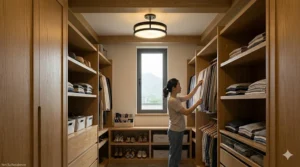
Ceiling Clearance Codes and Safety Requirements
Most jurisdictions follow NEC (National Electrical Code) guidelines requiring minimum 7-foot clearance from finished floor to lowest point of ceiling-mounted fixtures. This matters less for flush mounts (which add negligible height) and more for semi-flush models.
For stairways specifically, code typically requires 6’8″ headroom measured perpendicular to the stair tread nose. Installing a semi-flush mount with 8-inch drop in a stairwell with 7-foot ceiling height creates a code violation even if nobody hits their head.
Wet vs. Damp ratings matter more than marketing suggests. “Damp-rated” fixtures like most Hykolity models can handle bathrooms with exhaust fans. “Wet-rated” fixtures are required for outdoor applications or bathrooms without ventilation (rare but check your local code). Using damp-rated fixtures in direct water exposure voids warranties and creates fire hazards.
Weight limits on ceiling junction boxes range from 15-50 pounds depending on installation method. The typical household pancake box is rated for 15 pounds. If your semi-flush mount exceeds this (check the specs—glass shades add up), you need a fan-rated box upgrade. This isn’t optional; overloading junction boxes causes ceiling failures.
Energy Efficiency: LED Flush Mount vs Semi-Flush Mount Reality
All the fixtures reviewed here use LED technology, but efficiency varies dramatically by design. According to the U.S. Department of Energy, residential LED fixtures use at least 75% less energy and last up to 25 times longer than incandescent lighting—making them the clear choice for long-term cost savings.
Flush mounts like the Sunco disk achieve 70-80 lumens per watt because the design eliminates decorative elements that absorb light. That 15W Sunco producing 1050 lumens hits 70 LPW—exceptional for residential fixtures.
Semi-flush mounts with decorative shades drop to 50-60 LPW. The VONLUCE clear glass maintains around 65 LPW, but fixtures with frosted or colored glass can fall to 45 LPW. You’re trading efficiency for aesthetics—know this going in.
Real-world cost comparison: Running a 1300-lumen flush mount (20W) for 5 hours daily costs about $8/year at $0.12/kWh. The equivalent semi-flush mount consuming 25W costs $10/year. Over a 10-year lifespan, that’s $20 difference—negligible unless you’re outfitting 30+ fixtures.
The bigger savings question: How often do you actually need 100% brightness? Dimmable fixtures (all Hykolity and Kichler models here) let you run at 40-60% brightness for ambient lighting, cutting energy use proportionally. A dimmed semi-flush mount often uses less power than a non-dimmable flush mount running full-blast.
Color temperature also affects perceived brightness. A 1000-lumen 5000K fixture feels brighter than a 1200-lumen 2700K fixture due to how our eyes perceive blue-spectrum light. For energy efficiency, run warm white (2700-3000K) at higher lumens rather than cool white (5000K+) at lower lumens—you’ll get better perceived brightness with lower power consumption.
Drop Distance Differences: The 4-Inch Rule Explained
The defining line between flush mount vs semi-flush mount sits around 4 inches of drop. Less than 4 inches, and you’re basically looking at a flush mount with slightly more decorative depth. More than 4 inches, and the fixture achieves visual separation from the ceiling plane.
Why 4 inches matters: This is the minimum drop needed for light to escape upward and create ceiling wash effects. Fixtures dropping 2-3 inches (sometimes called “semi-flush” by manufacturers) behave optically like flush mounts—they illuminate the room but don’t create ambient glow.
The Kichler 8406NI at 7.75 inches and VONLUCE at 11 inches demonstrate true semi-flush behavior: walk beneath them and you see distinct fixture presence plus ceiling glow. The Hykolity models at under 1 inch create zero visual separation.
For interior designers, the 6-8 inch range is the sweet spot for residential semi-flush mounts. Less than 6 inches doesn’t create enough drama to justify the semi-flush complexity. More than 8 inches starts to feel pendant-like and creates head clearance concerns in standard 8-9 foot ceiling rooms.
Measurement tip most people miss: The published drop distance includes the canopy thickness. An 8-inch semi-flush mount might have a 1.5-inch canopy, meaning actual fixture-to-ceiling gap is only 6.5 inches. Always subtract canopy thickness to understand real visual separation.
FAQ: Flush Mount vs Semi-Flush Mount Answered
❓ Can I install a semi-flush mount on an 8-foot ceiling?
❓ Do flush mount lights provide enough light for a kitchen?
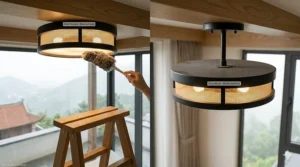
❓ How do I clean a semi-flush mount with glass shades?
❓ Are flush mount lights good for bedrooms?
❓ What's the typical lifespan of LED flush mount fixtures?
Conclusion: Making Your Final Decision on Ceiling Light Style
So where does this leave you in the flush mount vs semi-flush mount debate? If you’ve made it this far, you already know the answer depends entirely on your specific situation—ceiling height, room function, budget, and personal style preferences.
For the majority of homeowners dealing with standard 8-foot ceilings, flush mounts win on both practicality and cost-effectiveness. The Hykolity 13 inch delivers exceptional value with its 5CCT flexibility and low-profile design. If you’re outfitting multiple rooms or working within tight budgets, the Sunco disk lights in bulk packs offer unbeatable efficiency.
If you’ve got ceiling height to spare—9 feet or more—semi-flush mounts justify their price premium by adding the visual depth that transforms adequate lighting into considered design. The Kichler 8406NI represents smart long-term investment for primary living spaces, while the VONLUCE Industrial delivers trending aesthetics at accessible pricing for those embracing farmhouse style.
The real insight? Stop viewing this as flush mount or semi-flush mount and start thinking about choosing ceiling light style as part of a layered lighting strategy. Neither fixture type should carry your entire lighting load. Supplement with table lamps, wall sconces, and task lighting to create rooms that feel intentionally lit rather than merely illuminated.
When evaluating installation requirements, remember that semi-flush complexity adds 15-20 minutes per fixture—a worthwhile investment for statement rooms like dining areas, but overkill for utilitarian spaces like hallways and closets where flush mounts excel.
Your ceiling clearance needs dictate your baseline options, but within those constraints, you still have tremendous flexibility to match fixture personality to room character. A vintage seeded glass semi-flush mount (Globe Electric 65904) creates completely different ambiance than a minimalist disk flush mount (Sunco), even if both provide identical lumens.
Recommended for You
- 7 Best LED Flush Mount Living Room Lights That Save Energy (2026)
- 7 Best Flush Mount Living Room Lights That Transform Low Ceilings (2026)
- 7 Best Modern Farmhouse Chandeliers 2026
Disclaimer: This article contains affiliate links. As an Amazon Associate, I earn from qualifying purchases. If you purchase products through these links, we may earn a small commission at no additional cost to you.
✨ Found this helpful? Share it with your friends! 💬🤗
