
In This Article
Most living rooms are lit by exactly one thing: a ceiling fixture that someone flipped on in 1998 and never questioned again. It’s the lighting equivalent of eating cereal for every meal — technically food, technically light, but nobody’s thriving. Learning how to layer living room lighting is really just learning to stop asking one fixture to do a job meant for three. A properly layered room stacks ambient (general) light, task (functional) light, and accent (decorative) light so the space can shift from “movie night cave” to “reading nook” to “dinner party glow” without you touching a single bulb. On paper this means picking the right mix of floor lamps, table lamps, smart bulbs, and dimmers; in practice it means your living room finally looks like it belongs to an adult with opinions about ambiance. Based on the spec comparisons and aggregated review patterns across dozens of current lighting products, we’ve narrowed the field to seven pieces — spanning budget torchieres to app-controlled smart fixtures — that actually pull their weight in a layered scheme. Every recommendation below leans on real specifications, verified product listings, and honestly summarized customer sentiment, never invented reviews or fabricated hands-on testing. If you’re ready to stop squinting under one sad overhead light, keep reading.
Quick Comparison Table
Before the deep dive, here’s the express version — which product handles which lighting job, and roughly what it costs.
| Product | Primary Layer | Best For | Price Range |
|---|---|---|---|
| Brightech Sky LED Torchiere | Ambient | Budget corner uplighting | Under $80 |
| HadinEEon 3-Way Touch Table Lamp | Task | Cheap, dimmable reading light | Under $30 |
| Govee LED Strip Light M1 | Accent | TV walls and shelving | $45-$75 range |
| Philips Hue White and Color Ambiance Starter Kit | Ambient/Accent | App-controlled scene layering | $100-$140 range |
| Lutron Caseta Smart Dimmer Switch | Control | Whole-room dimming, no hub bulbs needed | $50-$70 range |
| Brightech Sky Dome Plus | Ambient + Task | Combo torchiere with reading arm | $70-$100 range |
| Govee RGBIC Smart Corner Floor Lamp | Ambient/Accent | Premium smart floor lighting | $70-$110 range |
Looking at the spread above, the smartest layered setups rarely rely on one product category — you’ll typically pair one ambient source, one task source, and one accent source rather than buying seven of the same thing. Budget-conscious readers can build a fully functional three-layer system for well under $150 using the HadinEEon 3-Way Touch Table Lamp, the Brightech Sky LED Torchiere, and a basic light strip, while anyone chasing app-based scene control should budget for the Philips Hue ecosystem and a Lutron Caseta switch. Notice that price alone doesn’t predict which layer a product fills; a $30 lamp and a $110 smart lamp can both be “ambient,” they just get you there with wildly different levels of control.
Just one click — help others make better buying decisions too!😊
Top 7 Living Room Lighting Products: Expert Analysis
Layering only works if the individual pieces are actually good at their assigned job. Here’s the honest breakdown of seven real products worth considering, organized loosely from budget ambient options through premium smart accent lighting.
1. Brightech Sky LED Torchiere — best budget ambient uplight for corners
The standout here is simplicity: this torchiere throws 2,190 lumens of warm 3000K light straight up into the corner of a room, and that bounced ceiling glow is exactly what ambient lighting is supposed to do. Key specs matter more than they sound — 26 watts of LED output replacing what would traditionally require a 150-watt halogen bulb means you get whole-room brightness without the heat or the electric bill spike, and the pivoting head lets you redirect the wash if your ceiling color is darker than expected.
Furthermore, this is the pick for renters or first-time layering buyers who want one lamp that visibly transforms a dim room without any wiring, apps, or smart-home setup — reviewers consistently note that it slides neatly into narrow corners and disappears behind a sofa or recliner, which matters more than people expect when floor space is already tight. Aggregated customer sentiment describes it as reliably bright for the price, with a sturdy weighted base that resists tipping, though a recurring theme in reviews is that the plastic diffuser shade feels less premium than the light output would suggest.
It won’t win design awards, but nobody’s judging your ambient layer on looks; they’re judging whether the room feels lit.
Pros:
- ✅ 2,190 lumens is genuinely enough for a mid-size living room
- ✅ Slim profile fits tight corners and behind furniture
- ✅ Low 26W draw keeps energy costs minimal
Cons:
- ❌ Plastic shade feels basic compared to the light output
- ❌ No smart or app control, just a manual switch
At a price that typically lands under $80, this is one of the easiest entry points into layered lighting, and it earns its keep as the anchor ambient piece in a budget-first setup.
2. HadinEEon 3-Way Touch Table Lamp — best budget task light for reading
This one’s built around a single standout feature: a touch-activated base that cycles through three brightness levels, which is the entire definition of task lighting done right. The spec sheet is modest — a compact 15.4-inch fabric-shade lamp with USB-C and USB-A charging ports built into the base — but that charging port detail actually solves a real problem, since a reading lamp next to a couch or armchair is also exactly where phones tend to die.
Based on the spec comparison against other budget touch lamps in this category, the 3-way dimming matters more than raw lumen count here; task lighting isn’t about flooding a space, it’s about giving your eyes a focused, adjustable pool of light for reading or needlework without glare bouncing off a nearby TV screen. What most buyers overlook about lamps in this price bracket is that a fabric shade diffuses light more evenly than the bare-bulb look of cheaper alternatives, reducing the harsh hot-spot that makes reading uncomfortable.
Finally, reviewers frequently mention the built-in charging ports as the reason they bought it over a plain lamp, alongside general satisfaction with build quality at this price point, though a smaller number note the touch sensor can be finicky if your hands are damp or if static electricity is present in dry winter months.
Pros:
- ✅ 3-way touch dimming built for actual reading use
- ✅ USB-C and USB-A charging ports solve a real problem
- ✅ Compact footprint fits any side table or console
Cons:
- ❌ Touch sensor can misfire in dry or staticky conditions
- ❌ Fabric shade shows dust faster than glass or metal
Usually priced under $30, this is the cheapest legitimate task-lighting fix on this list, and it’s the lamp we’d point a first-time layerer toward if their only current light source is the overhead fixture.
3. Govee LED Strip Light M1 — best accent lighting for shelves and TV walls
The headline feature is density: 60 LEDs per meter across ten independently controllable segments, which is roughly double the bead count of typical budget strip lights, and that translates directly into richer, more even color output rather than the blotchy look cheaper strips produce. In practical terms, Govee’s own published figures put peak output around 1,200 lumens at full white brightness, with 16 million color options and music-sync modes that respond to ambient sound through a built-in microphone in the control box.
This is squarely accent-layer territory — it’s not meant to light the room, it’s meant to wash color behind a TV, along a floating shelf, or under a console table to add depth and remove the “black hole” effect a dark TV creates in an otherwise lit room. What the spec sheet won’t tell you, but user reports suggest, is that the RGBIC segmenting genuinely does look more dynamic in person than single-color strips, since different sections can display different colors simultaneously rather than one flat wash.
Aggregated reviewer sentiment is largely positive on brightness and app responsiveness, with a real limitation worth flagging honestly: some buyers note the strip cannot be cut to length like older-generation Govee products, so measuring your intended run before purchasing matters more than usual.
Pros:
- ✅ 60 LEDs per meter for noticeably richer color output
- ✅ Ten segments allow multiple colors on one strip
- ✅ Music-sync mode adds real dynamic personality
Cons:
- ❌ Cannot be cut to custom length like basic strips
- ❌ Requires a nearby outlet for the control box
Typically running $45-$75 depending on length, the Govee LED Strip Light M1 is the single most cost-effective way to add a genuine third lighting layer to a living room that currently has zero accent light.
4. Philips Hue White and Color Ambiance Starter Kit — best smart bulbs for scene-based layering
The standout advantage is flexibility: a single bulb here can function as ambient, accent, or mood lighting depending on what scene you load, because the kit tunes both color temperature and full RGB color through the Hue app or the included Hue Bridge. Specs worth noting — output around 800 to 1,100 lumens per bulb depending on the exact kit configuration, a 60- to 75-watt incandescent equivalent, and compatibility with Alexa, Google Assistant, and Apple HomeKit — which in practice means you can schedule warm 2700K light for evening wind-down and crisp daylight-toned light for weekend cleaning, all from the same fixture.
Here’s what to weigh: the Bridge-based kit unlocks the deepest feature set (up to 50 connected lights, geofencing, scheduled routines) while Bluetooth-only Hue bulbs skip the Bridge but lose some automation range, so buyers should match the kit to how much smart-home depth they actually want rather than defaulting to the priciest option.
Reviewers consistently praise the range of tunable white and color options and describe the app as core to the experience once set up, though a recurring complaint in user reviews is that firmware mismatches or dropped connections occasionally require a bulb reset, which is a fair trade-off for the amount of control on offer.
Pros:
- ✅ Full tunable white plus 16 million colors in one bulb
- ✅ Works with Alexa, Google Assistant, and HomeKit
- ✅ Scenes let one fixture serve multiple lighting layers
Cons:
- ❌ Occasional connectivity hiccups reported after firmware updates
- ❌ Bridge-based kits cost more than basic smart bulbs
Depending on bulb count and Bridge inclusion, expect a $100-$140 range for a starter kit — a legitimate mid-range investment for anyone serious about switching between lighting moods rather than lighting states.
5. Lutron Caseta Smart Dimmer Switch — best control layer for whole-room dimming
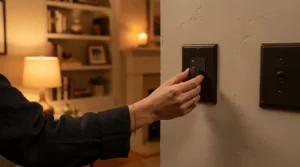
This is the one product on the list that isn’t a light source at all — it’s the nervous system that makes layering actually convenient, and that’s precisely why it’s here. The standout spec is load capacity: the Caseta dimmer handles up to 150 watts of dimmable LED or CFL bulbs (or considerably more for incandescent/halogen loads), and critically, it replaces an existing wall switch in about fifteen minutes without needing a neutral wire in most configurations, which removes the single biggest barrier to smart lighting in older homes.
In practical terms, this means your existing ceiling fixture — the ambient layer you already own — becomes dimmable and app-controllable without buying a single new bulb. Based on the spec comparison against similar switches, Caseta’s separate Clear Connect radio protocol (rather than relying purely on Wi-Fi) is a genuine advantage reviewers keep circling back to, since it tends to stay more reliable during home network outages than Wi-Fi-dependent competitors.
Aggregated sentiment across retailers is strongly favorable, with buyers repeatedly citing rock-solid reliability and easy installation as reasons they expanded to more switches throughout the house; the main friction point mentioned is that a companion Smart Bridge is required to unlock app and voice control, which is a separate purchase most first-time buyers don’t anticipate.
Pros:
- ✅ Installs on most existing switches in about 15 minutes
- ✅ Dedicated radio protocol avoids Wi-Fi congestion issues
- ✅ Turns any existing fixture into a dimmable smart layer
Cons:
- ❌ Full smart features require a separately sold Bridge
- ❌ Neutral wire is required for most Caseta models
Priced roughly $50-$70 per switch, this is the product that makes an entire layered lighting scheme feel effortless instead of like a nightly ritual of walking to three different lamps.
6. Brightech Sky Dome Plus — best 2-in-1 ambient and task combo
The standout feature is right there in the design: a 72-inch torchiere body paired with a secondary gooseneck reading arm, meaning this single lamp covers two lighting layers at once. Specs back it up — combined output around 2,400 lumens across the dome and arm lights, a 3-way dimmer with memory function, and a dimmable A21 LED bulb included in the box, so there’s no guessing about bulb compatibility.
What most buyers overlook about combo lamps like this is that positioning them beside a reading chair effectively eliminates the need for a separate side-table lamp, which is a real space and cost saver in smaller living rooms where every side table is already fighting for surface area. Here’s what to weigh: because the reading arm is a fixed gooseneck rather than a fully independent lamp, it’s better suited to a stationary reading spot than a room where the seating arrangement changes often.
Reviewers describe the light output as genuinely strong enough for a large room, and the memory function — which recalls your last brightness setting on power-up — gets specific praise as a small but appreciated detail; on the honest downside, a subset of reviews mention the multi-arm assembly involves threading wires through rods, which is fiddlier than a single-pole torchiere.
Pros:
- ✅ Combines ambient dome light and task reading arm in one
- ✅ 2,400 lumens is plenty for larger living rooms
- ✅ Memory function remembers your last brightness setting
Cons:
- ❌ Assembly involves threading wires through multiple rods
- ❌ Reading arm position is fixed, not freely repositionable
In the $70-$100 range, this is the efficient choice for anyone who wants two lighting layers solved by one purchase and one footprint.
7. Govee RGBIC Smart Corner Floor Lamp — best premium smart floor lamp for color-changing accent
The standout advantage is versatility inside a single slim body: RGBICW technology outputs both clean white ambient light and simultaneous multi-color segments, with brightness reaching up to 1,000 lumens and 58 preset scene modes ready out of the box. Key specs matter here in a specific way — the aluminum, minimalist build is designed explicitly to sit behind a couch or in a narrow gap beside furniture, so it delivers a genuinely premium ambient wash without demanding the floor space a traditional torchiere needs.
On paper this means one fixture can flex between “warm reading-adjacent glow” and “color accent for movie night” depending on the scene you load through the Govee Home app, which supports both Alexa and Google Assistant for voice control. What the spec sheet won’t tell you, but user reports suggest, is that the segmented color control genuinely reads as more dynamic in person than single-tone floor lamps, particularly when paired with the same brand’s strip lights for a coordinated look across the room.
Aggregated reviewer feedback highlights the slim profile and app responsiveness as top selling points, with a recurring theme that setup is faster than expected for a smart product; the tradeoff worth noting honestly is that, like most RGBIC fixtures, its peak brightness still trails dedicated single-purpose ambient lamps like the Brightech Sky Dome Plus, so pairing it with another ambient source is wise in larger rooms.
Pros:
- ✅ Simultaneous white and color output from one fixture
- ✅ Slim aluminum build fits tight spaces behind furniture
- ✅ 58 preset scenes plus full voice-assistant support
Cons:
- ❌ Peak brightness trails dedicated single-purpose torchieres
- ❌ Best results usually require WiFi setup patience
Typically priced $70-$110, this is the pick for anyone whose ambient layer needs to double as a genuine accent statement piece.
How to Layer Your Living Room Lighting: A Step-by-Step Setup Guide
Layering isn’t about buying seven lamps and hoping for the best — it’s a sequence. Start with ambient light first, since it establishes the baseline the other layers will build on; a torchiere like the Brightech Sky LED Torchiere in a corner, or an existing ceiling fixture wired to a Lutron Caseta Smart Dimmer Switch, should be able to light the whole room to a comfortable, even level on its own. Next, add task lighting exactly where an activity happens — a lamp like the HadinEEon 3-Way Touch Table Lamp beside the reading chair, not centered in the room, because task light that isn’t aimed at the task is just more ambient light in disguise. Third, install accent lighting last, since its whole purpose is to react against the first two layers rather than compete with them; a strip like the Govee LED Strip Light M1 behind the TV or along a shelf only reads as “accent” if the ambient layer isn’t already blasting the same wall. A common mistake in the first 30 days is running every layer at full brightness simultaneously, which just recreates the single-source glare you were trying to escape — instead, dim the ambient layer down when accent lighting is active in the evening. For maintenance, LED-based products in this category typically rate for 15,000 to 25,000+ hours, so the real upkeep is dusting shades and occasionally updating smart-bulb firmware, not bulb replacement.

Real-World Scenarios: Matching Lighting Layers to How You Actually Live
If you’re a renter in a studio-adjacent living room with no ceiling fixture worth using, skip wiring entirely: pair the Brightech Sky LED Torchiere for ambient wash with the HadinEEon 3-Way Touch Table Lamp beside your reading spot, and you’ve got a full two-layer system for under $110 total, with zero landlord permission required. If you’re a family that uses the living room for everything from homework to movie night, the flexibility case is stronger for smart bulbs: the Philips Hue White and Color Ambiance Starter Kit lets one overhead fixture shift from bright neutral-white for homework to warm dimmed light for films, controlled from a phone rather than four separate switches. If you’re a design-conscious couple who just bought their first house and want the wall switch itself to feel intentional, the Lutron Caseta Smart Dimmer Switch paired with the Govee RGBIC Smart Corner Floor Lamp behind the sofa creates a layered, app-schedulable look without a single visible cord running across the floor. Notice the pattern across all three profiles: budget, frequency of entertaining, and existing wiring — not personal taste — are what should actually decide which products you buy first.
Your Living Room Lighting Decision Framework
If your living room currently has one ceiling light and nothing else, start with an ambient floor lamp before anything smart, because a dark room can’t be fixed by adding color options to darkness. If you already have decent ambient light but find yourself squinting while reading on the couch, your next purchase should be a dedicated task lamp, not a second ambient source. If your ambient and task layers are handled but the room still feels flat or “showroom-empty,” accent lighting — a strip light or an art light — is the missing third layer, and it’s almost always the cheapest fix of the three. If you’re the type who changes the mood of a room daily (movie nights, dinner parties, actual Tuesdays), prioritize smart control — a dimmer switch or app-based bulbs — over buying more fixtures, since control is what turns three static layers into a genuinely flexible room.
The Three-Layer Lighting Design Framework Explained
Every credible source on lighting design agrees on the same structural idea: a well-lit room needs ambient, task, and accent light working together rather than one source doing all three jobs. The framework centers on three distinct lighting systems — ambient (general) lighting, task (focused) lighting, and accent (attention) lighting — which together create a balanced, functional, and aesthetically pleasing space. Ambient forms the base layer and typically comes from ceiling fixtures, recessed downlights, or a strong floor lamp bouncing light off the ceiling; used alone, though, flat overhead light is precisely why so many living rooms feel sterile or clinical despite being “bright enough.” Task lighting then layers on top wherever a specific activity happens — reading, needlework, laptop work on the coffee table — and industry guidance suggests giving task areas roughly twice the light level of the surrounding ambient space so the eyes aren’t straining against contrast. Accent lighting is the final, most subjective layer, and it’s the one people skip most often simply because it doesn’t feel “necessary” — but it’s also the layer responsible for the depth and warmth that separates a professionally lit room from a merely bright one.
| Lighting Approach | Coverage | Mood Flexibility | Best For |
|---|---|---|---|
| Single ceiling fixture only | Even but flat | Very low | Renters with zero other options |
| Ambient + Task (2 layers) | Functional | Moderate | Reading-focused living rooms |
| Ambient + Task + Accent (3 layers) | Full and dimensional | High | Anyone who entertains or relaxes in the same room |
The table makes the tradeoff obvious: adding each successive layer costs relatively little compared to the mood flexibility it unlocks, and the jump from two layers to three is usually cheaper than people assume, often achievable with a $50 strip light like the Govee LED Strip Light M1. What the single-fixture row can’t show numerically is the psychological effect — rooms lit by one overhead source tend to read as institutional or unfinished regardless of how many lumens that single fixture produces, because the human eye reads depth and shadow variation as “designed,” not just brightness.
Ambient vs Task Lighting Living Room: What’s the Real Difference
The confusion between ambient and task lighting in a living room usually comes down to purpose, not brightness. Ambient lighting exists to let you navigate and exist in a space comfortably — it’s the layer that answers “can I see the room,” typically delivered through ceiling fixtures, torchieres like the Brightech Sky LED Torchiere, or light bounced off walls. Task lighting exists to answer a narrower question — “can I read this page or thread this needle” — and it concentrates brighter, more directional light exactly where that activity occurs, which is why a lamp like the HadinEEon 3-Way Touch Table Lamp positioned beside a chair does more for reading comfort than doubling the wattage of the room’s ambient fixture ever would. The practical tell that you’re using the wrong layer for the job: if you find yourself cranking the overhead light brighter just to read comfortably, you don’t have a brightness problem, you have a missing task-lighting problem, and no amount of ambient wattage fixes that because the light still isn’t aimed where your eyes actually need it.
Living Room Lighting Layout Ideas for Balanced Illumination
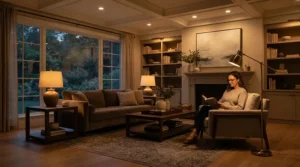
Layout matters as much as product choice, because even great fixtures fail if they’re clustered on one side of the room. A useful rule for balanced illumination is triangulating your light sources — placing ambient, task, and accent sources at different points around the room’s perimeter rather than letting them all originate from one wall or one corner, which prevents the harsh light-dark gradient that makes half a room glow and the other half disappear. In a rectangular living room, that often means an ambient torchiere in one corner, a task lamp beside the primary seating, and accent lighting (like the Govee LED Strip Light M1) on the wall directly opposite the ambient source, so light is distributed diagonally rather than bunched. In an open-concept layout where the living room bleeds into a dining or kitchen area, balanced illumination also means matching color temperature across zones — mixing a 2700K warm lamp in the living area with 5000K daylight bulbs in an adjoining kitchen creates a visual seam that makes the whole floor feel disjointed, even if each zone is well lit individually. Smaller living rooms benefit most from the Govee RGBIC Smart Corner Floor Lamp‘s slim profile precisely because layout constraints, not lumen count, are usually the real limiting factor in a compact space.
Functional and Decorative Lighting: Finding the Right Mix
Functional lighting keeps a room usable; decorative lighting keeps it from feeling like a waiting room, and the healthiest living rooms lean on both without letting either dominate. A purely functional approach — bright overhead light, a reading lamp, nothing else — is efficient but visually flat, the lighting equivalent of a sensible sedan. A purely decorative approach, all mood lighting and colored accents with no real task coverage, looks great in photos and is useless the moment you actually try to do something in the room. The Philips Hue White and Color Ambiance Starter Kit is a genuinely useful bridge between the two categories, since a single bulb can be scheduled to daylight-white for functional daytime use and shift to warm, dimmed color in the evening for decorative effect, without owning two separate fixtures. The honest advice here: buy functional lighting first, always — a beautifully accented room you can’t actually read in has failed at its primary job — and treat decorative accent pieces as the layer you add once the functional baseline is genuinely solid.
Lighting Design Principles Every Living Room Should Follow
Getting layered lighting right consistently comes down to a handful of repeatable principles rather than instinct or trend-chasing.
- Establish ambient coverage first, since every other layer is judged relative to it.
- Match color temperature deliberately — a color temperature of 2,700 to 3,600 Kelvin is generally recommended for most indoor general and task lighting applications, and mixing wildly different temperatures across one room reads as visually chaotic even when each source looks fine alone.
- Prioritize color rendering, not just brightness, because a color rendering index measures a light source’s ability to reveal colors faithfully compared with a natural or standard light source, and low-CRI bulbs can make furniture, skin tones, and artwork look subtly wrong even at high lumen counts.
- Put every layer on independent control — a dimmer or smart bulb — so brightness can shift by time of day without swapping fixtures.
- Position task lighting at the activity, not the center of the room, since proximity beats raw wattage for visual comfort.
- Add accent lighting last, and treat it as optional polish rather than a mandatory first purchase.
- Reassess after living with the setup for two weeks — the “right” balance is genuinely different for a household that reads nightly versus one that mostly watches TV.
Common Mistakes When Buying and Layering Living Room Lighting
The most frequent mistake is buying based on lumens alone without considering placement — a 2,000-lumen lamp in the wrong corner does less for a room than a 900-lumen lamp positioned where light is actually needed. A close second is mismatching color temperature between layers, pairing a warm 2700K ambient lamp with a cool 5000K task light, which creates a jarring visual split rather than a cohesive room. Buyers frequently skip the control layer entirely, assuming a $60 dimmer switch like the Lutron Caseta Smart Dimmer Switch is a luxury rather than the piece that makes daily use of multiple layers actually convenient — without it, most households quietly stop bothering with anything beyond the main overhead switch within a few weeks. Another recurring error is treating accent lighting as an afterthought bought in a rush, rather than measuring the actual run length needed for a strip light like the Govee LED Strip Light M1, which leads to returns or awkward gaps. Finally, plenty of buyers overspend on a premium smart ecosystem before confirming their home’s wiring even supports it — checking for a neutral wire before purchasing a hardwired smart switch saves a frustrating return down the line.
Long-Term Cost and Maintenance of a Layered Lighting Setup
LED-based lighting products dominate this category for a reason that goes beyond brightness: total cost of ownership. A traditional halogen torchiere pulling 150-300 watts costs meaningfully more to run over a year than an LED equivalent like the Brightech Sky LED Torchiere, which draws roughly 26 watts for comparable output, and LED lifespans in the 15,000-25,000+ hour range mean bulb replacement essentially disappears as a recurring cost.
| Cost Factor | Traditional Halogen Setup | Layered LED Setup |
|---|---|---|
| Typical wattage per ambient fixture | 150-300W | 20-30W |
| Bulb replacement frequency | Every 1-2 years | Rarely, often 10+ years |
| Added smart control cost | None available | $50-$70 per switch |
The table underscores a point that’s easy to miss when comparing sticker prices alone: a slightly pricier LED torchiere or smart bulb kit typically pays back its premium through lower electricity draw and near-zero bulb replacement within the first year or two of ownership, especially in a living room where ambient lighting runs for several hours nightly. Maintenance for a fully layered setup is genuinely minimal — dust shades and diffusers periodically, keep smart-bulb firmware updated through the manufacturer’s app, and confirm smart switches like the Lutron Caseta Smart Dimmer Switch still have a strong hub connection every so often, since that’s the one component most likely to need a reset over years of use.
Safety and Electrical Considerations for Living Room Lighting
Layering multiple lighting products often means more cords, more outlets in use, and occasionally an extension cord bridging a floor lamp to the nearest wall socket — which is exactly the kind of setup that deserves a quick safety check. Government safety guidance recommends limiting extension cord use where possible and replacing any cord that isn’t clearly rated for the load it’s carrying, which matters more than people assume once a room has three or four independently plugged-in lighting layers rather than one hardwired fixture. Practically, that means running an ambient torchiere like the Brightech Sky Dome Plus directly into a wall outlet rather than daisy-chaining it through a worn extension cord, and keeping any cords for accent lighting like the Govee LED Strip Light M1 tucked along baseboards rather than crossing open floor space where they become a trip hazard. For anyone installing a hardwired product like the Lutron Caseta Smart Dimmer Switch, always confirm the breaker is off before working on a wall switch, and if there’s any doubt about wiring compatibility, a licensed electrician’s ten-minute consult is cheaper than the alternative.
Frequently Asked Questions
❓ What is the difference between ambient, task, and accent lighting?
❓ How many lumens do I need to light a living room?
❓ Can I add layered lighting without rewiring my living room?
❓ Do smart bulbs work without a hub like Hue Bridge?
❓ Is warm or cool light better for a living room?
Conclusion
Layering living room lighting isn’t about buying more stuff — it’s about assigning each light a job it’s actually good at. Get ambient coverage right first with something like the Brightech Sky LED Torchiere or Brightech Sky Dome Plus, add task lighting exactly where you read or work with a lamp like the HadinEEon 3-Way Touch Table Lamp, and finish with an accent layer — the Govee LED Strip Light M1 or the Govee RGBIC Smart Corner Floor Lamp — that gives the room depth instead of flatness. Layer in control through the Philips Hue White and Color Ambiance Starter Kit or a Lutron Caseta Smart Dimmer Switch, and the whole system becomes something you actually adjust daily instead of ignoring. None of this requires a full renovation or an electrician on speed dial; most of it is plug-in, app-controlled, and reversible if your taste changes in six months. Start with the layer your room is missing most obviously, live with it for a couple of weeks, then add the next one — that’s genuinely the whole method, repeated three times.
Recommended for You
- Warm White vs Cool White Lighting: 7 Best Picks For 2026
- LED vs Incandescent Living Room Lights: 7 Best Bulbs For 2026
- Floor Lamp vs Table Lamp: 7 Picks That Settle the 2026 Debate
Disclaimer: This article contains affiliate links. As an Amazon Associate, I earn from qualifying purchases. If you purchase products through these links, we may earn a small commission at no additional cost to you.
✨ Found this helpful? Share it with your friends! 💬🤗
