
In This Article
You flip on the overhead light, squint, and think: something is still wrong here. That’s the moment most people start googling living room too dark solutions at 9 p.m. on a Tuesday, phone flashlight in one hand, remote in the other, wondering why a room that looked fine in the listing photos now feels like a cave with a couch in it. You’re not imagining it, and you’re definitely not alone — north-facing windows, low ceilings, dark paint choices from a previous owner, and single-bulb overhead fixtures conspire against a shocking number of American living rooms. 🔦
The good news is that fixing a dim living room rarely means knocking down walls or calling an electrician. Most of the time it comes down to layering the right light sources — the kind that add lumens exactly where your eyes need them instead of just dumping one harsh beam from the ceiling. In this guide, we’ve dug into seven real, currently available products that solve this problem from different angles: torchiere floor lamps that bounce light off the ceiling, smart bulbs you control from your phone, and even a light therapy lamp for the gray-sky months when “dark room” starts to feel like “dark mood.” We’ll walk through what to buy, why it works, and how to avoid the classic mistakes that leave people re-buying lamps every six months. By the end, you’ll have a genuinely workable plan — not just a shopping list.
Quick Comparison Table
| Product | Best For | Approx. Brightness | Price Range |
|---|---|---|---|
| Brightech Sky LED Torchiere Floor Lamp | Overall dark-corner fix | Bright torchiere-level output | Mid-$100s |
| SUNMORY LED Floor Lamp | Budget-friendly brightness | Up to 3,000 lumens | Under $100 |
| JOOFO LED Torchiere Floor Lamp | Remote-controlled dimming | Moderate-high, adjustable | Under $100 |
| Philips Hue White & Color Starter Kit | Smart, app-controlled lighting | Up to 1,100 lumens per bulb | $150-$250 range |
| Govee RGBIC LED Lamp | Ambiance and accent lighting | Around 1,000 lumens | Under $75 |
| Verilux HappyLight Luxe | Light therapy on gray days | 10,000 lux at close range | Around $70-$100 |
| Adesso Trinity Arc Floor Lamp | Stylish sofa-side lighting | Moderate, styled output | Mid-$100s |
Looking at the table, you’ll notice there’s no single “best” pick — the Brightech Sky LED Torchiere Floor Lamp wins on all-around reliability, while the SUNMORY LED Floor Lamp wins on raw lumens per dollar. If you’re chasing mood over brute brightness, the Govee RGBIC LED Lamp and Philips Hue White & Color Starter Kit pull ahead because they let you tune color and intensity from an app instead of committing to one fixed glow.
💬 Just one click — help others make better buying decisions too!😊
What Is “Living Room Too Dark” and Why Does It Happen?
A living room qualifies as “too dark” when the ambient light level falls well below the roughly 10-20 lumens per square foot that lighting professionals recommend for general living spaces, according to home-lighting guidance from Home Depot’s lumens estimation guide. In practice, this shows up as a room that always feels dim even with the lights on, forces you to squint at your phone, or makes photos taken indoors look muddy and yellow.
Most of the time it’s not one big problem — it’s three or four small ones stacking up. A single center-ceiling fixture is doing a job meant for three or four separate light sources. Dark furniture and wall colors are absorbing light instead of bouncing it back into the room. Windows are smaller than the room’s square footage calls for, or they’re blocked by trees, awnings, or a neighboring building. And older bulbs — especially incandescent holdovers — simply don’t produce enough lumens per watt to compete with how LED lighting has redefined “bright” over the past decade.
How to Choose Lighting Solutions for Dark Rooms
- Start with total lumens, not fixture count. Add up the rated lumens of everything currently lighting the room, then compare that number against the 1,000-2,000 lumens generally recommended for a 100-square-foot living room, scaling up proportionally for larger spaces.
- Pick a color temperature that matches the room’s job. Warmer 2700K-3000K light feels cozy for lounging and TV nights; anything pushing past 4000K starts to feel clinical in a living room, per residential lighting guidance from the U.S. Department of Energy.
- Layer three light types. Combine ambient (general room light), task (reading, hobbies), and accent (highlighting a shelf or art) rather than relying on one overhead fixture to do everything.
- Prioritize dimmable fixtures. A dimmer switch or remote lets one lamp serve both “movie night” and “reading a novel” without buying two separate products.
- Account for wall and furniture color. Dark walls and furniture absorb a noticeable chunk of light, so darker rooms often need 10-20% more rated lumens than a lighting calculator alone suggests.
- Check bulb compatibility and dimmer type before buying. Not every LED plays nicely with every dimmer switch, and mismatches cause flicker or buzzing that ruins the whole effort.
- Don’t ignore smart controls if you’re indecisive. App-based or remote-controlled lighting solves the “I bought the wrong brightness” problem because you can adjust output and color after the fact instead of returning the whole fixture.
Top 7 Living Room Lighting Solutions: Expert Analysis
1. Brightech Sky LED Torchiere Floor Lamp — best all-around dark-corner fix
The torchiere shape on the Brightech Sky LED Torchiere Floor Lamp is the whole trick: instead of aiming light downward at the floor, it fires upward and lets your ceiling act as a giant, free diffuser. In practice, that means a single lamp can wash an entire dim corner in soft, even light instead of creating one bright puddle on the carpet. Standing roughly five feet tall with a built-in dimmer, it’s designed specifically for the “one lamp changes the whole room” use case rather than pure task lighting. Based on the spec comparison with shorter table lamps in this category, height matters more than most buyers expect — a taller torchiere throws light further across a room before it falls off.
Reviewers consistently report that the dimming function is the standout feature, with many noting they leave it on the lowest setting overnight as a soft night light and crank it up for guests. A recurring theme in aggregated feedback is that the lamp runs noticeably cooler than older halogen torchieres, which is worth knowing if you’ve been burned (sometimes literally) by an older-generation floor lamp. What most buyers overlook about this style of lamp is that ceiling height and color directly affect how much benefit you get — a stark white ceiling bounces far more usable light back down than a textured or dark one.
Pros:
- ✅ Upward-facing design brightens the whole room evenly
- ✅ Touch or remote dimming for day-to-night flexibility
- ✅ Runs cool enough for safe all-evening use
Cons:
- ❌ Needs a light-colored ceiling to perform at its best
- ❌ Tall footprint isn’t ideal for very tight corners
Priced in the mid-$100s range at the time of research, this lamp earns its keep if you plan to use it as your primary evening light source rather than a supplemental accent — check current price before buying since availability shifts.

2. SUNMORY LED Floor Lamp — best budget-friendly brightness
If your main complaint is simply “not enough light,” the SUNMORY LED Floor Lamp solves it about as directly as a lamp can: it’s rated at up to 3,000 lumens with stepless dimming from 5% to 100% and adjustable color temperature between 3,000K and 6,000K. That range matters more than it sounds — you can run it warm and cozy for a Friday movie night, then flip it to a cooler, near-daylight setting when you need to actually read fine print or hunt for a dropped earring under the couch. On paper, 3,000 lumens from one fixture is enough to single-handedly cover a mid-size living room without any additional lighting.
What the spec sheet won’t tell you, but reviewers note, is that stepless dimming (versus the old click-through-five-presets style) feels far less fiddly in daily use — you land on exactly the brightness you want instead of hunting between “too dim” and “too bright.” Aggregated customer sentiment frequently praises the value-for-money angle here, since 3,000 lumens is a genuinely high output for a lamp typically priced under $100.
Pros:
- ✅ 3,000-lumen output rivals pricier premium lamps
- ✅ Stepless dimming avoids awkward brightness jumps
- ✅ Wide 3,000K-6,000K color range for different moods
Cons:
- ❌ Build materials feel budget-grade compared to premium options
- ❌ Remote range can be inconsistent in larger rooms
At under $100 at the time of research, this is the pick for anyone who wants maximum lumens per dollar without waiting for a sale.
3. JOOFO LED Torchiere Floor Lamp with Remote — best for hands-free control
The JOOFO LED Torchiere Floor Lamp with Remote trades a bit of raw brightness for something a lot of people value more day-to-day: control without getting off the couch. Based on the spec comparison with output-focused competitors, JOOFO’s ceiling isn’t the highest in this roundup, but the remote operation and stepless dimming curve make it feel more usable in practice, especially for anyone who dims lights constantly throughout the evening. It’s built around the same upward-facing torchiere logic as our top pick, spreading light broadly rather than in one harsh cone.
Here’s what to weigh: if you’re the type who adjusts lighting five times a night — brighter for cleaning up, dimmer for a show, near-off for falling asleep on the couch — a remote-first design like this one removes friction that a touch-dimmer lamp doesn’t. Reviewers commonly mention the remote as the single biggest quality-of-life upgrade over their previous lamp, though a handful note it can be easy to misplace since it isn’t magnetically attached to the lamp body.
Pros:
- ✅ Full remote control from anywhere in the room
- ✅ Smooth, stepless dimming curve
- ✅ Upward torchiere spread suits general room lighting
Cons:
- ❌ Peak brightness trails higher-lumen competitors
- ❌ Remote isn’t attached, so it’s easy to lose
Sitting in the under-$100 range at the time of research, it’s a strong value pick specifically for people who prioritize convenience over maximum output.
4. Philips Hue White and Color Ambiance Starter Kit — best smart lighting system
The Philips Hue White and Color Ambiance Starter Kit approaches “living room too dark” from a completely different angle: instead of one bigger lamp, it puts smart, app-controlled bulbs into the fixtures you already own. Each A19 bulb in the current 75-watt-equivalent lineup outputs up to 1,100 lumens, and because they’re individually addressable, you can brighten just the lamp by the reading chair while leaving the corner sconce dim for ambiance. Reviewers and lighting guides consistently point out that Hue’s real advantage isn’t raw lumens — it’s the ability to build “scenes” that adjust every bulb in the room simultaneously with one tap.
What most buyers overlook about smart bulb kits like this one is that the hub (included in the starter kit) unlocks features that Bluetooth-only smart bulbs can’t match, including voice control through Alexa, Google Assistant, or Apple HomeKit and scheduled scenes that gradually brighten a dark living room as the sun sets. Based on the spec comparison with the standard 800-lumen Hue bulb range, this 1,100-lumen tier is specifically the one to choose if brightness — not just color-changing novelty — is your priority.
Pros:
- ✅ Individually controllable bulbs for zoned brightness
- ✅ Voice assistant and automation compatibility
- ✅ 16 million color options plus tunable white light
Cons:
- ❌ Requires the included hub for full smart features
- ❌ Higher upfront cost than simply buying a brighter lamp
Expect a price in the $150-$250 range for the starter kit at the time of research, which reflects the hub and multiple bulbs rather than a single fixture.
5. Govee RGBIC LED Lamp — best for ambiance and accent lighting
Not every dark-room fix needs to be about maximum brightness, and the Govee RGBIC LED Lamp is proof of that. Rated around 1,000 lumens, it’s not designed to be your only light source — it’s designed to add color, depth, and a layered feel to a room that currently relies on one flat overhead light. The RGBIC feature lets different sections of the fixture display different colors simultaneously, which is a meaningfully different experience than a single-color smart bulb.
Reviewers frequently describe it as the lamp that “finally makes the room feel designed” rather than just lit, and a common theme in aggregated feedback is how well it pairs with a brighter primary source like a torchiere floor lamp — used together, you get functional brightness from one fixture and personality from the other. On paper, 1,000 lumens sounds modest next to the 3,000-lumen SUNMORY option, but that’s the point: this is a supporting player, not the star.
Pros:
- ✅ RGBIC multi-zone color for genuine ambiance
- ✅ App and voice control for scene-building
- ✅ Pairs well with a brighter primary light source
Cons:
- ❌ Not bright enough to serve as a sole light source
- ❌ Color features add complexity some users won’t use
At under $75 at the time of research, it’s an easy accent-lighting add-on rather than a standalone dark-room fix.
6. Verilux HappyLight Luxe — best light therapy lamp for gray-sky days
Sometimes “living room too dark” isn’t just about lumens on the wall — it’s about how a dim, gray winter genuinely affects mood, and that’s a documented phenomenon, not just a feeling. The Verilux HappyLight Luxe delivers up to 10,000 lux of UV-free, full-spectrum light at close range, which is the same intensity level used in clinical light therapy research for seasonal affective disorder, as documented in a peer-reviewed report published via the National Institutes of Health. It offers four brightness levels, three adjustable color temperatures, and a programmable countdown timer, all packed into a slim, tablet-style panel with a detachable stand.
Reviewers consistently note a genuine mood lift after regular morning use, though a fair number also point out that you need to sit close — within roughly 6 to 12 inches — to get the full 10,000-lux effect, since intensity drops off quickly with distance. Based on the spec comparison with a standard bright lamp, this product occupies a different category entirely: it’s not meant to light the whole living room, it’s meant to sit on a side table or desk within that room and give you a concentrated dose of daylight-mimicking brightness during the darkest months.
Pros:
- ✅ Clinical-grade 10,000-lux full-spectrum output
- ✅ Adjustable brightness and color temperature settings
- ✅ Compact, portable design with a countdown timer
Cons:
- ❌ Must be used at close range for full effect
- ❌ Relies on a proprietary USB-C charging cable
Priced around $70-$100 at the time of research, it’s a smart complementary pick alongside a brighter general-purpose lamp rather than a replacement for one. If you are dealing with ongoing mood changes related to seasonal darkness, it’s worth discussing symptoms with a healthcare provider alongside any lighting changes.
7. Adesso Trinity Arc Floor Lamp — best stylish option for sofa-side lighting
Rounding out the list, the Adesso Trinity Arc Floor Lamp solves the specific problem of a dark sofa zone without resorting to a purely utilitarian torchiere. Its arc silhouette lets the shade extend out over a couch or reading chair from a base positioned behind the furniture, so you get direct downward light exactly where you’re sitting without a lamp cord running across your walking path. Interior designers frequently point to arc lamps as one of the more effective ways to add height and light to a seating area without cluttering the floor space beside it.
What most buyers overlook about arc-style lamps is that base placement does most of the work — positioned incorrectly, the arm won’t actually reach over the seating area where you need the light. Aggregated review sentiment tends to focus on the style payoff here: this is the option people choose when they want the room to look intentionally lit rather than just brightened, making it a strong pick for anyone whose dark living room complaint is tangled up with a broader “this room doesn’t feel finished” feeling.
Pros:
- ✅ Arc design delivers direct light over seating
- ✅ Doubles as a stylish design statement piece
- ✅ Keeps cords and bases out of walking paths
Cons:
- ❌ Requires careful base placement to work correctly
- ❌ Output is more moderate than dedicated torchiere lamps
Expect a price in the mid-$100s range at the time of research, positioning it as a style-forward upgrade rather than a pure budget brightness play.
Top 7 Products at a Glance
| Product | Key Strength | Color Temp Range | Best For |
|---|---|---|---|
| Brightech Sky LED Torchiere Floor Lamp | Even, whole-room upward light | Warm dimmable | Best For: Primary room lighting |
| SUNMORY LED Floor Lamp | Highest rated lumens on this list | 3,000K-6,000K | Best For: Budget brightness seekers |
| JOOFO LED Torchiere Floor Lamp | Remote-first convenience | Adjustable | Best For: Frequent dimmer users |
| Philips Hue White & Color Starter Kit | Zoned smart control | Tunable + color | Best For: Tech-forward households |
| Govee RGBIC LED Lamp | Multi-zone color ambiance | RGB + white | Best For: Accent/mood lighting |
| Verilux HappyLight Luxe | 10,000-lux therapy-grade output | 3 settings | Best For: Seasonal mood support |
| Adesso Trinity Arc Floor Lamp | Direct light plus design impact | Standard warm | Best For: Sofa-side styling |
The pattern across this table is worth calling out directly: the SUNMORY LED Floor Lamp wins on pure output-per-dollar, but the Philips Hue White and Color Ambiance Starter Kit wins on flexibility since it’s the only option here that lets you change brightness and color per-bulb after installation. If your living room has multiple dim zones rather than one uniformly dark space, that flexibility often matters more than any single lamp’s peak lumen rating.
Practical Usage Guide: Setting Up Your New Lighting
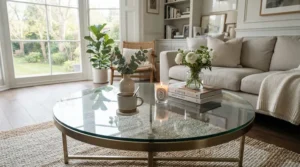
Getting a bright new lamp home is only half the job — how you set it up determines whether it actually fixes the “living room too dark solutions” problem you searched for in the first place. Start by placing your primary light source (a torchiere-style floor lamp works well here) in a corner where it can bounce light off two walls and the ceiling simultaneously, rather than tucking it directly behind furniture where the shade gets blocked. For the first 30 days, resist the urge to max out brightness constantly; instead, dial in a daytime setting and a lower evening setting so the room feels intentional rather than clinical at every hour.
Common early mistakes include mismatching bulb color temperatures across fixtures (mixing a 2700K lamp with a 5000K one makes a room look uneven and slightly off, even if you can’t immediately tell why), and forgetting to check dimmer compatibility before installing smart bulbs into an existing wall dimmer, which can cause flickering. Set a quarterly reminder to dust lampshades and clean bulb surfaces, since accumulated dust can measurably reduce output over time — a simple, free way to preserve brightness improvement you already paid for.
Real-World Scenarios: Matching Solutions to Your Space
Picture three different households, all typing the same frustrated search into Google at 8 p.m. First, there’s the renter in a studio apartment with one north-facing window and a landlord who won’t allow hardwired fixture changes — for them, a plug-in torchiere lamp like the SUNMORY LED Floor Lamp paired with the Govee RGBIC LED Lamp for accent color solves the problem without touching a single wall.
Second, consider the family with a large, open-concept living room that connects to a dim dining area — this is where a room-by-room smart system like the Philips Hue White and Color Ambiance Starter Kit genuinely shines, since it lets you brighten the whole connected space with one voice command instead of walking to three separate lamps. Third, think about the remote worker who spends short winter days feeling foggy and low-energy by 3 p.m.; for them, the Verilux HappyLight Luxe positioned near a desk within the living room addresses a problem that lumens alone can’t fully solve.
Problem → Solution: Common Dark Living Room Complaints, Fixed
- Problem: “Even with the ceiling light on, it still feels dim.” Solution: Add a second light source at a different height — a torchiere floor lamp — since a single overhead fixture creates harsh shadows that one bulb can’t erase.
- Problem: “The room looks yellow and gloomy in photos.” Solution: Swap to a cooler, higher-CRI bulb around 3500K-4000K for daytime use; low color-rendering bulbs mute how vibrant furniture and walls actually look.
- Problem: “I can’t tell what brightness I actually need before buying.” Solution: Choose a dimmable or app-controlled option like the smart bulb kit above, so you can adjust after installation instead of guessing.
- Problem: “The lamp I bought is bright but feels cold and sterile.” Solution: Layer in a warm accent lamp or color-changing fixture such as the Govee RGBIC LED Lamp to soften the overall effect.
- Problem: “Darkness during winter genuinely affects my mood, not just my eyesight.” Solution: Add a dedicated light therapy lamp like the Verilux HappyLight Luxe for morning use alongside your regular room lighting.
Brighten Dark Living Room: Layered Lighting vs. a Single Overhead Fixture
| Approach | Typical Coverage | Flexibility | Best For |
|---|---|---|---|
| Single overhead fixture | Uneven, shadow-prone | Low — one brightness for whole room | Renters avoiding any extra setup |
| Layered lighting (2-3 sources) | Even, shadow-reduced | High — adjust each zone independently | Anyone serious about brighten dark living room results |
The math on why layered lighting wins is straightforward: a single ceiling fixture has to illuminate the entire vertical and horizontal space of a room from one point, which is exactly why the areas farthest from that fixture — reading nooks, corner shelves, the far end of an L-shaped sofa — stay dim no matter how bright the bulb gets. Distributing that same total lumen output across two or three fixtures at different heights (a floor lamp, a table lamp, and overhead light) eliminates the shadow gaps a single source always leaves behind. It’s a bit like comparing one stadium floodlight to several smaller spotlights — more sources, positioned intentionally, beat one source cranked to maximum every time.
Lighting Solutions for Dark Rooms: Common Mistakes to Avoid
Most lighting solutions for dark rooms fail for the same handful of avoidable reasons. Buyers frequently choose a single “brightest possible” bulb without considering color temperature, ending up with a room that’s technically bright but feels uncomfortably clinical rather than cozy. Others install one large fixture and stop there, missing the shadow-reduction benefit of layered lighting discussed above. A particularly common misstep is ignoring dimmer or smart-hub compatibility, which causes flickering, buzzing, or a bulb that simply won’t dim below 50%. Finally, plenty of shoppers underestimate how much dark paint and furniture absorb — a room with charcoal walls and a black sectional genuinely needs more raw lumens than a lighting calculator alone would suggest, so it’s worth padding your target brightness by 10-20% in those cases.

Fix Poorly Lit Living Room: What to Expect, Realistically
Transforming specs into lived experience matters more than the numbers themselves. In practice, moving from a single 60-watt-equivalent bulb to a layered setup with a 3,000-lumen torchiere and a smart accent lamp doesn’t just make the room “brighter” — it changes how large the space feels, since shadowed corners visually shrink a room in a way most people don’t consciously register until it’s fixed. Expect an adjustment period of a few days where the new brightness feels almost too intense in the evening; this is normal, and it’s exactly why dimmable fixtures matter so much for anyone trying to fix a poorly lit living room without overcorrecting into “operating room” territory. By the second week, most people report simply forgetting the room was ever a problem — which, honestly, is the best compliment a lighting fix can get.
Illumination Strategies for Different Room Layouts
Illumination strategies need to flex based on your room’s actual shape, not just its square footage. In long, narrow living rooms, place light sources at both ends rather than one central fixture, since a single light in a long room inevitably leaves one end dim. In open-concept spaces that blend into a kitchen or dining area, smart bulbs with scene control let you visually “separate” zones by keeping the living room area warmer and dimmer while the kitchen stays brighter and cooler. For rooms with limited natural light from small or obstructed windows, prioritize daytime brightness over evening ambiance, since these spaces need the most help precisely when the sun is out but not reaching the interior effectively.
Light-Enhancing Products: Features That Actually Matter (and Those That Don’t)
Not every spec on a lighting product’s listing deserves your attention. Lumens and color temperature genuinely matter — they determine how bright the room feels and whether it reads as cozy or clinical. Dimmability matters just as much, since it’s the difference between one fixed brightness and a light-enhancing product that adapts across the day. On the other hand, marketing terms like “ultra premium” or an inflated number of preset “scenes” rarely translate into real-world usefulness if the base brightness and color quality aren’t there to begin with. Similarly, flashy app features on smart lighting are only worth paying extra for if you’ll actually use them — plenty of buyers pay a premium for voice control and color-changing modes they touch once and never again.
Brightness Improvement: Long-Term Cost and Maintenance
Thinking about brightness improvement as a one-time purchase misses half the picture — total cost of ownership matters just as much as sticker price. LED fixtures like the ones featured above typically use a fraction of the energy that older incandescent or halogen torchieres consumed, which means a $100 LED floor lamp often costs less to run over five years than a cheaper halogen model, even before factoring in bulb replacement. Maintenance is refreshingly low: dust the shade every few months, wipe down any glass or plastic diffusers to prevent yellowing, and check smart bulb firmware updates periodically if you’ve gone the connected-lighting route. The real long-term value comes from buying dimmable, well-reviewed fixtures upfront rather than replacing a cheap, non-dimmable lamp every year or two once its limitations become obvious.
Safety and Practical Considerations for Home Lighting Upgrades
Before adding multiple new fixtures, do a quick check of your outlets and extension cord usage — overloading a single outlet with several lamps is a common and avoidable fire-safety mistake. Choose fixtures with a recognized safety certification, and if you’re adding a smart hub like the one bundled with the Hue starter kit, keep it plugged into a stable, ventilated spot rather than tucked behind a media console where heat can build up. If your motivation for brightening the room is partly mood-related rather than purely visual, it’s worth knowing that researchers have linked light exposure to measurable changes in brain regions involved in mood regulation, a connection explored in ongoing research summarized by the National Institutes of Health — a useful reminder that this isn’t just a design problem, it’s sometimes a genuinely physiological one too.

Frequently Asked Questions
❓ What is the fastest way to fix a living room too dark?
❓ How many lumens do I need for a dark living room?
❓ Do smart bulbs actually help with dark rooms?
❓ Can a light therapy lamp help if my living room feels gloomy?
❓ What color temperature is best for a dark living room?
Conclusion
A dark living room isn’t a design flaw you’re stuck with — it’s a solvable, layered problem, and the solutions in this guide prove it doesn’t take a renovation budget to fix. Whether you start with the all-around reliability of the Brightech Sky LED Torchiere Floor Lamp, the budget-friendly brightness of the SUNMORY LED Floor Lamp, or the flexible smart-home approach of the Philips Hue White and Color Ambiance Starter Kit, the underlying principle stays the same: layer your light sources, choose a color temperature that matches how you actually use the room, and pick fixtures that let you adjust rather than committing to one fixed brightness forever. Add the Verilux HappyLight Luxe into the mix if the darker months affect more than just what you can see, and round things out stylistically with something like the Adesso Trinity Arc Floor Lamp once the functional problem is solved. Living room too dark solutions don’t have to mean starting over — they just mean lighting the room the way it should have been lit from day one.
Recommended for You
- How To Layer Living Room Lighting: 7 Genius Picks (2026)
- Warm White vs Cool White Lighting: 7 Best Picks For 2026
- LED vs Incandescent Living Room Lights: 7 Best Bulbs For 2026
Disclaimer: This article contains affiliate links. As an Amazon Associate, I earn from qualifying purchases. If you purchase products through these links, we may earn a small commission at no additional cost to you.
✨ Found this helpful? Share it with your friends! 💬🤗
