
In This Article
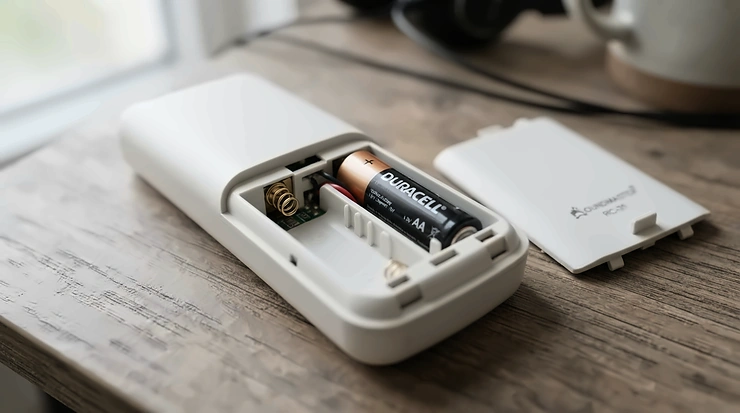
A motion sensor closet light battery operated is a small LED fixture that runs on AA/AAA cells or a built-in rechargeable pack, detects your movement with a passive infrared sensor, and switches on the moment you open the door. No electrician, no wall switch, no cords. Just stick, mount, and go.

Picture the usual morning. Phone flashlight clamped in your teeth, one hand parting a wall of hangers, the other hunting for the navy sweater that is definitely not black. (It was black. Wait, no. Navy. Probably.) A dark closet isn’t just annoying. It’s a daily tax on your patience, and on your dignity if you’ve ever left the house in two different shoes.
The fix is cheap, fast, and renter-friendly. These lights lean on a passive infrared sensor, the same heat-detecting tech used in security systems. It spots you when the door swings open, then shuts the light off after roughly 15-30 seconds of stillness to save battery. Many models add a daylight sensor so the light stays asleep when the room is already bright. Whether you want a cordless motion closet light that runs on an AA/AAA battery pack or a bar you top up over USB-C, the market has never offered more choices. It has never offered more junk either.
This guide ranks seven real options and decodes the sensor range numbers that listings love to bury. It also walks through setup, real-world scenarios, and long-term costs. One honesty note up front: everything here comes from manufacturer specs, retailer listings, and published roundups, not hands-on testing. I’ll flag every spot where review data couldn’t be verified. Prices appear as ballpark ranges only, so check current prices before you buy.
Quick Comparison: 7 Motion Sensor Closet Light Battery Operated Picks at a Glance
| Product | Power Source | Brightness | Best For |
|---|---|---|---|
| Mr. Beams MB990 UltraBright | Replaceable batteries | 300 lumens | Set-and-forget medium closets |
| Energizer 39677 | Replaceable batteries | 300 lumens | Walk-ins needing 360° pickup |
| TOOWELL 180-Lumen Battery Ceiling Light | 6 AA cells | 180 lumens | High-traffic closets, long AA runtime |
| Mr. Beams MB710 | 4 AAA cells | Not stated in manual | Narrow reach-ins and pantries |
| Gritin Under Cabinet Lighting | Rechargeable battery, 1800mAh | 180 lumens | Color-temperature tinkerers |
| EZVALO 13-Inch Bar Light | Rechargeable battery, 1800mAh | 100 lumens | Precise doorway detection |
| MCGOR 14.7-Inch Rechargeable Light | Rechargeable battery, 2200mAh | 180 lumens | Long shelf and rod runs |
Looking at the comparison above, Mr. Beams MB990 UltraBright and Energizer 39677 are the brightest of the group at 300 lumens each. Both are ceiling-style discs that suit medium closets, according to closet lighting guidance that puts 200-400 lumens in that range. If you’d rather light the shelves than the floor, the bar-style MCGOR 14.7-Inch Rechargeable Light and Gritin Under Cabinet Lighting trade a little power for coverage along the wall. The Mr. Beams MB710 is the minimalist’s pick: small, AAA-fed, and happy in a tight reach-in.
💬 Just one click — help others make better buying decisions too!😊
Top 7 Motion Sensor Closet Light Battery Operated Picks: Expert Analysis
Every pick below follows the same logic: what the spec means in practice, who it suits, and what reviewers and roundups say. Where I couldn’t verify individual customer reviews, I say so rather than invent sentiment.
1. Mr. Beams MB990 UltraBright — 300 lumens without a charging habit
The headline is raw output. Mr. Beams positions the MB990 as the brightest indoor light in its lineup, and 300 lumens sits at the sweet spot for a medium reach-in closet.
It combines motion activation, an automatic shut-off, and a built-in light sensor so it stays dark when the room is already lit. The maker estimates about a year of light per set of batteries at 8-10 activations a day. That works out to roughly 3,000-3,650 activations, which is a lot of door-opening for one set of cells.
Based on those specs, this suits households that want to forget about the closet light entirely. Think of the kid’s closet nobody remembers to recharge anything for. The trade-off is placement: ceiling-style fixtures light from above, so deep shelf corners can stay shadowy. Check the listing for the exact battery type before ordering.
On reviews, I couldn’t verify individual buyer comments for this model. Retailer pages mostly repeat the manufacturer’s year-per-set claim, which is marketing rather than buyer sentiment.
Pros:
- ✅ Bright 300 lumens for medium closets
- ✅ Maker-estimated year of runtime per battery set
- ✅ Daylight sensor prevents wasted activations
Cons:
- ❌ Overhead light leaves deep shelf corners dim
- ❌ Independent runtime data is thin
Expect a ballpark of $25-$45 for a two-pack, depending on seller. Check current price. The value verdict is strong if you hate charging cables.
2. Energizer 39677 — 360° detection from the middle of the ceiling
Where most lights watch a cone in front of them, this one watches the whole room. The listing describes motion pickup within 15 feet at a 360° angle, plus 300 lumens of diffused white light. It runs on batteries with no wiring.
Here’s what that means in practice. A 360° sensor stays reliable when you enter from the side, such as an L-shaped walk-in or a closet with two doors. A 15-foot sensor range covers a 10-by-10 space with room to spare. The light only fires in low-light conditions, which is good for battery life, though you should test it in a genuinely dim closet.
Based on the spec comparison, this is the better walk-in choice over directional bar lights. It rewards centered ceiling placement, though, so it’s less flexible in a closet where the fixture must hug one wall.
For sentiment, resale listings I found showed generally warm ratings. I’m not treating those numbers as verified, because the sites weren’t primary retailers. The Energizer name suggests broadly accessible support, but that’s brand reputation, not review data.
Pros:
- ✅ 360° coverage suits odd closet shapes
- ✅ 15-foot detection covers large walk-ins
- ✅ 300 lumens of diffused light
Cons:
- ❌ Works best centered on the ceiling
- ❌ High brightness likely drains cells faster
Ballpark $10-$25 per unit; check current price. It’s an easy value win for a walk-in closet.
3. TOOWELL 180-Lumen Battery Ceiling Light — six AA cells, 35-plus hours of light
This one is built for closets that get opened constantly. It takes six AA batteries (not included), and the listing claims more than 35 hours of light per set. A built-in photocell keeps it from firing in bright rooms, and it shuts off after 20 seconds of no motion.
Run the numbers. At 20 seconds per activation, 35 hours of light is over 6,000 triggers on paper. At ten opens a day, that’s well beyond a year before real-world factors kick in. Real life runs shorter, but the capacity is genuinely generous.
Based on the specs, that 20-second window is a double-edged sword. Passive infrared sensors respond to movement rather than presence, so standing perfectly still while you decide between two jackets can plunge you into darkness. A quick arm wave fixes it, but it’s worth knowing before you buy.
I couldn’t verify buyer reviews directly for this exact two-pack. Listings show wildly different prices across resellers, so compare sellers carefully.
Pros:
- ✅ Long claimed runtime from six AA cells
- ✅ Daylight photocell saves battery
- ✅ Two-pack covers two closets
Cons:
- ❌ Six AAs per fixture adds up quickly
- ❌ 20-second timeout can catch lingering browsers
Prices ranged roughly from $25-$55 depending on seller; check current price. The value is good if you favor fresh AA cells over charging.
4. Mr. Beams MB710 — the AAA workhorse for tight spaces
Small and unfussy is the pitch here. This model takes four AAA alkaline batteries, pairs a motion sensor with a light sensor, and detects movement from up to 10 feet. You can mount it with double-sided tape or two screws and anchors.
In practice, a 10-foot sensor range is plenty for a reach-in or pantry. The manual specifically recommends new alkaline AAA cells at 1.5V, which matters if you were planning to use rechargeable AAA cells with lower voltage. It also advises testing in a dark room or closet, because the light sensor won’t fire in daylight.
On the analysis side, this suits anyone with a narrow closet, linen cabinet, or pantry where a bright ceiling disc would be overkill. For a long walk-in rail, it’s underpowered. The manual doesn’t state lumen output, so treat it as accent-level lighting rather than a task light.
I couldn’t verify buyer reviews specific to this model number. Forum chatter about Mr. Beams lights generally praises simple installation, but that’s anecdotal.
Pros:
- ✅ Compact footprint fits tight closets
- ✅ Tape or screw mounting options
- ✅ Common AAA batteries are easy to find
Cons:
- ❌ Lumen output isn’t published
- ❌ Four AAAs per light adds ongoing cost
Ballpark under $20; check current price. It’s solid value for small spaces.
5. Gritin Under Cabinet Lighting — three color temperatures in one rechargeable bar
Color choice is the standout. This 84-LED bar offers 3000K, 4500K, and 6000K settings with 180 lumens and an 1800mAh USB-C rechargeable battery.
Why that matters: closet lighting guidance is split. Some designers favor 3000-4000K for a flattering, neutral look, while others push 4000-5000K for accurate color matching. One roundup author found 4000K ideal for closet applications. A switchable bar lets you settle the argument yourself instead of living with a fixed tone you can’t change.
Based on the spec comparison, the 180-lumen output plus bar form factor suits shelf and rod lighting well. The rechargeable battery means you’ll top it up periodically, but with typical closet use, that’s a periodic chore rather than a daily one.
Roundups tagged it as a strong budget pick with color options. I couldn’t verify raw buyer reviews, so treat that as editorial opinion rather than aggregated feedback.
Pros:
- ✅ Three selectable color temperatures
- ✅ 180 lumens from a slim bar
- ✅ USB-C recharging, no cell swaps
Cons:
- ❌ Rechargeable means periodic charging
- ❌ Independent runtime testing is scarce
Ballpark $20-$35; check current price. Value is excellent for the flexibility.
6. EZVALO 13-Inch Bar Light — a rotatable sensor head for precise doorway aim
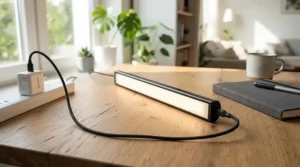
The unusual hook is a sensor head that rotates, roughly 60° according to roundups. The 13-inch bar offers 100 lumens, three color temperatures, high color rendering (roundups cite 90+ CRI), and an 1800mAh rechargeable battery.
Here’s the practical meaning. Aiming the sensor at the closet entrance, rather than at the bar’s fixed direction, reduces dead zones. That helps with narrow doorways or off-center mounting where a fixed sensor might miss you until you’re halfway in. High CRI also means navy and black look like different colors, which is the whole point of a closet light.
Based on the specs, 100 lumens is modest. Closet guidance suggests 100-200 lumens for a small reach-in, so one bar fits a small closet and two suit a medium one. A different EZVALO puck pack in the same roundup drew criticism for a fixed, harsh 7000K tone. That’s a reminder to check color temperature options on any model you buy.
I couldn’t verify buyer reviews for this exact bar. The roundup praise is editorial.
Pros:
- ✅ Rotatable sensor head aims at the doorway
- ✅ Three color temperatures to pick from
- ✅ High CRI shows true clothing colors
Cons:
- ❌ 100 lumens is modest for larger closets
- ❌ Needs periodic USB charging
Ballpark $25-$40 for a two-pack; check current price. The value is great for detail-oriented closets.
7. MCGOR 14.7-Inch Rechargeable Light — the brightest bar in the roundups
Roundups named it the “brightest pick” among bar lights, and the numbers back that up: 180 lumens from a 14.7-inch bar, powered by a 2200mAh rechargeable battery, sold in two-packs.
In practice, a longer bar spreads light along the hanging rod instead of pooling it at one spot. Pair two for a deep walk-in and you get 360 lumens total, comfortably inside the medium-closet range. The larger 2200mAh battery should also outlast the smaller 1800mAh packs on competing bars, all else being equal.
Based on the spec comparison, this is the pick for long rods and shelf runs where shadow gaps annoy you. A different 10-inch MCGOR variant also earned an editor’s-choice slot in another roundup. As with the rest, those are editorial opinions and not verified buyer sentiment.
Reviewers of rechargeable bars generally note the same trade-off: you’ll charge it eventually. Plan a reminder.
Pros:
- ✅ Brightest bar light in multiple roundups
- ✅ Longer bar covers more rod length
- ✅ Larger 2200mAh rechargeable battery
Cons:
- ❌ Charging remains a recurring chore
- ❌ Deep closets may still need a second bar
Ballpark $25-$40 for a two-pack; check current price. It’s strong value for long, dark rods.
Side-by-Side Specs
| Product | Power | Standout | Approx. Price Range (varies by seller) | Best For |
|---|---|---|---|---|
| Mr. Beams MB990 UltraBright | Replaceable batteries | 300 lm, ~1 year per set (maker claim) | $25-$45 | Medium closets |
| Energizer 39677 | Replaceable batteries | 360° pickup, 15 ft | $10-$25 | Walk-ins |
| TOOWELL 180-Lumen Battery Ceiling Light | 6 AA | 35+ hours per set (listing claim) | $25-$55 | Busy closets |
| Mr. Beams MB710 | 4 AAA | 10 ft detection | Under $20 | Tight spaces |
| Gritin Under Cabinet Lighting | USB-C rechargeable | 3 color temps | $20-$35 | Color control |
| EZVALO 13-Inch Bar Light | USB-C rechargeable | Rotatable sensor | $25-$40 | Doorway aim |
| MCGOR 14.7-Inch Rechargeable Light | USB-C rechargeable | 180 lm bar | $25-$40 | Long rods |
The pattern is clear. Replaceable-battery discs like the Energizer 39677 and Mr. Beams MB990 UltraBright win on brightness and low maintenance, while the rechargeable bars win on color control and shelf coverage. If your closet is tight and cheap is the goal, the Mr. Beams MB710 keeps costs down. If color accuracy matters more than anything, the EZVALO 13-Inch Bar Light and Gritin Under Cabinet Lighting make the best case.
How to Choose a Motion Sensor Closet Light Battery Operated
Here is the short, snippet-friendly version, with the reasoning behind each step:
- Match lumens to closet size. Closet lighting guidance suggests roughly 100-200 lumens for a small reach-in, 200-400 for a medium closet, and 400-plus for a large walk-in. Undersize it and you’re back to the phone flashlight.
- Choose your power style. An AA/AAA battery pack is simple and swap-ready, while a rechargeable battery saves ongoing cell costs but demands a charging habit. Heavy-use closets favor larger packs.
- Check the sensor range and angle. Ten feet and 120° is typical, but a 360° ceiling unit behaves very differently from a directional bar.
- Insist on a daylight sensor or mode switch. It keeps the light from burning battery when the room is already bright.
- Pick a color temperature. Experts disagree between 3000-4000K and 4000-5000K, so a switchable model removes the guesswork. Aim for CRI of 80 or higher.
- Plan the mounting. Magnet plates, adhesive, or screws each suit different surfaces, and renters should lean toward peel-and-stick.
- Look for safety marks and sensible auto-off timing. Rechargeable models should carry recognized certification, and a 15-30 second timeout is a fair balance.
Treat the first two steps as non-negotiable and the rest as tie-breakers. A beautifully tuned 6000K light that dies after a week is just an expensive paperweight.

AA/AAA Battery Pack vs Rechargeable Battery: Which Wins for Closets?
This is the biggest fork in the road, and the honest answer depends on how often you open that door.
An AA/AAA battery pack gives you the “install and forget” experience. With the TOOWELL 180-Lumen Battery Ceiling Light, the claimed 35 hours per six-cell set translates to thousands of activations. The Mr. Beams MB710 takes four AAA alkaline cells and the maker advises new 1.5V alkaline batteries specifically. That detail matters because many rechargeable AA/AAA cells run at a lower voltage and may behave poorly in some fixtures.
A rechargeable battery flips the cost curve. You pay more upfront but skip cell purchases entirely. Bigger packs stretch the gap between charges: the EZVALO 7.1-Inch 10000mAh Remote Dimmable Light advertises a 10,000mAh pack, and the Alivation 84 LED Bar Light is cited by a roundup for its 3200mAh endurance. Smaller packs run out sooner. One roundup noted that a 50-lumen, 1200mAh puck model needed recharging roughly every 10 days under heavy use.
Runtime claims also depend heavily on duty cycle. The BLS 36 LED Closet Light claims up to 120 days from its 1500mAh battery at ten activations a day, 20 seconds each. That’s under seven total hours of light across those four months. It’s a reasonable closet scenario, but it shows how small the real energy budget is.
Hybrids exist too. The BLS T01L LED Closet Light runs on batteries or a DC input, which suits a closet near an outlet. My rule of thumb: pick an AA/AAA battery pack for rarely used closets, and a rechargeable battery for daily-use closets where fresh cells would run out.
Sensor Range, Angle, and Delay: What the Numbers Actually Mean
Sensor range is the spec most buyers skim and most regret ignoring. Here’s the physics, minus the headache.
A PIR sensor doesn’t emit anything. It watches for changes in infrared energy, and a Fresnel lens divides its field of view into zones. When a warm body crosses from one zone to the next, the sensor sees the imbalance and triggers the light. Two consequences follow. Movement across zones triggers more reliably than walking straight at the sensor, and stillness eventually lets the light time out.
Listing numbers vary. Typical closet bars quote about 10 feet and 120°. One 6-pack listing claims a 9-foot sensor range. The Energizer 39677 claims 15 feet at 360°, and the Mr. Beams MB980 claims 20 feet at 180°. The Mr. Beams MB710 sits at 10 feet. For a standard reach-in, anything above 10 feet is overkill. For a deep walk-in or a closet you enter from the side, range and angle matter more than raw lumens.
A few practical cautions apply. PIR sensors can be fooled by direct sunlight and heat sources like heaters, so avoid mounting near a sunny window or vent. One listing warns that two motion-activated lights placed too close together can interfere with each other. And hanging clothes can block the sensor’s line of sight, so mount high.
The delay matters too. Fifteen to thirty seconds of no-motion before shutoff is standard. If you linger to choose outfits, pick a model with an adjustable timer or a manual “always on” mode.
Cordless Motion Closet Light Setup Guide: A No-Wire Install in 20 Minutes
A no-wire motion sensor light closet install really is a 20-minute job. Do it in this order and you’ll avoid the usual do-overs:
- Test before you stick. LED Supply’s DIY walkthrough recommends powering the unit on and holding the sensor where you plan to mount it. Have someone walk around, and check that the light triggers where you want it and stays quiet where you don’t.
- Mark the spot. A pencil mark saves you from peeling and re-sticking.
- Clean the surface. Wipe with rubbing alcohol and let it dry. Dust is the number one adhesive killer.
- Mount high and aimed at the door. The door frame or ceiling edge catches you as you enter, and it keeps hanging clothes out of the sensor’s view.
- Set the mode. Many lights have an on/off/auto-style switch. Use the daylight-sensing mode for bright rooms, and the always-motion mode if the closet is windowless.
- Label the battery date. A small sticker inside the battery compartment, or a phone reminder, prevents surprise darkness.
The common first-30-day mistakes are mounting too low, crowding two lights together, and forgetting to switch the mode. If your cordless motion closet light seems “broken” in a bright room, it probably isn’t. The daylight sensor is doing its job.
Real-World Scenarios: Which Pick Fits Which Closet?
The renter with a 5-by-2 reach-in. She can’t drill holes and opens the closet two or three times a day. The Gritin Under Cabinet Lighting or EZVALO 13-Inch Bar Light suits her. Both stick or magnet on without damage, and a rechargeable battery that’s lightly used might need charging only occasionally. Budget: about $20-$40.
The family with a busy kids’ closet. Little hands open that door constantly, and no adult will remember a charging schedule. The Mr. Beams MB990 UltraBright or TOOWELL 180-Lumen Battery Ceiling Light fits better. Replaceable batteries mean one annual swap, and a bright overhead light covers a floor strewn with toys.
The owner of an 8-by-6 walk-in with a long hanging rail. One ceiling disc won’t cover it, so combine the Energizer 39677 overhead with a MCGOR 14.7-Inch Rechargeable Light along the rail. That layering approach, a ceiling light plus linear task lighting, mirrors what professional designers recommend. Budget: roughly $40-$70 total.
If you’re a commuter who dresses in the dark at 5 a.m., prioritize fast response and a short, reliable sensor range over fancy color options. The Energizer 39677‘s 360° pickup earns its keep here.
Problem → Solution: Fixing the Most Common Closet-Light Headaches
The light won’t turn on in the daytime. Usually the daylight sensor is working as designed. Switch to the always-motion mode if your model has one, or cover a window. Check the manual before assuming a defect.
It switches off while you’re choosing an outfit. Remember, PIR responds to movement, not presence. Wave an arm, or choose a model with a longer timer or adjustable delay.
Batteries die within weeks. Check for false triggers: a heat vent, a breezy curtain, or a sunlit wall can keep the sensor firing. Move the light, or switch to a larger-capacity pack.
The adhesive keeps peeling. Clean with alcohol and press for 30 seconds. For heavy bars, add the included screws or magnet plates, as on the Mr. Beams MB710.
The light looks too harsh or too yellow. Color temperature is the culprit. A selectable model like the Gritin Under Cabinet Lighting lets you shift between warm and cool settings without replacing anything.
✨ Ready to Banish the Dark Closet?
🔍 Take your closet from guesswork to grab-and-go with these carefully selected lights. Click on any highlighted product name above to check current pricing and availability. A few minutes of setup will make every morning easier!

Battery Powered Auto Closet Light vs Hardwired and Plug-In Options
A battery powered auto closet light isn’t the only way to light a closet, but it’s the only one that asks nothing of your walls.
| Option | Install Effort | Ongoing Cost | Brightness Ceiling | Best For |
|---|---|---|---|---|
| Battery powered auto closet light | Minutes, no tools | Cells or USB charging | About 100-300 lumens per unit | Renters, quick retrofits |
| Plug-in motion light | Easy, needs an outlet | Small electricity cost | Moderate to high | Closets near outlets |
| Hardwired motion fixture | Electrician or permit may apply | Lowest running cost | Often 1,000+ lumens in listings | Owners remodeling |
| Pull-chain bulb | Already installed | Bulb replacement | Varies | Nobody, honestly |
The table makes the trade-off visible. Hardwired fixtures win on sheer brightness, with listings showing 1,100 and even 2,000 lumens, and on lowest running cost. But they require wiring and sometimes permits, which rules them out for most renters and anyone who wants to be done by lunch. A battery powered auto closet light gives up some brightness and adds a small maintenance chore, in exchange for zero construction. For most closets, 200-400 well-placed lumens is plenty, so the brightness gap rarely matters.
If you’re mid-remodel and already have a wire run, go hardwired. For every other case, battery wins on convenience.
Features That Actually Matter (And Those That Don’t)
Matter: a daylight sensor, an honest sensor range, a sensible auto-off timer, and a mounting method that suits your surface. Add a color temperature you can live with, plus a battery type that matches how often you open the door.
Mostly don’t: remote controls on a closet light, “10,000mAh” headline numbers without a real-world duty cycle, and counting LEDs. Dozens of LEDs sound impressive, but lumens are the number that tells you how bright the light actually is. A 10,000mAh pack is wonderful, but a remote that you’ll lose in a week adds little.
Sometimes matter: dimming (lovely in a bedroom closet at night), selectable color temperatures, and high CRI. These are the features that separate a closet you tolerate from one you enjoy. The EZVALO 13-Inch Bar Light and Gritin Under Cabinet Lighting lean into them. Marketing hype tends to clump around anything you can print on a box, so ask what a feature changes in daily use.
Common Mistakes When Buying a Motion Sensor Closet Light Battery Operated
Buying on LED count instead of lumens. More tiny LEDs doesn’t guarantee more light. Check lumen figures, and be skeptical if none are listed.
Ignoring the daylight sensor. A light that fires all day wastes batteries, and one that never fires in a dim closet is just as frustrating. Know which mode you need.
Mounting too low. Hanging clothes block a PIR sensor’s view. Higher is almost always better.
Mixing battery types. Fresh alkaline cells in a fixture designed for them beat a drawer of half-dead batteries. Don’t mix old and new.
Skipping color temperature. A fixed 7000K light can feel harsh, as one roundup noted about a different EZVALO puck pack. If you’re picky, buy adjustable.
Believing runtime claims at face value. Those claims assume specific activation counts. A motion sensor closet light battery operated model in a closet with a pet or a busy household will use batteries faster than the estimate.
Long-Term Cost & Maintenance: What You’ll Actually Spend
| Option | Upfront | Recurring | Effort | Best Fit |
|---|---|---|---|---|
| Mr. Beams MB990 UltraBright | Mid | New batteries about once a year (maker estimate) | Very low | Medium closets, low fuss |
| TOOWELL 180-Lumen Battery Ceiling Light | Mid | Six AA cells per fixture | Low | High-traffic closets |
| EZVALO 7.1-Inch 10000mAh Remote Dimmable Light | Low-to-mid | Occasional USB charging | Low-to-medium | Daily-use closets |
| MCGOR 14.7-Inch Rechargeable Light | Mid | Occasional USB charging | Medium | Long rod runs |
Cost per use favors rechargeable battery models over time, because you aren’t buying cells. But the difference is often small: a handful of batteries a year versus a handful of charging sessions. What matters more is whether you’ll actually remember to charge. A dead rechargeable light is worse than a replaceable-battery light with spare cells in a drawer.
Maintenance is minimal either way. Wipe the sensor lens every few months, since dust dulls PIR sensitivity. Check adhesive after the first month. Keep a spare set of cells on hand for AA/AAA battery pack models. Over a few years, the total cost of any option here lands in the tens of dollars, which makes a good closet light one of the cheapest quality-of-life upgrades in the house.
Safety, Standards, and Battery Care
Rechargeable battery models contain lithium-ion cells, and the safety guidance is straightforward. The NFPA’s guidance, echoed in state fire-safety campaigns, tells buyers to look for a safety mark such as UL, ETL, or CSA, use the manufacturer’s charging cable, and never toss lithium-ion batteries in household trash or standard recycling. The U.S. Consumer Product Safety Commission also tracks the voluntary battery safety standards that apply to household and battery-powered products, a useful reference if you want to understand what those marks mean.
A few practical habits help. Don’t charge a light unattended overnight if it’s an unbranded off-listing, and store spare alkaline cells away from metal objects. Replace swollen or hot-feeling batteries immediately. LED fixtures also run cooler than incandescent bulbs, which is one more reason they suit clothing storage.
For AA/AAA models, remove batteries if the light will sit unused for months, and always use the chemistry the manual specifies.

FAQ: Motion Sensor Closet Light Battery Operated
❓ Can I use rechargeable NiMH batteries in an AA/AAA closet light?
❓ How many motion sensor lights does a walk-in closet need?
❓ Will hanging clothes block the sensor?
❓ Why won't my battery powered auto closet light turn on in daytime?
❓ Is a cordless motion closet light safe near clothing?
Conclusion: Your Closet Doesn’t Have to Be a Cave
A motion sensor closet light battery operated model is one of those rare home upgrades that’s cheap, quick, and annoyingly satisfying. You stick it up, you open the door, and the dark simply goes away. After that, you wonder why you spent years doing the flashlight-in-teeth shuffle.
Here’s how the seven picks shake out. For maximum brightness with minimum fuss, the Mr. Beams MB990 UltraBright and Energizer 39677 are the easiest calls. For a high-traffic closet where AA cells make sense, the TOOWELL 180-Lumen Battery Ceiling Light is the endurance option. Tight spaces suit the Mr. Beams MB710. If you want control over color and coverage, the Gritin Under Cabinet Lighting, EZVALO 13-Inch Bar Light, and MCGOR 14.7-Inch Rechargeable Light are the rechargeable battery bars worth shortlisting.
My advice: measure your closet, match lumens to its size, pick your battery style honestly based on whether you’ll remember to charge, and test the sensor range before you commit to a mounting spot. Then enjoy finding the navy sweater on the first try.
✨ Don’t Miss Your Chance to Upgrade Your Closet Today!
🔍 Click on any highlighted product above to check current pricing and availability, and give your dark closet the light it deserves. 💡
Recommended for You
- LED Closet Light For Walk-In Closet: 7 Best Picks 2026
- LED Closet Light For Small Closet: 7 Brilliant Picks (2026)
- Motion Sensor Closet Lights: 7 Best Picks
Disclaimer: This article contains affiliate links. As an Amazon Associate, I earn from qualifying purchases. If you purchase products through these links, we may earn a small commission at no additional cost to you.
✨ Found this helpful? Share it with your friends! 💬🤗
