
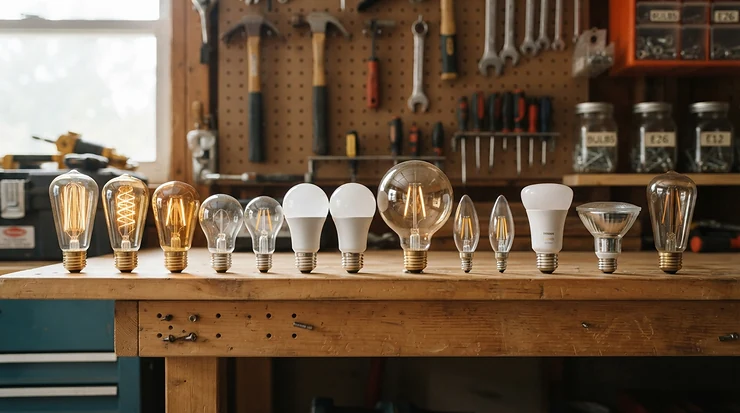
In This Article
Flip a switch in your living room and you probably don’t think twice about what’s actually happening inside that little glass dome above your head. But the debate over LED vs incandescent living room lights isn’t just a tech-nerd argument anymore — it’s a decision that quietly shapes your electricity bill, how often you’re standing on a step stool with a replacement bulb in hand, and whether your Sunday movie night looks warm and inviting or slightly clinical. Here’s the short version: incandescent bulbs are basically tiny space heaters that happen to glow, while LEDs turn nearly all their energy into usable light. That difference compounds fast once you’re running six or eight fixtures every evening.
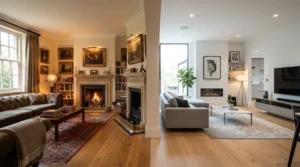
We dug into real product specs, aggregated review data, and current U.S. Department of Energy guidance to build this guide, because the “just grab whatever’s cheapest at the hardware store” approach tends to backfire — either on your power bill or on the mood of your living room. Below, you’ll find a head-to-head comparison, seven real bulbs worth buying in 2026, and the practical reasoning to help you pick the right one for your specific fixtures, your dimmer switches, and the way you actually use your living room. No fluff, no invented lab results — just the honest analysis you need to stop guessing at the lighting aisle.
What Is LED vs Incandescent Lighting?
LED vs incandescent living room lights refers to the comparison between light-emitting diode bulbs, which convert electricity into light using a semiconductor chip, and traditional incandescent bulbs, which heat a metal filament until it glows. LEDs use dramatically less energy, last far longer, and run cooler, while incandescents produce a familiar warm glow but waste most of their energy as heat.
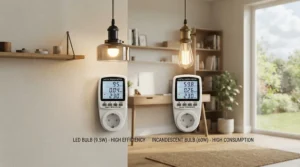
That efficiency gap isn’t marketing spin. According to ENERGY STAR, LED lighting products produce light up to 90% more efficiently than incandescent bulbs, largely because incandescents release roughly 90% of the electricity they consume as heat rather than visible light. If you’ve ever burned your fingers changing a bulb that had been on for twenty minutes, you already understood this instinctively — you just didn’t have the percentage to back it up.
Quick Comparison Table: LED vs Incandescent Living Room Lights
| Factor | LED Bulbs | Incandescent Bulbs |
|---|---|---|
| Average lifespan | 15,000–25,000+ hours (10–22+ years at 3 hrs/day) | 1,000–1,200 hours (about 1 year) |
| Energy use (60W equivalent) | 8–10 watts | 60 watts |
| Annual cost per bulb (3 hrs/day) | Roughly $1–$2 | Roughly $7–$9 |
| Heat output | Minimal — safe to touch after minutes | High — can scorch lampshades |
| Best For | Long-term savings, dimmable ambiance, smart control | Nostalgic glow (largely phased out for general use) |
Look at that lifespan row again — it’s not a rounding error. A single LED bulb can realistically outlast fifteen to twenty incandescent bulbs installed in the same fixture over the same stretch of years, and that’s before you even factor in the wattage gap. Because most general-purpose incandescent bulbs have been phased out of U.S. retail shelves since August 2023, the practical question for most shoppers today isn’t “should I switch,” it’s “which LED actually fits my living room.” The upfront price of an LED still runs higher per bulb than incandescents used to, but that gap closes within the first few months of use once you account for electricity savings and how rarely you’ll be back at the store.
💬 Found this comparison useful? A quick share helps other homeowners stop overpaying for light.
Top 7 LED Light Bulbs for Living Rooms: Expert Analysis
We focused this roundup entirely on LED options because that’s what nearly every living room in America is now shopping for — incandescents are increasingly hard to find for general household use following the 2023 federal phase-out. What follows spans budget bulk packs, color-accurate mid-range picks, and smart or decorative bulbs for people who want their living room to do more than just turn on and off.
1. Feit Electric A19 LED (OM60DM/927CA/8) — best CRI-per-dollar bulk pack
The standout here is the 90+ CRI rating on a bulb that ships eight to a box, which is a spec you usually only see on boutique bulbs costing three times as much. Each bulb replaces a 60-watt incandescent while pulling around 9 watts and producing about 800 lumens of 2700K soft white light, and Feit backs it with a 22-year rated lifetime based on typical evening use.
What most buyers overlook about high-CRI bulbs is that the number matters far more in a living room than a hallway — CRI measures how accurately colors render under that light, so your throw pillows, wood tones, and skin tones under lamplight will look noticeably richer than they do under a bargain 80-CRI bulb. Based on the spec comparison, this is one of the few 8-packs that doesn’t force you to trade color accuracy for bulk pricing, which makes it a smart pick for anyone re-lamping an entire living room at once, from overhead cans to a pair of table lamps. Reviewers consistently report that the dimming is smooth down to low levels on standard trailing-edge dimmers, though a handful note occasional buzzing on older dimmer models — a common LED compatibility issue rather than a defect specific to this bulb.
Pros:
- ✅ 90+ CRI at a bulk-pack price point
- ✅ Rated for roughly 22 years of typical use
- ✅ Dims smoothly on most modern dimmer switches
Cons:
- ❌ Occasional dimmer buzz reported on older switches
- ❌ Frosted finish only, no clear/decorative option in this line
At around $20-$25 for an 8-pack, the Feit Electric A19 LED works out to some of the lowest per-bulb pricing in this guide once you divide out the cost, and the value verdict is straightforward: if you need to relamp multiple fixtures in one trip, this is the pack to grab.

2. Sylvania A19 LED Soft White — most budget-friendly straightforward option
The short answer to “what’s the cheapest reasonable LED” is this bulb — Sylvania’s basic A19 line delivers 800 lumens at 2700K using about 8.5 watts, with no smart features, no filament styling, just a straightforward 60-watt replacement. LEDVANCE, which now owns the Sylvania lighting brand, rates the line at roughly 10 years of life based on average household use, and the bulb powers on instantly with zero warm-up lag.
Here’s what to weigh: this isn’t the bulb for a fixture you’ll show off, but it’s an excellent choice for closets-adjacent living room lighting like a reading nook lamp or a secondary overhead can where color accuracy matters less than reliability and price. The spec sheet won’t tell you this, but user reports suggest the non-dimmable variants are genuinely non-negotiable — pairing them with a dimmer switch causes flickering, so double-check your fixture before ordering. Aggregated reviewer sentiment skews positive on reliability and brightness consistency, with the most common complaint being that colors look slightly flatter than premium alternatives, which tracks with its lower published CRI.
Pros:
- ✅ Among the lowest cost-per-bulb in this roundup
- ✅ Instant-on with no flicker or warm-up delay
- ✅ Mercury-free and rated non-toxic for home use
Cons:
- ❌ Non-dimmable versions will flicker on dimmer circuits
- ❌ Lower CRI means slightly flatter color rendering
Priced in the under-$15 range for a multi-pack, the Sylvania A19 LED Soft White is the value pick for anyone lighting a secondary lamp or a fixture where budget matters more than ambiance.
3. GE Relax HD LED — best for warm, cozy movie-night atmosphere
GE built its “Relax HD” line specifically around comfort lighting, and the standout feature is its enhanced color contrast technology, which GE says boosts color boldness compared to a standard LED at the same wattage. Specs land at roughly 8.5–10 watts for 800 lumens at 2700K, dimmable, with a rated lifespan around 13.7 years based on three hours of nightly use.
On paper this means a warmer, slightly richer-looking light than a plain soft-white LED, and in practice that’s exactly the niche GE is chasing — living rooms, family rooms, and dining spaces where you want the glow to feel intentional rather than utilitarian. What most buyers overlook is that “enhanced contrast” bulbs like this one are engineered to be dimmed; GE explicitly markets the dimmable feature as core to setting movie-night versus dinner-party moods. Reviewers frequently mention that the warm tone pairs particularly well with earth-toned or wood-heavy living room decor, and GE’s own marketing states the bulb can save an estimated $84–$89 per bulb in energy costs over its lifetime compared to an equivalent incandescent — a genuinely useful, sourced figure rather than a vague promise.
Pros:
- ✅ Enhanced color contrast built specifically for living spaces
- ✅ Rated 13.7-year lifespan at typical evening use
- ✅ Dims smoothly for mood-based lighting changes
Cons:
- ❌ Slightly pricier per-bulb than basic soft-white LEDs
- ❌ Enhanced tone is a matter of taste, not universally preferred
In the $15-$25 range for a multi-pack, the GE Relax HD LED earns its keep if cozy, warm ambiance is your priority over raw color accuracy or price.
4. Cree Lighting Exceptional Series A19 — longest-rated lifespan in this lineup
Cree’s headline spec is a 25,000-hour rated life — equivalent to roughly 22.8 years at three hours of nightly use — paired with a genuinely high 90+ CRI rating and 815 lumens of 2700K soft white output from about 9.5 watts. It’s also explicitly rated for use in fully enclosed fixtures, which trips up a surprising number of cheaper LEDs.
Based on the spec comparison, this is the bulb to reach for if your living room has enclosed globe fixtures or a ceiling fan with a sealed shade, since heat buildup inside an enclosed housing shortens the life of LEDs that aren’t rated for it. Reviewers consistently note the color rendering as a standout — Cree has built its brand reputation on LED chip quality since its early days as a semiconductor manufacturer, and it shows in how true skin tones and fabric colors look under this bulb compared to bargain alternatives. A recurring theme in aggregated feedback is that Cree bulbs run slightly warmer to the touch than some competitors during extended use, though nowhere near incandescent territory, and this hasn’t been linked to any reported failures.
Pros:
- ✅ 25,000-hour rated lifespan, among the longest here
- ✅ Safe for fully enclosed fixtures, unlike many rivals
- ✅ 90+ CRI for noticeably richer color rendering
Cons:
- ❌ Costs more per bulb than basic soft-white options
- ❌ Runs a touch warmer to the touch than some competitors
At a mid-range price point, typically in the $18-$28 range for a 2-4 pack, the Cree Lighting Exceptional Series A19 delivers real long-term value for enclosed fixtures where bulb-swapping is a hassle.
5. Philips 60W Equivalent Soft White A19 — most recognizable trusted-brand basic pick
Philips built its lighting reputation over more than a century, and this basic A19 dimmable bulb is the brand’s answer to “give me something reliable I don’t have to think about.” It delivers 800 lumens at 2700K using roughly 8.5-9.5 watts, with dimmable and non-dimmable variants both widely available at major retailers.
Here’s what to weigh: this isn’t a spec-sheet standout in any single category, and that’s arguably the point — Philips’ broad retail distribution and brand consistency mean you’re less likely to get a mismatched color temperature between bulbs bought months apart, which is a genuinely underrated frustration when you’re slowly replacing bulbs room by room. What the spec sheet won’t tell you, but longtime buyers note, is that Philips’ frosted glass diffuses light slightly more evenly than some clear-lens competitors, reducing visible hotspots in open fixtures. Aggregated review sentiment is strongly positive on dimming smoothness specifically, with Philips repeatedly cited by independent testers for consistent low-end dimming performance without flicker.
Pros:
- ✅ Widely available with consistent color temperature across batches
- ✅ Smooth, flicker-free dimming performance
- ✅ Frosted diffusion reduces visible hotspots
Cons:
- ❌ No standout spec versus category-leading CRI or lifespan bulbs
- ❌ Some non-dimmable SKUs are easy to mix up when ordering
Typically priced in the $8-$15 range for a 2-4 pack, the Philips 60W Equivalent Soft White A19 is the safe, dependable choice for anyone who just wants consistent light without researching every spec.
6. Feit Electric ST19 Vintage Edison Filament LED — best decorative statement bulb
If your living room has an exposed-bulb fixture, a pendant, or a fixture where the bulb itself is part of the decor, this is the standout pick. The Feit Electric ST19 uses an exposed LED filament wrapped in clear glass to mimic classic Edison-bulb styling, delivering around 800 lumens from 8.8 watts with a rated 15,000-hour lifespan and full dimmability.
What most buyers overlook about filament-style LEDs is that they solve a real design problem: exposed incandescent Edison bulbs run hot enough to be a burn hazard on low-hanging pendants, while this filament LED delivers the same nostalgic look at a fraction of the heat and energy draw. Based on the spec comparison, the tradeoff is lower total lumen output than a standard A19 at the same wattage, since decorative filament styling isn’t optimized purely for brightness — so this bulb works better as accent or ambient lighting than as your primary living room light source. Reviewers frequently mention pairing these with dimmer switches to lean into the vintage-warm aesthetic during evening hours, and Feit offers both soft white and warmer amber-tinted glass options depending on how dramatic you want the retro look.
Pros:
- ✅ Authentic vintage look with modern LED efficiency
- ✅ Runs far cooler than a true incandescent Edison bulb
- ✅ Fully dimmable for adjustable retro ambiance
Cons:
- ❌ Lower usable brightness than a standard A19 bulb
- ❌ Premium styling comes at a premium per-bulb price
Expect to pay in the $20-$35 range for a multi-pack, and the value verdict for the Feit Electric ST19 Vintage Edison Filament LED is simple: buy it for design impact in a visible fixture, not as your only light source.
7. Philips Hue White and Color Ambiance A19 — best smart, app-controlled premium pick
The standout feature is total lighting control from your phone — this bulb delivers 800 lumens equivalent to a 60-watt incandescent, tunable from warm 2200K to cool 6500K white, plus millions of RGB colors, all controlled through the Hue app or voice assistants including Alexa, Google Assistant, and Apple HomeKit.
Based on the spec comparison, what separates Hue from cheaper smart bulbs is depth of ecosystem — scheduling, geofencing, scene libraries, and (with a Hue Bridge) integration with motion sensors and dimmer switches that most budget smart bulbs simply don’t support. What most buyers overlook is that you don’t strictly need the Bridge for basic Bluetooth control of a few bulbs in one room, which lowers the barrier to entry for a living-room-only setup versus a whole-home system. Reviewer sentiment is highly positive on color vibrancy and app responsiveness, with a frequently repeated theme in customer feedback being that the investment pays off specifically in living rooms used for movie nights, parties, or mood-based entertaining, where color-changing scenes get genuinely more use than in a bedroom or hallway.
Pros:
- ✅ Full color range plus tunable white in one bulb
- ✅ Deep smart-home integration across major platforms
- ✅ No hub required for basic single-room control
Cons:
- ❌ Highest per-bulb price in this roundup
- ❌ Full feature set requires the separate Hue Bridge
Multi-packs typically fall in the $130-$160 range, which puts the Philips Hue White and Color Ambiance A19 solidly in premium territory — but for a living room used heavily for entertaining, the smart features can genuinely justify the price for the right buyer.
Top 7 Products at a Glance
| Bulb | Lumens | CRI | Rated Life | Dimmable | Best For |
|---|---|---|---|---|---|
| Feit Electric A19 LED | ~800 | 90+ | ~22 years | Yes | Whole-room bulk relamping |
| Sylvania A19 LED Soft White | ~800 | Standard | ~10 years | Varies by SKU | Tightest budgets |
| GE Relax HD LED | ~800 | Enhanced | ~13.7 years | Yes | Cozy movie-night ambiance |
| Cree Lighting Exceptional Series A19 | ~815 | 90+ | ~22.8 years | Yes | Enclosed fixtures |
| Philips 60W Equivalent Soft White A19 | ~800 | Standard | ~10-15 years | Yes | Reliable, recognizable brand |
| Feit Electric ST19 Vintage Edison | ~800 | 90+ | ~15,000 hrs | Yes | Exposed decorative fixtures |
| Philips Hue White and Color Ambiance | ~800 | High | ~15,000-25,000 hrs | Yes | Smart control & entertaining |
Scanning this table, a pattern emerges: nearly every serious contender in 2026 clusters around 800 lumens and full dimmability, which tells you the real differentiator isn’t brightness — it’s CRI, lifespan claims, and smart features layered on top of a mature baseline technology. If price is your only constraint, the Sylvania A19 LED Soft White and Philips 60W Equivalent Soft White A19 are the safest starting points, while anyone chasing longevity or color accuracy should lean toward the Feit Electric A19 LED or Cree Lighting Exceptional Series A19.
Benefits vs Traditional Incandescent Alternatives
| Category | LED Advantage |
|---|---|
| Energy efficient lighting comparison | Uses roughly 85-90% less electricity per equivalent lumen output |
| Heat & safety | Runs cool enough to touch safely; lower fire risk near fabric shades |
| Maintenance | Years between replacements versus roughly annual incandescent swaps |
| Regulatory status | Meets current federal efficiency standards; incandescents largely phased out |
This is where the energy efficient lighting comparison stops being theoretical and starts showing up in your utility bill. A living room running five 60-watt-equivalent fixtures for three hours nightly would have burned through roughly 900 watt-hours a night on incandescents; the LED equivalents draw closer to 135-150 watt-hours for the same light output, a difference that adds up to real annual savings once you multiply it across a whole house. The maintenance angle matters just as much day-to-day — nobody enjoys balancing on a chair to replace a bulb in a vaulted living room ceiling every ten months, and LEDs largely eliminate that chore for a decade or more.
Practical Usage Guide: Setting Up LED Lighting in Your Living Room
Swapping bulbs sounds simple, but a few first-30-days mistakes trip up otherwise careful homeowners. Start by checking your fixture’s maximum wattage rating printed on the socket housing — because LEDs draw so little power, you can typically size up in brightness without exceeding that rating, but it’s still worth a quick glance before installing a higher-lumen bulb than your old incandescent. Next, confirm dimmer compatibility before installing multiple bulbs at once: LED dimming requires a dimmer switch rated for LED loads, and older incandescent-only dimmers frequently cause flickering, buzzing, or a limited dimming range with LED bulbs.
For enclosed fixtures — globe pendants, flush-mount ceiling fixtures, anything with a sealed glass or plastic cover — verify the bulb is explicitly rated for enclosed use, since heat that can’t escape shortens LED lifespan faster than the manufacturer’s rating suggests. A simple 30-day habit worth building: note the install date somewhere handy, like a phone reminder or a piece of tape on the fixture, since most LED failures happen gradually as lumen output declines rather than an abrupt burnout, making it easy to not notice your living room has been dimmer than usual for months. Finally, match color temperature across all bulbs in the same room — mixing a 2700K bulb with a 4000K bulb in adjacent lamps creates a visibly mismatched, slightly uncanny effect that’s one of the most common and easily avoidable living room lighting mistakes.
Real-World Scenarios: Which Bulb Fits Your Life?
Consider a young couple in a one-bedroom apartment who mostly use their living room lamp for reading and casual TV time in the evening. Budget and simplicity matter more than smart features here, making the Sylvania A19 LED Soft White or Philips 60W Equivalent Soft White A19 a sensible fit — reliable light, low upfront cost, and no app to configure.
Now picture a family with a vaulted living room ceiling and an enclosed flush-mount fixture that’s genuinely annoying to access for bulb changes. Longevity and enclosed-fixture safety become the priority, which points toward the Cree Lighting Exceptional Series A19 or the bulk Feit Electric A19 LED, both rated for enclosed use and both engineered to minimize how often that ladder comes out of the garage.
Finally, imagine someone who hosts regularly — game nights, dinner parties, the occasional movie marathon — and wants their living room to shift mood on command. That’s precisely the use case the Philips Hue White and Color Ambiance A19 was built for, letting a single tap dim the room for a film or shift to warm amber for a dinner party, while a decorative pendant fitted with the Feit Electric ST19 Vintage Edison Filament LED adds visual warmth to the space even when it’s not the primary light source.
Buyer’s Decision Framework: LED vs Incandescent Living Room Lights
If you’re still finding incandescent stock somewhere — old inventory, specialty retailers, or bulbs you already own — here’s the honest framework for deciding what to do next.
If your priority is lowest possible electricity cost over time, choose an LED, because the energy savings alone typically recoup any price difference within months, not years. If your priority is passing federal efficiency requirements or shopping at a major retailer at all, choose an LED, since general-purpose incandescent bulbs are largely unavailable for new sale following the August 2023 federal phase-out. If your priority is a specific decorative, nostalgic look for an exposed fixture, choose a filament-style LED rather than a true incandescent, since it delivers the aesthetic without the fire-hazard-level heat output. The only scenario where a genuine incandescent still makes sense is a narrow set of exempted specialty applications — appliance bulbs, certain oven-safe bulbs — which fall outside general living room lighting entirely.
How to Choose LED Light Bulbs for Your Living Room
- Match color temperature to mood. Choose 2700K-3000K warm white for cozy, relaxed living rooms; reserve anything above 4000K for task-focused spaces, not general seating areas.
- Check dimmer compatibility first. Confirm your existing dimmer switch is rated for LED loads before buying multiple bulbs, since mismatched dimmers cause flicker and buzzing.
- Prioritize CRI of 90 or higher. A higher Color Rendering Index makes furniture, skin tones, and artwork look noticeably richer under lamplight.
- Calculate total lumens needed. Multiply your room’s square footage by roughly 20 lumens per square foot for baseline ambient lighting, then distribute that across fixtures.
- Confirm enclosed-fixture ratings. If your fixture has a sealed glass or plastic cover, only buy bulbs explicitly rated for enclosed use to avoid premature failure.
- Decide if smart features earn their price. Smart bulbs make sense for entertaining-heavy living rooms; a basic dimmable LED covers most everyday needs just as well.
- Buy in the right pack size for your fixtures. Bulk 8-packs offer the best per-bulb pricing if you’re relamping an entire room at once, not just one lamp.
LED vs Incandescent Living Room Lights: The Full Comparison
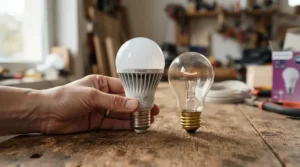
The core disagreement between these two technologies comes down to how they generate light in the first place. Incandescent bulbs heat a tungsten filament until it glows white-hot, a process so energy-inefficient that, per ENERGY STAR, roughly 90% of the electricity going into the bulb becomes heat rather than usable light. LEDs instead pass current through a semiconductor chip that emits light directly, with the leftover heat channeled into a small heat sink rather than radiating outward into the room.
That fundamental difference explains nearly every practical gap between the two: why LEDs stay cool to the touch, why they last fifteen to twenty-five times longer, and why regulators moved to phase out inefficient incandescent bulbs starting in August 2023, following updated Department of Energy efficiency standards. According to Wikipedia’s overview of the phase-out, the sale of most general-purpose incandescent bulbs became federally restricted that year, meaning most living rooms shopping for replacement bulbs today are choosing among LED options by default rather than by preference. The one area incandescents still win, narrowly, is upfront simplicity — no dimmer compatibility to check, no color temperature to match — but that convenience gets outweighed within a single billing cycle by the cost difference in most households.
Common Mistakes When Buying LED Light Bulbs
The single most common mistake is buying based on wattage instead of lumens, a holdover habit from decades of incandescent shopping — wattage measures energy draw, not brightness, and an LED using 9 watts can produce the same light as a 60-watt incandescent. A close second is ignoring color temperature consistency across a room; mixing 2700K and 5000K bulbs in the same space creates a jarring, mismatched look that many homeowners can’t quite identify the cause of. Buyers also frequently skip checking dimmer compatibility, assuming any dimmer works with any LED, which leads to flickering, buzzing, or a frustratingly narrow dimming range.
Another overlooked pitfall involves enclosed fixtures — installing a standard-rated bulb into a sealed globe or flush-mount fixture traps heat and can shorten lifespan well below the advertised rating, even though the bulb itself isn’t defective. Finally, some buyers assume “dimmable” printed on the box guarantees smooth performance with their specific switch, when in reality LED dimming quality varies noticeably by brand and by the switch’s own compatibility list — a detail worth checking before buying enough bulbs to relamp an entire room.
What to Expect: Real-World Performance in Your Living Room
Specs on a box only tell part of the story, so here’s what actually changes day to day. Instant-on is universal now — unlike older CFL bulbs that took a moment to reach full brightness, every LED in this guide lights up at full output the instant you flip the switch. Dimming feels different, too: LED dimming isn’t always perfectly linear like old incandescent dimmers, so you may notice most of the visible dimming happens in a narrower range near the bottom of the dial, which is normal LED behavior rather than a fault.
Heat is the most immediately noticeable shift for anyone upgrading from incandescents — you can touch a running LED bulb within a minute or two of it being on, something that would have burned your fingers on an old 60-watt incandescent. Color rendering differences show up most in fabric and skin tones under lamplight; a 90+ CRI bulb like the Cree Lighting Exceptional Series A19 or Feit Electric A19 LED will make a beige couch look genuinely beige, while a lower-CRI budget bulb can shift it slightly gray or washed out. Over months, expect a very gradual, barely perceptible dimming as LEDs age — true burnout, the way incandescents fail, is rare with quality LED bulbs.
Long-Term Cost & Maintenance: Electricity Cost Savings Breakdown
Here’s where the electricity cost savings case for LEDs becomes concrete rather than abstract. A 60-watt incandescent running three hours a day consumes about 65.7 kilowatt-hours annually; an 8.5-watt LED equivalent consumes roughly 9.3 kilowatt-hours over the same period. At a typical U.S. residential rate, that gap translates to real annual savings per bulb, and multiplying that across every fixture in an average living room — often five to eight bulbs between overhead lighting, lamps, and accent fixtures — turns a modest per-bulb number into a meaningful line item on your yearly power bill.
According to the Department of Energy’s Energy Saver program, lighting accounts for around 15% of the average home’s electricity use, and the average household saves about $225 annually in energy costs by switching to LED lighting throughout the home. Maintenance costs matter just as much: at roughly 1,000-1,200 hours of life, an incandescent running three hours nightly needed replacing about once a year, while a 15,000-25,000 hour LED can realistically go a decade or more without a swap — meaning the true total cost of ownership favors LEDs even though the shelf price per bulb is higher.
Bulb Lifespan Comparison: LED vs Incandescent
Rated lifespan is one of the clearest, most sourced numbers in this entire comparison, and the bulb lifespan comparison isn’t close. A standard incandescent bulb is rated for roughly 1,000-1,200 hours, meaning three hours of nightly use burns through it in about a year. The LED bulbs in this guide range from 15,000 hours on the low end (the Feit Electric ST19 Vintage Edison Filament LED) up to 25,000 hours on the high end (the Cree Lighting Exceptional Series A19), translating to roughly 13 to 23 years of typical evening use before replacement.
What that bulb lifespan comparison means practically: over a 15-year span, a household relying on incandescents in a single fixture would go through roughly 15 replacement bulbs, versus potentially zero to one replacement with a quality LED. That’s not just a convenience win — every incandescent replacement also means another manufacturing cycle, another package, another trip to the store, all of which the LED math simply avoids by design.
Light Quality Differences: Color, CRI, and Ambiance
Light quality differences between LED and incandescent light have narrowed dramatically since LEDs first hit the mainstream market, but they haven’t disappeared entirely. Older, cheaper LEDs earned a reputation for a slightly cooler, flatter look compared to incandescent’s naturally warm glow, and low-CRI budget bulbs can still exhibit that today. Modern 90+ CRI LEDs like the Feit Electric A19 LED and Cree Lighting Exceptional Series A19 largely close that gap, rendering colors close enough to incandescent warmth that most people can’t tell the difference in a blind comparison.
Where light quality differences still show up is in dimming behavior and color consistency across a room. Incandescent bulbs shift warmer as they dim, a visual effect some people find cozy; most LEDs hold a fairly consistent color temperature throughout the dimming range unless specifically engineered otherwise. If that warm-shift dimming effect matters to your living room’s ambiance, look specifically for LED bulbs marketed with “warm dim” or “incandescent-style dimming” technology rather than assuming every dimmable LED replicates it.
Safety, Regulations & Compliance: The Incandescent Phase-Out
The regulatory backdrop here isn’t a minor footnote — it directly explains why incandescent options have largely vanished from general retail shelves. Following updated efficiency standards from the U.S. Department of Energy, the sale of most general-purpose incandescent light bulbs became restricted starting August 1, 2023, requiring bulbs to meet a minimum efficacy standard that traditional incandescent filaments can’t hit. The Department of Energy directly addresses common misconceptions about this rule, clarifying that specialized incandescent bulbs — like appliance and oven-safe bulbs — remain exempt, while general household bulbs must now meet LED-level efficiency.
From a household safety standpoint, the shift also reduces fire risk tied to bulb heat near curtains, lampshades, and paper products, since incandescent bulbs running at high surface temperatures have long been a documented ignition source in residential fires. For anyone renovating or re-lamping a living room in 2026, the practical takeaway is straightforward: you’re shopping in an LED-first market by regulation, not just by trend, so budgeting for LED replacements — rather than hunting down legacy incandescent stock — is the more future-proof move.

Frequently Asked Questions
❓ Are LED bulbs really better than incandescent for a living room?
❓ Can I still buy incandescent light bulbs in 2026?
❓ What color temperature is best for living room LED lighting?
❓ Do LED bulbs work with my existing dimmer switch?
❓ How much can I actually save switching to LED in my living room?
Conclusion
The LED vs incandescent living room lights debate has largely settled itself, not because of marketing but because of math and federal regulation working in the same direction. Incandescents still have a nostalgic warmth that some people miss, but modern high-CRI LEDs have closed that gap close enough that most households won’t notice a meaningful difference in everyday use — while saving real money and eliminating the annual bulb-replacement chore in the process.
If you’re relamping an entire living room on a budget, start with the Feit Electric A19 LED or Sylvania A19 LED Soft White. If your fixtures are enclosed or hard to access, the Cree Lighting Exceptional Series A19 earns its slightly higher price through sheer longevity. And if your living room doubles as your entertaining space, the Philips Hue White and Color Ambiance A19 turns lighting into part of the experience rather than just background utility. Whichever direction you go, the switch pays for itself — in dollars, in convenience, and in fewer trips up a step ladder.
Recommended for You
- Floor Lamp vs Table Lamp: 7 Picks That Settle the 2026 Debate
- Choosing Ceiling Light Type: 7 Best Fixtures for 2026
- Uplighter Torchiere Lamp: 7 Bright Picks for Softer Rooms (2026)
Disclaimer: This article contains affiliate links. As an Amazon Associate, I earn from qualifying purchases. If you purchase products through these links, we may earn a small commission at no additional cost to you.
✨ Found this helpful? Share it with your friends! 💬🤗
