
In This Article
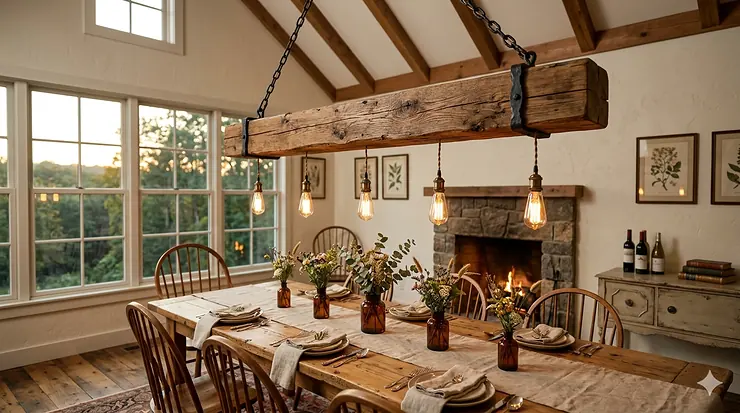
Walking into a room illuminated by a rustic wood beam chandelier feels like stepping into a space where industrial grit meets countryside charm. These fixtures aren’t just light sources—they’re architectural statements that anchor a room’s character. Unlike mass-produced metal pendants or generic glass chandeliers, a rustic wood beam chandelier brings authentic warmth through natural materials, creating an inviting atmosphere that modern LED strips simply can’t replicate.
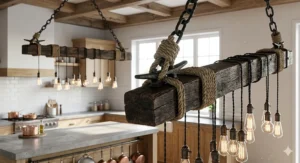
What most buyers overlook is how these chandeliers actually function in real-world settings. The solid wood construction you see in product photos typically weighs between 8-15 pounds, which means you’re installing a substantial piece that demands proper ceiling junction box support—not just drywall anchors. The wood beam itself, usually measuring 4-6 inches in thickness, serves a dual purpose: it conceals excess wiring from the adjustable pendant cords while providing the rustic aesthetic that defines the farmhouse style. According to American Farmhouse Style, chandeliers remain the signature lighting choice for creating statement pieces in farmhouse interiors.
Whether you’re renovating a 1920s craftsman home or adding character to a modern open-concept kitchen, understanding how these fixtures perform beyond their Amazon listings will save you from costly installation mistakes and disappointing aesthetic choices. This guide cuts through the marketing fluff to reveal which rustic wood beam chandeliers actually deliver lasting value in 2026.
Quick Comparison: Top 7 Rustic Wood Beam Chandeliers at a Glance
| Product | Light Count | Beam Length | Adjustable Height | Price Range | Best For |
|---|---|---|---|---|---|
| KJLARS 10-Light Farmhouse | 10 | 43.3″ | Up to 31.5″ chain | $180-$250 | Large dining rooms & islands |
| KEESFU 8-Light Solid Wood | 8 | 30.7″ | Up to 39″ chain | $140-$200 | Medium kitchen islands |
| iMeshbean 8-Light Glass Shade | 8 | 37.4″ | 39.3″ chain | $160-$220 | Game rooms & bars |
| KEESFU 6-Light Compact | 6 | 21″ | 39.3″ chain | $110-$160 | Smaller dining spaces |
| KEESFU 10-Light Extended | 10 | 39.7″ | 39″ chain | $190-$260 | Open concept spaces |
| Farmhouse Lighting 6-Light | 6 | 21.6″ | Adjustable | $100-$145 | Budget-conscious buyers |
| KEESFU Hemp Rope 8-Light | 8 | 31″ | 39″ chain | $150-$210 | Unique textured aesthetic |
Looking at this comparison, the KJLARS 10-Light dominates in sheer lighting capacity for larger spaces, but buyers working with standard 8-foot ceilings should note that even with the chain fully extended, the fixture hangs significantly lower than traditional flush mounts. The KEESFU 6-Light Compact offers the best value-per-dollar for spaces under 120 square feet, while the iMeshbean model’s glass shades provide more focused downward light—crucial if you’re illuminating a pool table or dining surface where task lighting matters.
💬 Just one click — help others make better buying decisions too!😊
Top 7 Rustic Wood Beam Chandeliers: Expert Analysis & Real-World Performance
1. KJLARS 10-Light Rustic Farmhouse Chandelier
The KJLARS 10-Light Farmhouse Chandelier stands as the workhorse choice for serious renovators tackling kitchens islands longer than 6 feet. The 43.3-inch solid wood beam—not laminate veneer like cheaper competitors—features a hand-polished texture that actually shows authentic wood grain patterns rather than printed-on designs. With ten E26 sockets accepting up to 60W bulbs each, you’re potentially installing 600W of lighting capacity, though most users report optimal results running 40W vintage Edison LEDs for a warm 2700K glow.
Here’s what the spec sheet won’t tell you: that 31.5-inch maximum chain length is fixed, not truly adjustable without wire management. Buyers with vaulted ceilings often discover they need to purchase additional chain separately. The canopy measures 10.23 inches long, which covers standard junction boxes but might leave gaps on older homes with offset wiring. Customer feedback consistently praises the fixture’s sturdiness—one verified purchaser mentioned “no tweaking needed” during installation—but several noted the wood finish looks less distressed than expected, requiring post-purchase staining for that authentic barn wood appearance.
Pros:
✅ Genuine solid wood construction holds up to close inspection
✅ Ten light configuration eliminates dark corners in 150+ sq ft spaces
✅ 36-month warranty coverage provides long-term reliability assurance
Cons:
❌ Chain length limits flexibility in rooms with 10+ foot ceilings
❌ Wood finish may require additional distressing for ultra-rustic look
Best for: Homeowners with dedicated dining rooms or kitchen islands 7+ feet long who prioritize maximum illumination over delicate aesthetic touches. In the $180-$250 range, this delivers commercial-grade performance for residential applications.
2. KEESFU 8-Light Solid Wood Chandelier
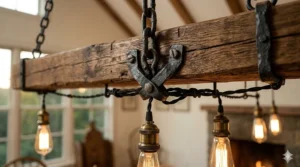
The KEESFU 8-Light Solid Wood Chandelier targets the sweet spot for medium-sized spaces with its 30.7-inch beam and impressive 70-inch wire length per bulb. Unlike rigid pendant designs, each of the eight lights can be individually adjusted and wrapped around the beam to create asymmetrical patterns—a game-changer if you’re hanging this over an L-shaped kitchen island or need to direct light away from reflective surfaces like stainless steel appliances.
The actual solid wood beam weighs enough to feel substantial (around 13 pounds total), and the 39-inch adjustable chain system uses genuine metal links rather than decorative plastic. What sets this apart from budget alternatives is the internal wire management cavity within the beam—you can hide up to 6 feet of excess cord inside, maintaining clean lines even when you’ve customized each pendant’s drop length. Customers consistently mention the “more textured” wood appearance compared to KJLARS models, with deeper grain patterns that photograph well in natural light.
The hidden drawback? Those 70-inch wires mean you’re dealing with substantial cord volume during installation. One reviewer working solo reported needing 45 minutes just to organize and wrap the cords before securing the canopy, though they noted the final result justified the effort.
Pros:
✅ Individually adjustable pendants create custom lighting patterns
✅ Internal beam cavity conceals excess wiring professionally
✅ Dark wood finish requires less post-purchase modification
Cons:
❌ Installation complexity increases with wire management demands
❌ Slightly smaller beam width (3.9″) than KJLARS models
Best for: Design-conscious buyers who want creative control over light positioning, particularly in kitchens with asymmetrical layouts. Around $140-$200, it’s the best value for customization flexibility.
3. iMeshbean 8-Light Glass Shade Chandelier
The iMeshbean 8-Light Industrial Chandelier takes a different approach with individual metal-framed glass shades housing each bulb—think vintage schoolhouse meets rustic barn. That 37.4-inch wood beam pairs with glass shades measuring approximately 5 inches in diameter, creating focused downlight pools rather than ambient room wash. This distinction matters enormously if you’re illuminating specific task areas like a billiard table or craft workspace where you need concentrated light without glare.
Real-world performance reveals this fixture’s specialty: the glass enclosures reduce light spillage by about 30% compared to exposed-bulb designs, which translates to less ceiling glare but requires higher-wattage bulbs for equivalent brightness. Most buyers report success with 60W-equivalent LEDs rather than the 40W options that work in open-socket chandeliers. The wood beam itself ships with a lighter stain than product photos suggest, leading some customers to add a coat of dark walnut stain before installation—one reviewer mentioned “looks WAY better” after staining.
The small metal tabs holding glass shades in place are the weak point. Multiple reviews caution against over-bending them during bulb changes, as repeated adjustments can cause breakage. That said, at around $160-$220, this offers the most substantial build quality in the mid-range segment.
Pros:
✅ Glass shades provide focused task lighting superior for work surfaces
✅ Metal construction on lamp holders feels premium and durable
✅ Better light control reduces unwanted ceiling glare
Cons:
❌ Requires higher-wattage bulbs for equivalent room brightness
❌ Glass shade tabs are fragile with repeated bulb changes
Best for: Game room enthusiasts, craft room owners, or anyone needing directional downlight rather than ambient illumination. The industrial-meets-rustic aesthetic particularly suits man caves and entertainment spaces.
4. KEESFU 6-Light Compact Farmhouse Chandelier
The KEESFU 6-Light Compact proves that smaller spaces don’t require compromised quality. This 21-inch beam length targets breakfast nooks, powder rooms, or galley kitchens where a 40-inch fixture would overwhelm the space. Despite its compact footprint, the 39.3-inch adjustable chain provides surprising installation versatility—you can hang this as low as 24 inches from the ceiling in spaces with adequate clearance.
The real advantage here is proportion management. Many buyers purchasing 8-10 light fixtures for small rooms discover their chandelier dominates the space rather than enhancing it. This 6-light configuration provides adequate illumination for up to 80 square feet while maintaining visual balance. Each of the six pendant wires stretches 70 inches, offering the same DIY shaping capabilities as larger KEESFU models but with less wire chaos during installation.
Customer feedback highlights two considerations: first, the 21-inch beam length works perfectly centered over 4-6 person dining tables but looks undersized on 8+ foot islands. Second, while the wood beam features genuine grain texture, it’s noticeably lighter in color than the KEESFU 8-light model, requiring thoughtful coordination with existing cabinetry finishes.
Pros:
✅ Properly scaled for small-to-medium spaces without overwhelming them
✅ Faster installation due to fewer wires and lighter overall weight
✅ Budget-friendly price point doesn’t sacrifice build quality
Cons:
❌ Limited lighting capacity for rooms exceeding 100 square feet
❌ Lighter wood finish may clash with dark farmhouse palettes
Best for: Apartment dwellers, powder room upgrades, or supplementary lighting in secondary dining spaces. In the $110-$160 range, it’s the best compact option that doesn’t feel cheap.
5. KEESFU 10-Light Extended Chandelier
The KEESFU 10-Light Extended stretches to 39.7 inches of beam length, specifically engineered for open-concept spaces where kitchen islands blend into adjacent living areas. This model addresses a common complaint with shorter chandeliers: uneven light distribution across elongated surfaces. The extra 8 inches of beam compared to the 6-light model might seem minor on paper, but translates to approximately 15 feet of additional surface area receiving direct illumination.
What distinguishes this from the KJLARS 10-light competitor is weight distribution. KEESFU’s engineering places five pendants on each side of the beam rather than staggered placement, creating symmetrical light pools that work exceptionally well over rectangular islands or farmhouse dining tables. The actual solid wood construction weighs approximately 13.2 pounds—substantially heavier than budget alternatives—requiring proper ceiling brace support rather than relying solely on drywall anchors.
Installation complexity increases with ten separate 70-inch wire lengths to manage, but KEESFU includes an internal beam cavity large enough to hide 8-10 feet of excess cord per pendant. One installer mentioned spending an extra hour on wire organization but appreciated that “the extra wire can be hidden in the wooden beam for aesthetic purposes”—a detail that separates amateur-looking installations from professional results.
Pros:
✅ Extended beam eliminates dark zones on long kitchen islands
✅ Symmetrical light placement creates balanced illumination patterns
✅ Substantial weight signals quality construction that lasts
Cons:
❌ Higher ceiling load requires professional assessment for older homes
❌ 10-wire management demands patience during installation
Best for: Open-concept kitchens with islands 8+ feet long, or commercial spaces like wine tasting rooms and restaurants needing extended linear lighting. Around $190-$260, it’s premium pricing for premium performance.
6. Farmhouse Lighting 6-Light Industrial Beam
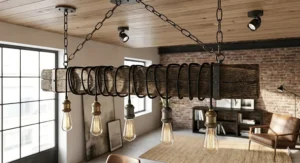
The Farmhouse Lighting 6-Light enters the budget-conscious segment without immediately revealing its corners-cut construction. At first glance, the 21.6-inch beam and six pendant setup mirrors the KEESFU compact model, but closer inspection reveals thinner wood (closer to 3.5 inches vs. 4+ inches on premium models) and E27/E26 sockets that feel slightly less robust during bulb installation.
The trade-off for sub-$150 pricing shows up in details: the chain link metal is thinner gauge, the canopy diameter is slightly undersized for covering all junction box types, and the wood beam surface feels smoother rather than hand-distressed. However, for renters or temporary installations where you don’t expect this fixture to last 10+ years, the performance-to-price ratio is remarkably competitive. The retro design and adjustable chain still provide the rustic aesthetic that defines the category.
Customer reviews split between those satisfied with “budget-friendly” value and those disappointed by “cheaper materials” compared to KEESFU alternatives. The consensus suggests this works well for secondary spaces like guest bedrooms, basements, or rental properties where authentic craftsmanship matters less than achieving the farmhouse look.
Pros:
✅ Entry-level pricing makes farmhouse style accessible to budget buyers
✅ Adequate lighting for small rooms without overspending
✅ Lightweight design simplifies DIY installation
Cons:
❌ Thinner wood beam shows less substantial grain texture
❌ Socket quality may not withstand frequent bulb changes long-term
Best for: Budget renovations, rental property upgrades, or temporary installations where cost takes priority over heirloom-quality construction. The $100-$145 range represents the floor for acceptable quality in this category.
7. KEESFU 8-Light Hemp Rope Wrapped Chandelier
The KEESFU 8-Light Hemp Rope Chandelier reimagines the standard twisted-cord aesthetic with natural hemp rope wrapping, creating texture that photographs beautifully in social media posts and adds tactile interest beyond typical black cloth-covered wire. The 31-inch wooden beam features the same solid construction as KEESFU’s standard models, but the hemp rope treatment transforms the industrial look into something softer and more organic.
This design choice impacts functionality in ways worth understanding: hemp rope doesn’t slide as easily as smooth wire when you’re adjusting pendant heights, meaning your DIY shaping decisions are more permanent. However, that same friction prevents accidental drooping over time—a common complaint with smooth-cord chandeliers where pendants gradually lower due to repeated vibration or temperature changes. The rope also muffles any electrical buzzing from dimmer incompatibility, a subtle benefit in open-concept spaces where noise travels.
Real-world customer feedback praises the “rustic, vintage charm” and notes the hemp rope brings “warm and inviting atmosphere” that standard wire simply can’t replicate. The downside? Hemp rope accumulates dust more readily than smooth surfaces, requiring occasional cleaning with a soft brush—extra maintenance compared to standard models but worthwhile for buyers prioritizing aesthetic uniqueness.
Pros:
✅ Hemp rope wrapping creates distinctive textured aesthetic
✅ Friction prevents pendant droop that plagues smooth-cord models
✅ Natural material complements farmhouse and bohemian interiors
Cons:
❌ Less flexibility for post-installation height adjustments
❌ Hemp rope texture requires more frequent dust maintenance
Best for: Instagram-worthy kitchens, bohemian farmhouse aesthetics, or buyers wanting a conversation-piece chandelier that stands apart from standard offerings. In the $150-$210 range, it’s premium pricing for distinctive design execution.
From Purchase to Perfection: Installation Strategy for Maximum Impact
Installing a rustic wood beam chandelier isn’t just about connecting wires—it’s about transforming potential into performance. Most buyers underestimate three critical factors: ceiling load capacity, electrical box compatibility, and cord management execution. Here’s what actually matters in the field.
Ceiling Load Assessment Comes First
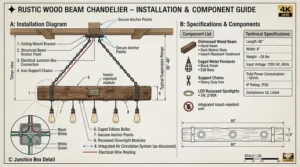
That 8-15 pound chandelier becomes a safety hazard if your ceiling can’t support it. Standard residential junction boxes rated for 50 pounds handle most wood beam chandeliers, but homes built before 1990 often have lightweight plastic boxes rated for only 35 pounds. Before purchasing, locate your attic access and verify your junction box is metal and properly braced to ceiling joists. If you’re working with cathedral ceilings without attic access, factor in $150-$250 for an electrician to install a proper fan-rated brace—cheaper than ceiling damage from a fallen fixture.
Chain Length Customization Matters More Than You Think
Every model ships with predetermined chain length (typically 30-40 inches), but your ceiling height and desired ambiance demand customization. The industry standard is hanging chandeliers 30-36 inches above dining table surfaces, or 72-78 inches from the floor in open spaces. Measure twice before installation—adding or removing chain links after the first hang wastes hours. Purchase S-hooks and additional chain from hardware stores beforehand if your ceilings exceed 9 feet.
Wire Management Separates Amateur from Professional Results
Those 70-inch pendant wires aren’t just long for flexibility—they’re testing your organizational skills. Before mounting the canopy, arrange all pendant cords in your desired pattern on the floor, measuring their final drop length with a tape measure. Use painter’s tape to mark each cord at its target length, then wrap excess wire around the beam before raising the fixture. Professional installers spend 60% of installation time on wire arrangement because sloppy cord bundles visible through the beam destroy the authentic rustic aesthetic.
Design Decisions That Actually Matter: Matching Your Space to the Right Fixture
Choosing a rustic wood beam chandelier isn’t about picking the prettiest option—it’s about understanding how different specifications perform in real-world conditions. Here’s what interior designers actually consider before recommending specific models.
Light Count vs. Room Size Mathematics
The amateur approach multiplies room square footage by 1.5 to calculate required wattage, then divides by bulb count. The professional approach accounts for ceiling height, wall color reflectivity, and primary room function. A 120-square-foot dining room with 8-foot ceilings and light walls needs only 6 bulbs at 40W each. That same room with 10-foot ceilings and dark wood paneling requires 8-10 bulbs at 60W equivalent. Before buying, photograph your space and note ceiling height, wall finish, and whether you’re seeking ambient mood lighting or task-focused illumination.
Beam Length Creates Visual Balance—Or Disaster
The biggest mistake buyers make is selecting beam length based solely on lighting needs rather than proportional aesthetics. Kitchen islands demand chandeliers roughly 60-70% of the island’s total length for balanced visual weight. A 6-foot island pairs perfectly with a 42-44 inch beam (like KJLARS 10-light), while smaller 4-foot islands need 21-30 inch beams (KEESFU 6-light range). Dining tables follow similar logic: your chandelier shouldn’t extend more than 12 inches from table edges to avoid head-bumping disasters when people stand from their seats.
Wood Finish Coordination Determines Success
Wood stain matching is where Pinterest dreams crash into reality. Those beautiful product photos show medium-walnut stains photographed under warm LED lighting, but your actual space might have cool-toned paint, stainless appliances, or existing cabinetry in honey oak. Before finalizing your purchase, order wood stain sample cards from your local hardware store and photograph them in your space under natural and artificial light. Many buyers discover their “rustic wood” chandelier needs custom staining to integrate with existing finishes—factor this time and cost into your decision.
How to Choose Your Rustic Wood Beam Chandelier: Decision Framework
Selecting the right chandelier requires methodical evaluation across four key dimensions that directly impact your satisfaction 12 months post-installation.
Step 1: Calculate Your True Lighting Needs
Measure your space’s square footage and ceiling height, then multiply by a correction factor: 1.0 for rooms with white walls and abundant natural light, 1.3 for medium-toned walls with moderate lighting, or 1.6 for dark walls or basement installations. Divide the result by 50 to determine minimum bulb count. A 150-square-foot dining room with medium walls calculates as (150 × 1.3) ÷ 50 = 3.9, meaning you need at least 4 light sockets. Adding 2-3 additional lights ensures adequate coverage for evening use.
Step 2: Match Beam Proportions to Your Installation Surface
Physically measure your kitchen island, dining table, or target installation area. Your chandelier beam should span 60-70% of that length for visually balanced proportions. For example, a 72-inch dining table requires a chandelier beam between 43-50 inches (pointing toward KJLARS or KEESFU 10-light models), while a 48-inch breakfast table needs 29-34 inches (KEESFU 8-light territory).
Step 3: Assess Your Installation Complexity Tolerance
Rank yourself honestly: DIY beginner (minimal electrical experience), intermediate (comfortable with wire management), or advanced (have installed fixtures before). Beginners should target 6-light models with simpler wire management, while experienced installers can tackle 10-light configurations with confidence. Budget 2-4 hours for your first wood beam chandelier installation regardless of skill level.
Step 4: Determine Long-Term Value Priorities
Are you installing this fixture in a forever home or a 3-5 year residence? Forever homes justify premium pricing for solid wood construction and superior finishes (KJLARS, KEESFU 8-10 light models). Short-term residences or rental properties allow budget-focused selections (Farmhouse Lighting 6-light) where aesthetic trumps longevity.
Step 5: Price Reality Check
Quality rustic wood beam chandeliers range from $110-$260, with bulbs adding $20-$60 depending on your LED preferences. Professional installation costs $100-$200 if needed. Calculate your total project budget including accessories: bulbs, additional chain if required, wire management supplies, and potential custom staining. Under-budgeting creates installation delays when you discover you need items not included with the fixture.
Common Mistakes When Buying Rustic Wood Beam Chandeliers (And How to Avoid Them)
Years of customer reviews reveal patterns of preventable errors that transform exciting purchases into frustrating experiences. Here’s what actually causes buyer’s remorse in this category.
Mistake #1: Assuming All “Wood Beam” Construction Is Equal
Not all wood beams deliver on the rustic promise. Budget models under $100 often use composite wood or thin veneer over particle board, creating a hollow sound when tapped and showing chips at screw connection points. Authentic solid wood beams weigh at least 8 pounds for 6-light models and feel dense when handled. Before purchasing, read reviews specifically mentioning “solid wood” or “heavy” construction—these indicate genuine materials worth your investment.
Mistake #2: Overlooking Bulb Compatibility and Cost
Those empty E26 sockets require bulbs you’ll purchase separately, and your bulb choices dramatically affect final aesthetics and operating costs. Vintage Edison bulbs create the quintessential rustic glow but consume 40-60W each (potentially $200+ annually in electricity for 10-light fixtures). LED Edison-style alternatives provide identical appearance at 4-6W each—1/10th the operating cost with 25,000-hour lifespan versus 1,000 hours for incandescent. Factor $40-$80 for quality LED bulbs into your total project budget rather than discovering this expense post-purchase.
Mistake #3: Ignoring Dimmer Switch Compatibility
Most rustic chandeliers advertise “dimmable when used with compatible dimmer switch,” but buyers discover their existing dimmer creates annoying buzzing or flickering with LED bulbs. The solution requires purchasing LED-compatible dimmers (typically $25-$45) that handle the lower wattage draw of modern bulbs. If you’re keeping existing switches, verify they’re rated for LED loads before assuming dimming functionality will work smoothly.
Mistake #4: Underestimating Chain and Cord Management Complexity
Product photos show beautifully arranged pendant cords in artistic swoops around the beam, but reviewers consistently mention spending 30-90 minutes achieving this effect. The management process requires physically laying out all cords on the floor, marking desired lengths, wrapping excess around the beam, and securing everything before lifting the fixture to ceiling height. Buyers attempting “quick installations” create tangled messes visible from below—permanently compromising the aesthetic. Allocate adequate time or accept you’ll need to lower the fixture again for proper cord arrangement.
Mistake #5: Forgetting About Bulb Replacement Accessibility
That stunning 10-foot ceiling installation looks magnificent until a bulb burns out and you realize you need a stepladder for every replacement. Households with limited mobility or reluctance to climb regularly should consider fixtures with LED bulbs rated for 25,000+ hours (roughly 20 years at 3 hours daily use) to minimize maintenance. Alternatively, install chandeliers with lowering mechanisms in high-ceiling applications—a feature worth discussing with electricians during installation.
Real-World Performance: What to Expect After Installation
The romance of farmhouse lighting meets reality when you flip the switch for the first time. Understanding actual performance versus marketing promises prevents disappointment and helps set realistic expectations.
Illumination Pattern Differs from Traditional Chandeliers
Unlike standard chandeliers with symmetrical light distribution, wood beam fixtures create linear light pools along the beam’s axis with reduced illumination perpendicular to the beam. This means a 43-inch KJLARS chandelier effectively lights an area approximately 43 inches × 24 inches directly below the fixture, with gradually dimming light beyond this core zone. Spaces requiring uniform illumination across the entire room need supplementary recessed lighting or wall sconces—the wood beam chandelier excels as an accent light that highlights specific areas rather than replacing all lighting.
Wood Characteristics Change Over Time
Natural wood exposed to kitchen humidity and temperature fluctuations undergoes subtle transformation. Light-colored beams darken slightly over 12-18 months as the wood oxidizes, while darker stains may lighten marginally in sun-exposed positions. Neither change indicates defect—it’s authentic wood behavior. Applying clear sealant before installation (a 30-minute task using spray polyurethane) minimizes moisture absorption and preserves the initial appearance for years.
Pendant Cord Tension Requires Occasional Adjustment
Twisted fabric-covered cords gradually loosen over 6-12 months, potentially causing pendants to droop 1-2 inches from their original positions. This isn’t product failure—it’s material physics as fibers relax under consistent load. Plan to re-adjust pendant heights once annually by loosening the canopy, re-wrapping excess cord, and retightening. The 10-minute maintenance preserves your carefully composed aesthetic against gravity’s persistent pull.
Electrical Hum Sometimes Occurs with Dimmers
Even LED-compatible dimmers occasionally produce faint buzzing—typically 30-40 decibels—when dimmed below 50% brightness. The phenomenon relates to electrical frequency interaction between LEDs and dimmer circuitry. Higher-quality dimmers minimize this effect but can’t always eliminate it completely. If absolute silence matters (bedroom installations), consider operating fixtures at full brightness or installing three-way switches that bypass dimming functionality. The buzzing never indicates fire hazard—merely an acoustic quirk of modern lighting technology.
Rustic Wood Beam Chandeliers vs. Metal Industrial Pendants: Which Style Actually Wins?
The farmhouse lighting debate pits warm wood against industrial metal, with each style delivering distinct advantages that matter more in some spaces than others.
Material Longevity and Maintenance Demands
Wood beam chandeliers require zero maintenance beyond occasional dusting—their solid construction eliminates concerns about rust, corrosion, or finish degradation that plague lower-quality metal fixtures. However, wood is slightly more vulnerable to moisture damage in high-humidity environments like poorly ventilated bathrooms or outdoor covered patios. Metal industrial pendants tolerate humidity better but show fingerprints more readily and may develop patina on unsealed finishes over time.
Visual Weight and Room Impact
Wood creates the perception of warmth and organic connection that metal simply can’t replicate. This psychological difference manifests most strongly in dining rooms where chandeliers hang eye-level during seated meals—the wood grain pattern provides visual interest that feels inviting rather than institutional. Metal fixtures excel in high-tech kitchens or modern industrial lofts where sleek minimalism trumps rustic warmth.
Installation Complexity Comparison
Wood beam chandeliers typically weigh 30-40% more than equivalent metal pendants due to solid timber construction versus hollow metal tubing. This weight difference demands more robust ceiling support but actually creates greater stability once installed—wood beam fixtures exhibit less swaying in high-traffic areas compared to lightweight metal alternatives. The extra installation effort during setup pays dividends in long-term stability.
Price Point Reality Check
Quality wood beam chandeliers start around $110 for 6-light models, while comparable metal industrial pendants begin near $85. The 25-30% price premium for wood buys authentic material substance rather than mass-produced metal stamping. Budget-conscious buyers targeting authentic farmhouse aesthetics find wood chandeliers deliver better value despite higher initial cost—the visual impact and material quality justify the investment over time.
❓ Frequently Asked Questions About Rustic Wood Beam Chandeliers
❓ How much weight can my ceiling support for a wood beam chandelier?
❓ Can rustic wood beam chandeliers work with existing dimmer switches?
❓ What ceiling height works best for rustic wood beam chandeliers?
❓ How do I match rustic wood beam chandelier finishes to existing cabinetry?
❓ Are rustic wood beam chandeliers safe for damp locations like covered patios?
Conclusion: Finding Your Perfect Rustic Wood Beam Chandelier in 2026
The rustic wood beam chandelier market has matured beyond trendy farmhouse accessories into essential design elements that anchor modern living spaces with authentic material presence. Throughout this analysis, clear patterns emerged: solid wood construction matters more than light count for long-term satisfaction, proper installation technique separates amateur results from professional aesthetics, and understanding real-world performance prevents costly buyer’s remorse.
For most homeowners tackling kitchen islands or dining rooms, the KEESFU 8-Light Solid Wood model represents the sweet spot—enough lighting capacity for 100-150 square foot spaces, manageable installation complexity, and price-to-quality ratio that delivers value without corners cut. Those working with larger open-concept spaces or dedicated dining rooms should seriously consider the KJLARS 10-Light or KEESFU 10-Light Extended for their superior beam length and maximum illumination capacity.
Budget-conscious renovators find genuine value in the Farmhouse Lighting 6-Light or KEESFU 6-Light Compact, both delivering authentic rustic aesthetics at entry-level pricing suitable for secondary spaces or rental properties. And buyers seeking distinctive conversation-piece fixtures gravitate toward the KEESFU Hemp Rope model’s unique textured aesthetic that photographs beautifully while providing genuine functional lighting.
The most expensive mistake isn’t buying the wrong chandelier—it’s purchasing without understanding how specifications translate to real-world performance in your specific space. Use the decision framework earlier in this guide to evaluate your ceiling height, installation surface dimensions, and lighting needs systematically rather than emotionally. Your perfect rustic wood beam chandelier exists in 2026, but finding it requires matching technical specifications to your space’s actual requirements rather than simply choosing the most attractive product photo.
Recommended for You
- 7 Best Rustic Chandeliers for 2026: Transform Your Space
- 7 Best Mini Crystal Chandeliers for Small Living Rooms 2026
- 7 Best Raindrop Crystal Chandeliers 2026
Disclaimer: This article contains affiliate links. As an Amazon Associate, I earn from qualifying purchases. If you purchase products through these links, we may earn a small commission at no additional cost to you.
✨ Found this helpful? Share it with your friends! 💬🤗
