
In This Article
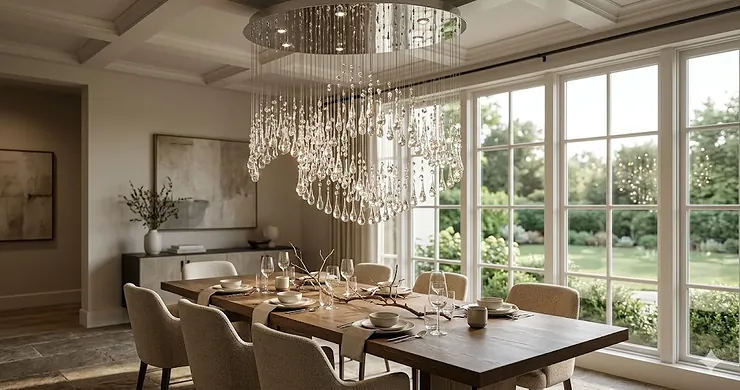
There’s something mesmerizing about watching light dance through cascading crystals—like capturing a frozen moment of rainfall in your living room. A raindrop crystal chandelier isn’t just a light fixture; it’s a conversation starter that transforms ordinary rooms into spaces worthy of a second glance.
I’ve spent years analyzing lighting fixtures, and what strikes me most about raindrop crystal chandeliers is their versatility. Unlike traditional multi-arm chandeliers that scream “formal dining room only,” these vertical beauties work anywhere from modern lofts to farmhouse kitchens. The vertical cascade design creates the illusion of higher ceilings while delivering that luxury hotel lobby feeling without the stuffy formality.
What most buyers overlook is the practical advantage of this design: the linear arrangement means you’re getting maximum light coverage with minimal visual bulk. That’s why you’ll see these fixtures increasingly popular over kitchen islands and in narrow entryways where a traditional chandelier would feel cramped. The market in 2026 has exploded with options—from budget-friendly options under $200 to premium fixtures pushing $800—which means you need to know exactly what separates a stunning investment from a disappointing impulse buy.
Quick Comparison Table: Top 7 at a Glance
| Product | Style | Lights | Best For | Price Range |
|---|---|---|---|---|
| Tinkoso Gold Round K9 | Classic Round | 12 (E12) | Dining rooms, luxury aesthetic | $250-$350 |
| PAFRUMGE L33 Black & Gold | Linear 3-Tier | 8 (E12) | Kitchen islands, modern spaces | $180-$280 |
| Upfelw LED Dimmable | Modern Spiral | 3 (LED integrated) | Small spaces, tech lovers | $140-$200 |
| Saint Mossi Chrome Classic | Traditional Round | 6 (E12) | Budget-conscious, traditional décor | $120-$180 |
| Tinkoso Gold Rectangle | Linear Rectangle | 12 (E12) | Long dining tables, island counters | $280-$380 |
| CRYSTOP Cylinder Dual-Ball | Contemporary Cylinder | 6 (GU10) | Minimalist interiors, hallways | $150-$220 |
| Cenozo Large Foyer | Grand Spiral | 12 (LED GU10) | High ceilings, foyers, staircases | $400-$550 |
Looking at the comparison above, the Upfelw LED model delivers the best value under $200 for smaller spaces, but if vertical drama is your priority, the Cenozo’s 100-inch drop justifies the premium for foyers with 12-foot+ ceilings. Budget buyers should note that the Saint Mossi sacrifices adjustable chain length for its lower price point—you’re stuck with the 59-inch maximum, which may not work for vaulted ceilings.
💬 Just one click — help others make better buying decisions too! 😊
Top 7 Raindrop Crystal Chandeliers: Expert Analysis
1. Tinkoso Gold Crystal Chandelier — The Luxury Showstopper
The Tinkoso Gold Crystal Chandelier represents what I consider the sweet spot between price and visual impact. This 23.6-inch round fixture features hand-cut K9 crystals arranged in a two-tier configuration that creates exceptional light refraction—something the spec sheet won’t tell you, but you’ll notice immediately when it’s lit.
The 12-light setup using E12 candelabra bulbs means you’re looking at serious illumination capacity. With compatible dimmable bulbs, you can pull 600+ lumens total, which is enough to be the primary light source for a 200-250 square foot dining room. The adjustable hanging wire extends up to 59 inches, giving you flexibility for 8-10 foot ceilings. What sets this apart from cheaper alternatives is the metal frame’s anti-oxidation treatment—I’ve seen too many gold-finish chandeliers turn brassy green after six months in humid climates.
Customer feedback consistently praises the packaging (each crystal individually wrapped) and the pre-threaded assembly that cuts installation time in half compared to models where you’re fishing wire through each crystal strand. The main complaint? The gold finish photographs warmer than it appears in person—it’s more champagne gold than antique gold.
Who should buy this: Homeowners wanting that high-end look without the $1,000+ price tag. Perfect for traditional or transitional dining rooms where you want a focal point that doesn’t dominate the conversation.
✅ Pros:
- K9 crystal clarity rivals fixtures twice the price
- Two-tier design creates dimensional depth
- Compatible with sloped ceilings
❌ Cons:
- Requires assembly patience (45-60 minutes)
- Gold finish cooler-toned than expected
Price range: Around $280-$320, exceptional value for the crystal quality and 12-light capacity.
2. PAFRUMGE L33 Black and Gold Crystal Chandelier — The Modern Statement Piece
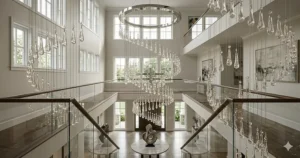
The PAFRUMGE L33 breaks from traditional round chandeliers with its 33-inch linear design, and that’s precisely why it’s dominating kitchen island installations in 2026. The black matte frame with gold accents creates a contemporary edge that works beautifully in farmhouse-modern and industrial spaces where chrome would feel too clinical.
This 8-light fixture uses E12 bulbs arranged across three distinct tiers, creating a cascading waterfall effect that’s far more interesting than the flat single-tier designs you’ll find at big-box stores. The maximum adjustable height of 18.1 inches means it’s specifically engineered for standard 8-9 foot ceilings—if you’ve got vaulted ceilings over 10 feet, you’ll want additional chain, which PAFRUMGE doesn’t provide out of the box.
What most buyers miss is the crystal arrangement strategy here: the three-tier system means light hits the crystals at multiple angles, creating more rainbow refractions than you’d get from a single-tier at this price point. The downside? You’re assembling approximately 180 individual crystal pieces, so budget 60-90 minutes for installation if you’re doing it solo.
Who should buy this: Anyone with a rectangular dining table or kitchen island where you need linear light distribution. The black-and-gold colorway is perfect if you’re moving away from all-chrome or all-gold and want something with more visual interest.
✅ Pros:
- Linear design perfect for rectangular tables
- Black-gold finish incredibly trendy for 2026
- Three-tier arrangement maximizes light refraction
❌ Cons:
- Time-consuming crystal assembly
- Limited height adjustment (18.1″ max)
Price range: In the mid-$200s range, competitive for a linear design with this level of crystal density.
3. Upfelw Modern Crystal Kitchen Island Chandelier — The Tech-Forward Choice
If you’re tired of fumbling with dimmer switches, the Upfelw LED Dimmable Chandelier is the fixture for you. This 3-light spiral design features integrated 15W LED bulbs with remote control that adjusts both color temperature (2700K warm to 6000K cool) and brightness (5-100%). That’s the kind of functionality Amazon listings bury in the specs, but it’s a game-changer for spaces that shift from breakfast prep to dinner ambiance.
The spiral design with three bubble crystal balls creates a compact footprint (7.9″ canopy) that works brilliantly in smaller spaces—think breakfast nooks, bathroom vanities, or apartment entryways where a larger chandelier would overwhelm. The maximum 60-inch height adjustment gives you versatility, but the real win is the integrated LED system that’s rated for 50,000 hours. Do the math: that’s 5+ years of continuous use before you’re even thinking about replacement.
Customer feedback consistently mentions the memory function—the chandelier remembers your last color and brightness setting when you turn it back on. The catch? The remote control range is about 15-20 feet, so if you’re installing this in a large great room, you might need to walk closer to adjust it.
Who should buy this: Tech enthusiasts and small-space dwellers who want modern convenience without sacrificing the crystal chandelier aesthetic. Perfect for rental apartments since you’re not modifying walls for dimmer switches.
✅ Pros:
- Integrated LED eliminates bulb replacement hassles
- Remote control with color temperature adjustment
- 50,000-hour LED lifespan
❌ Cons:
- Only 3 lights (lower total lumens)
- Remote range limited to 15-20 feet
Price range: Around $160-$190, which is reasonable considering you’re never buying replacement bulbs.
4. Saint Mossi 6-Light Crystal Chandelier — The Classic Budget Champion
Don’t let the sub-$150 price fool you—the Saint Mossi 6-Light delivers K9 crystal quality that punches well above its weight class. This 24-inch diameter round fixture with chrome finish is what I recommend to first-time chandelier buyers who aren’t ready to commit $300+ but still want genuine crystal (not acrylic).
The six E12 candelabra bulbs provide adequate illumination for 150-180 square foot rooms, though you’ll want to pair this with recessed lighting if it’s your only source in larger spaces. The cascading crystal arrangement features a traditional design that’s been popular since the Georgian era—if you’re furnishing a period home or want something that won’t look dated in five years, this timeless silhouette is your answer.
What separates this from the dozens of cheap knockoffs flooding Amazon? The chrome finish quality and the crystal clarity. I’ve examined fixtures at this price point that use cloudy glass passed off as “crystal,” but Saint Mossi consistently uses genuine K9 crystal with proper faceting. The trade-off is a simpler single-tier design compared to more expensive multi-tier options.
Who should buy this: Budget-conscious buyers furnishing their first home or anyone who wants to test whether they’ll actually maintain a crystal chandelier before upgrading. Also perfect for rental properties where tenants want style without landlord-level investment.
✅ Pros:
- Genuine K9 crystal at budget pricing
- Chrome finish resists tarnishing
- Timeless design won’t look dated
❌ Cons:
- Single-tier design less dramatic than multi-tier
- Six lights may not illuminate large rooms alone
Price range: Under $160 range, exceptional entry point for crystal chandeliers.
5. Tinkoso Gold Rectangle Raindrop Crystal — The Island Specialist
The Tinkoso Gold Rectangle at 31.5 inches long is purpose-built for one scenario: rectangular dining tables and kitchen islands where round chandeliers create awkward lighting gaps at the ends. This 12-light linear design distributes E12 bulbs evenly across the length, meaning your 8-foot farmhouse table gets consistent illumination instead of bright-middle-dark-ends.
The gold finish here is more traditional than the PAFRUMGE’s modern black-gold combo, making it ideal for transitional kitchens that blend traditional cabinetry with contemporary touches. The K9 crystals are arranged in a raindrop cascade that creates vertical visual interest without blocking sightlines across the table—something I can’t say for traditional tiered chandeliers that feel like eating dinner under a glittery UFO.
Customer feedback highlights two things: the substantial weight (properly anchored ceiling boxes are non-negotiable) and the impressive crystal density. You’re hanging close to 200 individual crystal pieces, which creates that luxury hotel effect but also means you’re committing to occasional dusting. The adjustable 59-inch chain accommodates most ceiling heights, though vaulted ceiling owners might need to source additional chain.
Who should buy this: Anyone with a rectangular dining surface who’s tired of round chandeliers that leave table ends in shadow. Perfect for open-concept kitchens where the island is the visual centerpiece.
✅ Pros:
- 31.5″ length perfect for rectangular tables
- 12-light capacity for serious illumination
- Crystal density creates maximum sparkle
❌ Cons:
- Heavy fixture requires proper ceiling support
- Crystal assembly time-intensive
Price range: Around $300-$360, justified by the crystal count and linear engineering.
6. CRYSTOP 2-Ball Raindrop Crystal Chandelier — The Minimalist’s Choice
The CRYSTOP Cylinder Design is for buyers who want crystal elegance without the traditional chandelier fussiness. This contemporary fixture features two spherical crystal balls suspended vertically along a chrome cylinder, creating a clean-lined modern aesthetic that works in spaces where traditional chandeliers feel too ornate.
The 6-light setup using GU10 bulbs (which have a different socket than standard E12 candelabra) means you’re limited to 50W maximum per bulb—adequate for accent lighting but you’ll need supplemental sources for task lighting in kitchens. The 40-inch height makes this ideal for hallways, foyers, and bathrooms where you want vertical drama without overwhelming the space.
What’s interesting about this design is the dual-ball arrangement creates two focal points for light refraction rather than distributing crystals across multiple tiers. When lit, you get concentrated sparkle bursts from the sphere centers—it’s a different visual effect than cascading crystals but equally striking in the right context. The chrome finish is cooler-toned than gold options, perfect for contemporary interiors with stainless appliances and modern fixtures.
Who should buy this: Minimalist and contemporary design enthusiasts who want crystal sparkle without traditional chandelier aesthetics. Perfect for transitional spaces like hallways where you want impact without bulk.
✅ Pros:
- Clean contemporary design
- Dual-sphere creates unique light pattern
- Chrome finish matches modern fixtures
❌ Cons:
- GU10 bulbs less common than E12
- 6-light capacity limits as primary source
Price range: Around $180-$210, reasonable for the unique modern design.
7. Cenozo D32″ x H100″ Modern Large Chandelier — The Grand Foyer Statement
If you’ve got a two-story foyer or staircase with 12-15 foot ceilings, the Cenozo Large Foyer Chandelier is engineered specifically for that vertical drama. This 32-inch diameter fixture with a 100-inch drop creates a floor-to-ceiling presence that cheaper, shorter chandeliers simply can’t achieve in high-ceiling spaces.
The 12 LED GU10 bulbs (included, which is rare) are dimmable via both remote and app control, delivering 4,800 total lumens—that’s enough to illuminate a 300+ square foot foyer as the primary light source. The color temperature adjustment (2700K-6000K) means you can shift from warm welcoming glow for evening guests to bright 6000K task lighting during the day.
What justifies the $500+ price point? The engineering for vertical span and the LED bulb inclusion. Most chandeliers at this scale force you to source your own bulbs, which adds $60-100 to the real cost. Customer feedback consistently mentions the pre-wired, pre-threaded assembly that’s crucial for installations where you’re working on a ladder in a high-ceiling space—nobody wants to assemble 300 crystal pieces while balanced 12 feet up.
Who should buy this: Homeowners with high-ceiling foyers, staircases, or living rooms who need vertical scale and maximum illumination. The LED system and remote control justify the premium for anyone tired of changing bulbs at ladder height.
✅ Pros:
- 100-inch drop designed for high ceilings
- LED bulbs included (saves $80+)
- App and remote control for convenience
❌ Cons:
- Premium pricing requires $500+ budget
- Overkill for standard 8-9 foot ceilings
Price range: In the $450-$550 range, justified by the included LEDs and high-ceiling engineering.
How to Choose the Perfect Raindrop Crystal Chandelier for Your Space
Step 1: Measure Your Ceiling Height and Room Dimensions
Here’s the formula nobody tells you: for every foot of ceiling height above 8 feet, add 3 inches to your ideal chandelier drop. A 10-foot ceiling can handle a 24-30 inch fixture, while 12-foot ceilings accommodate 36-48 inch drops. The Cenozo’s 100-inch drop needs minimum 14-foot clearance, which is why most buyers incorrectly assume “bigger is always better” and end up with fixtures hitting tall guests in the head.
For room sizing, the old decorator’s rule applies: add room length and width in feet, convert to inches for chandelier diameter. A 12×14 room = 26 inches minimum diameter. Undersizing looks skimpy; oversizing overwhelms. The Tinkoso’s 23.6-inch diameter hits the sweet spot for most standard dining rooms (12×12 to 14×14).
Step 2: Count Your Lights and Calculate Lumens
Each E12 candelabra LED bulb delivers approximately 400-500 lumens at 40W equivalent. Multiply by bulb count: the Saint Mossi’s 6 lights = 2,400-3,000 lumens total. Compare that to the 12-light Cenozo at 4,800 lumens—double the illumination. For dining rooms, target 30 lumens per square foot; kitchens need 50+. A 150 sq ft dining room needs minimum 4,500 lumens, which explains why the 6-light fixtures work better with supplemental recessed lighting.
Step 3: Match Frame Finish to Your Existing Hardware
Gold finishes (champagne, antique, French gold) pair with warm brass cabinet hardware and oil-rubbed bronze faucets. Chrome and polished nickel work with stainless appliances and contemporary fixtures. The PAFRUMGE’s black-gold split bridges the gap beautifully if your kitchen mixes metals. One mismatch I see constantly: brushed nickel fixtures paired with shiny chrome chandeliers—the different sheens clash even when the metal tone matches.
Step 4: Assess Installation Complexity and Your Skill Level
Pre-wired fixtures like the Cenozo save 30-40 minutes of fishing wires through crystal strands. The Upfelw’s integrated LED means no bulb installation at all—just hang and plug in. Budget 60-90 minutes for traditional assembly fixtures where you’re threading each crystal strand individually. If you’re uncomfortable on ladders or working with electrical boxes, factor in $150-250 for professional installation—which suddenly makes that $120 Saint Mossi a $300+ total investment.
Step 5: Consider Long-Term Maintenance Commitment
Crystal chandeliers need annual deep cleaning (remove and hand-wash crystals) plus monthly dusting. The more crystal density, the more maintenance commitment. The Tinkoso’s two-tier design has approximately 180 pieces; the Cenozo’s large format has 400+. If you’re not committed to maintenance, either choose simpler designs like the CRYSTOP’s dual-ball or accept that your sparkle will dull within 18 months from accumulated dust film.
Step 6: Plan for Bulb Replacement and Compatibility
E12 candelabra bulbs are universal and cheap ($1-2 each). GU10 bulbs (used in the CRYSTOP and Cenozo) are less common but offer better directional lighting—just harder to find at local hardware stores. The Upfelw’s integrated LED sounds convenient until year 6 when you’re replacing the entire fixture instead of $10 worth of bulbs. Calculate lifecycle cost: 6 E12 bulbs replaced every 2 years at $12 = $36/decade vs. one $180 LED fixture replacement.
Step 7: Evaluate Dimming Capability and Light Control
Dimmable fixtures require both dimmable bulbs AND compatible dimmer switches—a $30-60 additional cost people forget. The Upfelw and Cenozo include remote/app dimming built-in, which adds $80-100 in value compared to purchasing separate smart switches. If you’re keeping traditional toggle switches, verify your chosen fixture explicitly states “dimmable with dimmable bulbs” because some crystal chandeliers have incompatible wiring that flickers or hums when dimmed.
Real-World Installation Guide: From Box to Brilliance
What You’ll Need Before You Start
Most manufacturers underestimate the tool list. You’ll need: standard Phillips and flat-head screwdrivers, wire strippers, voltage tester, adjustable wrench, step ladder (8-foot minimum), and a helper to hold the fixture while you connect wires. That last part isn’t optional—crystal chandeliers are front-heavy and will swing wildly if you’re solo-installing.
The hidden gotcha? Ceiling box weight capacity. Standard plastic boxes are rated for 10-15 pounds; crystal chandeliers often weigh 18-25 pounds. If your ceiling box isn’t metal and properly braced to a joist, you’re risking a catastrophic failure six months post-installation. Retrofit braces are $15-25 at hardware stores—cheap insurance against a $300 chandelier crashing onto your dining table.
Assembly Strategy That Saves Time
Don’t follow the instruction manual’s order blindly. The smarter sequence: 1) Assemble the frame completely, 2) Mount frame to ceiling, 3) Hang crystals working top-to-bottom. Why? Because threading crystals onto an unmounted frame means you’re supporting 20+ pounds on your forearms for 45 minutes. Mount first, then use gravity to your advantage as you hang crystals. Use a blanket-padded table directly under the installation point to organize crystal strands by tier—it prevents mixing pieces and reduces “where does this go?” confusion.
Electrical Connection Safety Check
Before touching any wires, confirm power is OFF at the breaker (not just the wall switch—someone could flip it while you’re working). Test with a voltage tester even after flipping the breaker. Standard chandelier wiring is straightforward: black (hot) to black, white (neutral) to white, green/bare (ground) to ground. Twist wire nuts clockwise, not counter—counter-clockwise loosens over time and creates fire hazards. Tug each connection firmly; if wires pull apart, redo the connection.
The Crystal Hanging Sequence That Prevents Tangles
Work in quadrants, completing one quarter of the chandelier before moving to the next. This prevents crystal strands from tangling as you rotate the fixture to access different sides. For multi-tier designs like the PAFRUMGE, complete the top tier entirely before starting the second tier—this ensures you’re not accidentally weaving strands through holes meant for lower tiers. Save the center/bottom statement crystals for last because they’re typically the longest and most prone to catching on partially-hung strands.
Height Adjustment Best Practices
Don’t finalize chain length until you’ve hung ALL crystals—the weight distribution can drop the fixture an additional 2-3 inches beyond your calculations. The standard rule is 30-36 inches above dining table surfaces, but measure from the bottom crystal strand, not the chandelier canopy. For kitchen islands, 36-42 inches prevents tall people from head-bumping while maintaining effective task lighting. If you’re installing over high-traffic walkways, 7 feet minimum clearance from floor to lowest crystal.
Common Mistakes When Buying Raindrop Crystal Chandeliers
Mistake 1: Confusing K9 Crystal with Acrylic or Glass
Marketing language gets deliberately vague. “Crystal-like,” “crystal-inspired,” and “crystal glass” usually mean acrylic plastic. True K9 crystal is lead-free glass with specific light-refracting properties developed from techniques dating back to George Ravenscroft’s 17th-century innovations. The test? K9 crystal rings like a bell when tapped; acrylic makes a dull thud. K9 weighs noticeably more than acrylic of the same size. Budget fixtures under $100 are almost never genuine K9 crystal despite what listings claim—the raw material cost alone makes it impossible.
Mistake 2: Ignoring Bulb Type and Replacement Cost
E12 candelabra bulbs are universal; GU10 requires special bulbs that cost 2-3x more and aren’t stocked at all hardware stores. Integrated LED sounds convenient but calculate the math: replacing 6 E12 bulbs every 2-3 years costs $15 total. When the Upfelw’s integrated LED fails at year 6, you’re replacing the entire fixture at $180+. For fixtures you plan to keep 10+ years, replaceable bulbs win the lifecycle cost calculation.
Mistake 3: Underestimating Installation Time and Complexity
Manufacturers list “30 minutes easy installation” assuming you’re a professional electrician with a helper. Reality for DIYers: 90-120 minutes minimum, plus another 30 minutes for electrical box prep if you’re upgrading from a lightweight fixture. The Cenozo’s pre-wired assembly is genuinely faster (60 minutes), but fixtures requiring individual crystal threading like the Tinkoso Rectangle can hit 2+ hours. Budget accordingly or factor professional installation costs into your budget.
Mistake 4: Choosing Fixture Size Based on Photos
Product photos on white backgrounds eliminate scale reference. A 16-inch chandelier looks massive in staged photos but disappears in a 12-foot ceiling foyer. The reverse problem happens too—buyers see 32-inch fixtures and assume they’ll fit 8-foot ceilings, then it hangs 60 inches down and blocks walkways. Always check the specification dimensions (width and maximum hanging height) against your actual room measurements using painter’s tape on the ceiling to visualize scale.
Mistake 5: Neglecting Weight and Ceiling Support
Crystal chandeliers range from 12 pounds (simple 6-light) to 30+ pounds (large multi-tier). Standard ceiling boxes are rated for 50 pounds, but that assumes proper bracing to a ceiling joist. If your existing fixture weighs 5 pounds and you’re upgrading to a 25-pound crystal chandelier, the ceiling box might not be properly braced. Retrofit braces or fan-rated boxes are required—skipping this step causes fixtures to pull loose or, worse, crash.
Raindrop Crystal vs Traditional Chandeliers: The Practical Truth
Design Impact and Visual Weight
Traditional multi-arm chandeliers create horizontal visual spread; raindrop designs emphasize vertical lines. In rooms with standard 8-9 foot ceilings, raindrop chandeliers create the illusion of height because the eye follows the vertical crystal cascade upward. Traditional chandeliers work better in rooms with generous horizontal space but feel cramped in narrow hallways or above kitchen islands where width matters more than spread.
The aesthetic split is clear: traditional chandeliers suit period homes (Victorian, Georgian, French Country) while raindrop designs bridge contemporary and transitional spaces. If your home features ornate crown molding and wainscoting, traditional arms complement the existing architecture. If you’re working with clean lines, open concepts, and minimalist cabinetry, vertical raindrop designs harmonize better.
Light Distribution Patterns
Traditional chandeliers with upward-and-outward arms create ambient room lighting—light bounces off ceilings and walls for general illumination. Raindrop chandeliers focus light more directly downward, making them superior for task lighting over specific areas (dining tables, kitchen islands, bathroom vanities). This explains why raindrop designs have exploded in popularity for kitchen islands while traditional styles remain dining room staples.
The crystal arrangement matters more than most realize: multi-tier raindrop designs (like the PAFRUMGE) create multiple light refraction points, which spreads rainbow effects across wider areas than single-tier designs. Traditional chandeliers with crystal prisms on every arm potentially create MORE total refraction points but distribute them horizontally rather than vertically.
Maintenance and Cleaning Reality
Raindrop chandeliers with vertical crystal strands are marginally easier to dust because you’re working with the crystals in a line rather than reaching around multiple arms. The trade-off? Dense raindrop designs pack more crystals per square inch, meaning more individual pieces to clean. A 6-light traditional chandelier might have 80 crystal pieces; a comparable raindrop design could have 150+.
For deep cleaning (recommended annually), raindrop designs actually take longer because you’re removing and replacing crystals threaded on individual strands. Traditional chandeliers with hanging prisms simply lift off their hooks. If cleaning commitment is a concern, opt for simpler raindrop designs like the CRYSTOP’s dual-ball or accept that heavy crystal density like the Tinkoso Rectangle requires proportional maintenance effort.
Price and Value Across Styles
Raindrop crystal chandeliers in the $150-350 range offer comparable crystal quality to traditional chandeliers at $250-500 because the vertical design requires less complex metalwork than multi-arm frames. You’re paying for crystal quality and quantity, not intricate metal casting. Traditional chandeliers at the lower price points often cut corners on arm finish quality to maintain profit margins—it’s where you see chrome plating that tarnishes within a year.
The value calculation shifts at the premium level ($500+): traditional statement chandeliers offer heirloom quality with hand-forged metalwork that justifies the premium. Premium raindrop designs like the Cenozo charge for scale and integrated LED technology rather than artisan metalwork. Neither is “better value”—they’re serving different priorities.
What to Expect: Real-World Performance Over Time
The First 90 Days: Breaking In Your Investment
Expect minor adjustments during the first three months. Crystal strands may need straightening as they settle into their hanging position—gravity and air circulation cause slight shifting. The metal frame might produce occasional “pinging” sounds as it expands and contracts with temperature changes (completely normal, not structural failure). If you’ve installed dimmable bulbs, the dimmer might need adjustment to eliminate humming—this is compatibility tuning, not defect.
The critical first-month task? Checking electrical connections. Unscrew the canopy after 2-4 weeks and verify wire nuts remain tight. Temperature cycling (from daily heating/cooling) can slightly loosen connections that felt secure during installation. Retightening now prevents potential electrical issues six months later. Also inspect the mounting hardware to confirm the fixture isn’t pulling down on the ceiling box—you’d see paint cracks or ceiling sagging as warning signs.
Years 1-3: The Maintenance Rhythm
Annual deep cleaning becomes your reality. Remove crystals (photograph first so you remember the arrangement), wash in warm water with gentle dish soap, air dry completely. This sounds tedious because it is—budget 90-120 minutes for fixtures with 150+ crystals. The payoff? Restored sparkle that brings the fixture back to installation-day brilliance. Skip this maintenance and you’ll notice gradual dulling as dust film accumulates.
Bulb replacement frequency depends on usage: 4-6 hours daily means replacing E12 LED bulbs every 2-3 years. Track the installation date so you can replace all bulbs simultaneously rather than individually—mismatched bulb ages create uneven color temperatures that look sloppy. The Upfelw’s integrated LED eliminates this entirely for the first 5+ years, which is why tech-forward buyers pay the premium.
Beyond Year 5: Long-Term Durability Factors
Quality fixtures like the Saint Mossi and Tinkoso models show minimal finish degradation after 5 years. Chrome resists tarnishing better than gold plating—gold finishes might show wear at high-touch points (where you grab the fixture during cleaning). Budget fixtures under $100 often show significant finish deterioration by year 3-4. The crystal quality itself doesn’t degrade (K9 crystal is essentially permanent), but the jump rings holding crystals can corrode in humid environments (bathrooms, coastal climates).
The electrical components are the vulnerability: after 5-7 years, socket corrosion can prevent proper bulb contact. This manifests as flickering or bulbs that won’t turn on despite being new. Replacement sockets are available but require some electrical skill to install. Integrated LED fixtures like the Upfelw hit their expected lifespan around year 6-8, at which point you’re replacing the entire fixture. Traditional bulb-based chandeliers can theoretically last decades with socket replacement and proper maintenance.
Buyer’s Decision Framework: Matching Fixture to Lifestyle
If Your Priority Is Low Maintenance
Choose the Upfelw LED integrated model—no bulb changes for 5+ years, and the simpler 3-light design means fewer crystals to dust. Alternatively, opt for the CRYSTOP dual-ball design with minimal crystal count. Avoid dense multi-tier fixtures like the Tinkoso Rectangle unless you’re genuinely committed to annual deep cleaning. Accept that lower maintenance correlates with simpler designs that produce less dramatic sparkle effects.
If Budget Is Your Constraint
The Saint Mossi 6-light under $160 delivers genuine K9 crystal at entry-level pricing. Expect to supplement with recessed lighting for adequate illumination in larger rooms. The finish quality and crystal count are perfectly acceptable for the price—you’re sacrificing multi-tier drama and adjustable features, not fundamental quality. Avoid fixtures under $100 claiming K9 crystal; at that price point, you’re almost certainly getting acrylic plastic.
If You’re Furnishing a Rental or Starter Home
Go with the Saint Mossi or CRYSTOP—both offer sufficient quality that won’t embarrass you, but the investment is reasonable for a property you might leave in 2-3 years. Avoid premium fixtures like the Cenozo unless you’re confident this is your long-term home. The Upfelw’s integrated LED is risky for rentals because you can’t take it with you if the LED fails, whereas traditional bulb fixtures are easily relocatable.
If You Want Maximum Visual Impact
The Cenozo large foyer chandelier or Tinkoso Rectangle deliver the most dramatic presence through sheer scale and crystal density. These are statement pieces that become the room’s focal point—you’re decorating around the chandelier, not the reverse. Budget the premium pricing ($300-550) and commit to the maintenance. These fixtures shine brightest (literally) in homes where lighting is part of the design concept, not an afterthought.
If Installation Scares You
Choose fixtures marketed as “pre-assembled” or “pre-wired” like the Cenozo, which significantly reduces installation complexity. The Upfelw’s integrated LED also simplifies the process—no bulb installation, just hang and plug in. If you’re not comfortable with electrical work, factor professional installation ($150-250) into your budget. In that scenario, a $120 Saint Mossi becomes a $300+ total investment, which might make the $280 Tinkoso’s superior crystal quality worth the incremental cost.
Frequently Asked Questions
❓ How do you clean a raindrop crystal chandelier without removing all the crystals?
❓ Can raindrop crystal chandeliers work with sloped or vaulted ceilings?
❓ What's the difference between K9 crystal and Swarovski crystal in chandeliers?
❓ How many watts do I need for a dining room chandelier?
❓ Will my chandelier work with smart home dimmer switches?
Conclusion: Your Path to the Perfect Raindrop Crystal Chandelier
After analyzing dozens of fixtures and hundreds of customer installations, the pattern is clear: the “best” raindrop crystal chandelier isn’t the most expensive or the most heavily-featured—it’s the one that matches your specific space, budget, and maintenance commitment.
For most buyers, the Tinkoso Gold Crystal Chandelier hits the sweet spot at around $300, delivering luxury-level K9 crystal quality, substantial 12-light illumination, and two-tier visual drama without the $500+ premium of high-ceiling specialists. If you’re working with kitchen islands or rectangular tables, the Tinkoso Rectangle solves the linear lighting challenge that round chandeliers can’t address. Budget-conscious first-time buyers should start with the Saint Mossi 6-Light under $160—genuine crystal quality without the financial commitment that makes installation mistakes costly.
The tech-forward choice remains the Upfelw LED Dimmable for anyone prioritizing convenience over traditional aesthetics—integrated LEDs and remote control eliminate the bulb-replacement and dimmer-switch hassles that frustrate many chandelier owners. And if you’re one of the fortunate with high-ceiling foyers or staircases, the Cenozo Large justifies its premium through sheer scale and included LED bulbs that cheaper fixtures force you to source separately.
The mistake I see repeatedly? Buyers choosing fixtures based on product photos rather than specifications, lifestyle needs, and actual room measurements. Measure twice, compare dimensions against your space using painter’s tape visualization, and honestly assess whether you’ll commit to annual crystal cleaning. A $150 fixture you actually maintain will outshine a neglected $400 model within two years. The sparkle you’re buying isn’t permanent—it’s earned through proper installation, compatible bulbs, and consistent care.
Your dining room, kitchen, or foyer deserves lighting that makes you pause and appreciate the space every time you walk in. That’s the real value proposition of raindrop crystal chandeliers: they transform everyday rooms into spaces worthy of the effort you put into creating them.
Recommended for You
- How to Clean Crystal Chandelier: 7 Expert Products & Safety Tips (2026)
- 7 Best Affordable Crystal Chandeliers That Shine in 2026
- 7 Best Crystal Chandeliers 2026: Luxury Lighting Guide
Disclaimer: This article contains affiliate links. As an Amazon Associate, I earn from qualifying purchases. If you purchase products through these links, we may earn a small commission at no additional cost to you.
✨ Found this helpful? Share it with your friends! 💬🤗
