
In This Article
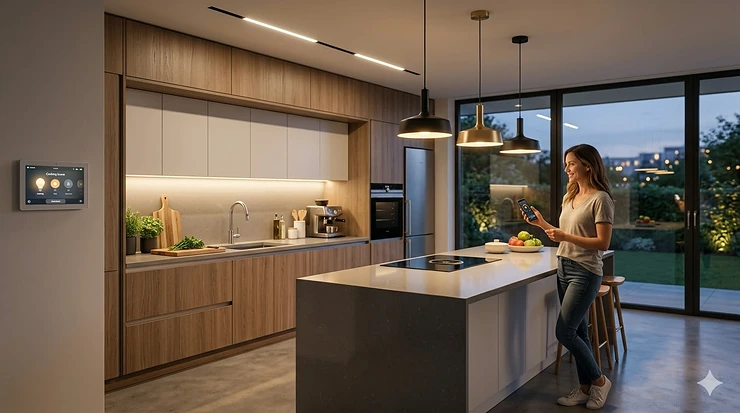
Smart kitchen lighting refers to WiFi-enabled or Bluetooth-connected lighting systems that allow you to control brightness, color temperature, and timing through smartphone apps, voice commands, or automation schedules. These intelligent fixtures transform your kitchen from a simple cooking space into a responsive environment that adapts to your daily routines, enhances food preparation safety, and creates the perfect ambiance for any occasion.
Unlike traditional kitchen lights, smart systems integrate with platforms like Amazon Alexa and Google Assistant, enabling hands-free operation when your fingers are covered in flour or chicken marinade. The technology has evolved dramatically since its introduction, and 2026 models now offer features like circadian rhythm synchronization, motion detection, and seamless integration with other smart home devices. According to research published by the National Institutes of Health, smart home technologies have progressed from wireless networks to Internet of Things and artificial intelligence applications, making modern systems more intuitive and user-friendly than ever before.
The real magic happens when you realize these lights do more than illuminate countertops. They can gradually brighten to simulate sunrise during your morning coffee ritual, shift to cool white tones for precise meal prep, then transition to warm amber hues for romantic dinners. Some advanced models even sync with music for entertaining or flash red when connected sensors detect potential cooking hazards like excessive steam.
Quick Comparison Table: Top Smart Kitchen Lighting Systems 2026
| Product | Type | Alexa Compatible | Color Options | Price Range | Best For |
|---|---|---|---|---|---|
| LAMPAOUS CabiSmart CW 6-Kit | Under Cabinet | ✅ Yes | 2700K-6500K | $89-$119 | Budget-conscious buyers |
| GE Cync Reveal HD+ 18″ | Under Cabinet | ✅ Yes | Full color + white | $45-$65 | Mid-range quality |
| Govee Pendant Light | Pendant | ✅ Yes | 16M+ colors | $109-$150 | Kitchen islands |
| GE Cync Puck Lights 3-Pack | Puck Lights | ✅ Yes | Full color + white | $59-$89 | Accent lighting |
| Globe Electric Pendant | Pendant | ✅ Alexa Only | RGB + tunable white | $89-$129 | Alexa ecosystems |
| ANKEE Smart Pendant | Chandelier | ✅ Yes | Compatible bulbs | $179-$249 | Vintage aesthetics |
| LAMPAOUS CabiSmart 3-Kit | Under Cabinet | ✅ Yes | 2700K-6500K | $59-$79 | Small kitchens |
💬 Just one click – help others make better buying decisions too!😊
Top 7 Smart Kitchen Lighting Systems: Expert Analysis
1. LAMPAOUS CabiSmart CW Smart Cabinet Lights (6 Lights Bar Kit)
The LAMPAOUS CabiSmart CW series represents an exceptional entry point into smart kitchen lighting without compromising functionality. This six-bar kit delivers adjustable color temperature ranging from warm 2700K to cool 6500K, providing versatility for any kitchen activity.
Key Specifications:
- Color temperature: 2700K-6500K (tunable)
- Total output: 12W, 1000 lumens
- Lifespan: Approximately 27,000 hours
- Compatibility: Amazon Alexa, Google Assistant, IFTTT, Smart Life App
Installation couldn’t be simpler—the kit includes extension cords, cable ties, adhesive tapes, and mounting clips. Customer feedback consistently praises the straightforward setup process, with most users completing installation within 30 minutes. The Smart Life app provides intuitive control over brightness and color temperature, while voice commands through Alexa add convenient hands-free operation.
Pros:
✅ Excellent value for six-bar configuration
✅ Wide color temperature range for various tasks
✅ Energy-efficient with 80% savings versus traditional lighting
Cons:
❌ Only works with 2.4GHz WiFi (5GHz not supported)
❌ Smart features require WiFi connection
Price Range: $89-$119 | Customer Rating: 4.3/5 stars
2. GE Cync Reveal HD+ Smart Undercabinet Light Fixture (18-inch Bar)
GE’s Cync ecosystem brings Matter compatibility to the table, making this GE Cync Reveal HD+ 18-inch bar a future-proof investment for smart home enthusiasts. The fixture works seamlessly across multiple platforms including Amazon Alexa, Google Assistant, Samsung SmartThings, and Apple Home.
Key Specifications:
- Full color spectrum plus tunable white
- Matter-compatible for cross-platform integration
- Linkable up to 500 watts total
- Direct wire or plug-in installation options
What sets this model apart is its captive screw design that creates a sleek, professional appearance. The color-changing capabilities extend beyond practical white tones into millions of vibrant colors perfect for holiday decorations or themed dinner parties. Users appreciate the scheduling automation features that ensure lights activate automatically during typical cooking hours.
Pros:
✅ Matter compatibility ensures long-term relevance
✅ Multiple installation methods (hardwired or plug-in)
✅ Can link up to 10 fixtures for comprehensive coverage
Cons:
❌ Higher price point than basic models
❌ Requires 2.4GHz WiFi for smart features
Price Range: $45-$65 | Customer Rating: 4.5/5 stars
3. Govee Pendant Light for Kitchen Island (Three-Layer RGBIC)
The Govee Pendant Light redefines what pendant lighting can accomplish in modern kitchens. This three-layer design provides 360-degree surround illumination with independently controllable color segments, creating dynamic lighting effects impossible with conventional fixtures.
Key Specifications:
- Brightness: 1300 lumens
- Color Rendering Index (CRI): 95
- Color temperature: 2700K-6500K adjustable
- Weight: 5.29 lbs for easy one-person installation
With over 80 preset lighting effects and six music synchronization modes, this pendant transforms your kitchen island into an entertainment centerpiece. The Matter integration means it works flawlessly whether you’re an Apple HomeKit devotee or an Android enthusiast running Google Home. Customer reviews highlight the impressive brightness and the quality of white light for food preparation tasks.
Pros:
✅ Exceptional CRI of 95 for accurate color representation
✅ Three independently controlled lighting layers
✅ Matter support for maximum compatibility
Cons:
❌ Premium pricing compared to basic pendants
❌ May be overstyled for minimalist kitchen designs
Price Range: $109-$150 | Customer Rating: 4.7/5 stars
4. GE Cync Reveal HD+ Smart Undercabinet Puck Light Fixtures (3-Pack)
For targeted task lighting with smart capabilities, the GE Cync puck lights deliver compact power. This three-pack configuration provides flexible placement options for highlighting specific work zones or creating layered lighting schemes.
Key Specifications:
- Dimensions: 3-inch diameter per puck
- Full color spectrum capabilities
- Matter-compatible smart controls
- Flush or recessed mounting options
The compact size makes these pucks ideal for illuminating corners, highlighting backsplashes, or providing accent lighting under upper cabinets where bar lights won’t fit. Installation flexibility stands out—choose between hardwired junction box mounting or simple plug-in operation with linking cables. The recessed mounting option creates an exceptionally clean, integrated appearance.
Pros:
✅ Compact form factor fits tight spaces
✅ Can link up to 10 fixtures together
✅ Multiple mounting configurations
Cons:
❌ Lower total light output than bar fixtures
❌ Three pucks may not suffice for larger kitchens
Price Range: $59-$89 | Customer Rating: 4.4/5 stars
5. Globe Electric Smart Pendant Lighting (Alexa Exclusive)
The Globe Electric pendant takes a different approach by exclusively partnering with Amazon’s Alexa ecosystem, resulting in streamlined setup and optimized performance for Echo device owners.
Key Specifications:
- Power: 30W equivalent output
- Features: Multicolor RGB + tunable white
- Diameter: 17.7 inches x Height: 19.7 inches
- Base: E12 (uses four standard bulbs sold separately)
The “Certified for Humans” designation means frustration-free setup—the pendant automatically appears in your Alexa app during installation. No separate hubs, third-party apps, or complicated pairing procedures. While the Alexa exclusivity limits ecosystem flexibility, it delivers rock-solid reliability for Amazon-centric smart homes. The matte brass finish complements both modern and traditional kitchen aesthetics.
Pros:
✅ Zero-touch setup for Alexa users
✅ No hub required for full functionality
✅ Energy Star certified efficiency
Cons:
❌ Incompatible with Google Assistant or Apple HomeKit
❌ Bulbs sold separately
Price Range: $89-$129 | Customer Rating: 4.2/5 stars
6. ANKEE Smart Pendant Light – Vintage Chandelier
For homeowners seeking smart functionality wrapped in vintage charm, the ANKEE Smart Pendant delivers period-appropriate aesthetics with modern intelligence.
Key Specifications:
- Style: Vintage chandelier design
- Lights: 4-light configuration (E12 base)
- Dimensions: 19.7″ diameter x 22.4″ height
- Control: ANKEE app + voice commands
This fixture bridges the gap between traditional design sensibilities and contemporary smart home integration. The spherical vintage design works beautifully in farmhouse, transitional, or eclectic kitchens where modern minimalism would feel out of place. Users can create lighting groups within the ANKEE app to control multiple fixtures simultaneously, perfect for coordinating pendant lights with other room lighting.
Pros:
✅ Authentic vintage aesthetic with smart controls
✅ Group control for multiple fixtures
✅ Works with both Alexa and Google Assistant
Cons:
❌ Higher price point for the form factor
❌ Requires specific E12 bulbs (sold separately)
Price Range: $179-$249 | Customer Rating: 4.1/5 stars
7. LAMPAOUS CabiSmart CW Smart Cabinet Lights (3 Lights Bar Kit)
The LAMPAOUS 3-bar kit provides the same intelligent features as its six-bar sibling in a more compact, budget-friendly package ideal for smaller kitchens or supplemental lighting zones.
Key Specifications:
- Color temperature: 2700K-6500K tunable
- Power: 12W total, 1000 lumens
- Lifespan: 27,000 hours
- Smart features: Alexa, Google, Siri, IFTTT compatible
Don’t let the smaller configuration fool you—this kit packs identical smart capabilities including scene creation, scheduling automation, and multi-user family access through the Smart Life app. The voice activation feature particularly shines during cooking when switching lights manually isn’t practical. Installation hardware mirrors the six-bar version, ensuring the same easy setup experience.
Pros:
✅ Most affordable smart cabinet lighting option
✅ Triple voice assistant compatibility (Alexa, Google, Siri)
✅ Perfect for galley kitchens or targeted zones
Cons:
❌ Limited coverage area with only three bars
❌ May require expansion for comprehensive kitchen lighting
Price Range: $59-$79 | Customer Rating: 4.3/5 stars
Understanding Smart Kitchen Lighting Technology in 2026
The Evolution from Simple Switches to Intelligent Networks
The journey from wall switches to voice-activated smart lighting represents more than technological novelty—it reflects fundamental changes in how we interact with our living spaces. Research on smart home adoption indicates that technology integration depends on public perception of benefits and innovation compared to perceived risks, which explains why manufacturers have invested heavily in user-friendly interfaces and robust security protocols.
Modern smart kitchen lighting operates on several connectivity protocols. WiFi-based systems like those from GE Cync and LAMPAOUS connect directly to your home network, offering broad compatibility and remote access from anywhere with internet connectivity. Zigbee and Thread protocols, employed by systems like Philips Hue, create mesh networks that improve reliability and extend range through device-to-device communication. The emerging Matter standard promises to unify these ecosystems, allowing seamless operation across previously incompatible platforms.
✨ Don’t Miss These Exclusive Deals!
🔍 Take your smart kitchen lighting to the next level with these carefully selected products. Click on any highlighted item to check current pricing and availability. These tools will help you create authentic culinary experiences your family will love!
How Voice Control Integration Actually Works
When you say “Alexa, set the kitchen lights to cool white,” a surprisingly complex chain of events unfolds in milliseconds. Your Echo device captures the audio, processes it through Amazon’s cloud-based natural language processing systems, identifies the target device and desired action, then sends commands back to your smart light through your WiFi network or smart home hub.
The response time has improved dramatically—2026 models typically execute commands within 1-2 seconds compared to the 5-10 second delays common in earlier generations. This responsiveness makes voice control practical for real-time adjustments rather than just pre-planned routines. Compatibility with multiple voice assistants (Alexa, Google Assistant, Siri) has become standard, though some manufacturers like Globe Electric opt for exclusive partnerships to optimize performance within specific ecosystems.
WiFi Kitchen Light Fixtures vs. Hub-Based Systems
Direct WiFi Connection: Simplicity and Accessibility
WiFi-enabled fixtures like the LAMPAOUS CabiSmart and most GE Cync products connect directly to your 2.4GHz home network without requiring additional hardware. This approach offers several advantages: immediate out-of-box functionality, lower total system cost, and simplified troubleshooting. If your internet goes down, so does remote access and voice control, though scheduled automations typically continue functioning through onboard memory.
The limitation surfaces when scaling beyond 10-15 smart lights. Home routers can become overwhelmed managing numerous individual connections, potentially affecting network performance. Most residential routers support 20-30 connected devices comfortably, but gaming systems, streaming devices, and smartphones quickly consume that capacity.
Hub-Based Systems: Reliability at Scale
Zigbee-based systems like Philips Hue require a central hub that serves as the translator between your lights and home network. While this adds upfront cost ($60-80 for a hub), it offers significant advantages for larger installations. The hub maintains a single WiFi connection while managing up to 50 lights through the more power-efficient Zigbee protocol.
This architecture creates a self-healing mesh network where each powered Zigbee device acts as a repeater, extending range and improving reliability. If one device fails, the network automatically routes around it. For kitchen renovations involving 15+ smart lights across multiple fixture types, hub-based systems typically deliver superior long-term stability.
Matter compatibility, now standard in most 2026 products, attempts to combine the best of both approaches by allowing hub-optional operation while maintaining cross-platform compatibility.
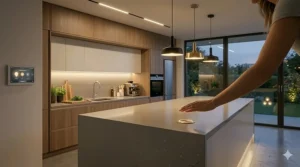
Alexa Compatible Kitchen Lights: Integration and Commands
Setting Up Amazon Alexa Voice Control
Modern Alexa-compatible kitchen lights have streamlined the setup process to near-effortless simplicity. The “Certified for Humans” program, exemplified by Globe Electric’s pendant lights, enables automatic discovery—install the fixture, power it on, and your Alexa app displays a notification asking permission to add the device.
For other compatible lights, the process involves three steps: install the manufacturer’s app (Smart Life, Cync, Govee), link that app to your Alexa account through the Skills section, and allow device discovery. The entire process typically takes 3-5 minutes per fixture.
Effective Voice Commands for Kitchen Lighting
The sophistication of voice control extends far beyond simple on/off commands. Try these natural language phrases that work with most Alexa-compatible systems:
- “Alexa, set the kitchen lights to 50% brightness”
- “Alexa, make the kitchen lights cool white” (automatically selects 5000K-6500K range)
- “Alexa, turn kitchen lights to cooking mode” (custom scene you’ve created)
- “Alexa, gradually brighten kitchen lights over 10 minutes”
- “Alexa, schedule kitchen lights to turn on at 6 AM on weekdays”
The 2026 Alexa update improved contextual understanding, so saying “make it brighter in here” while cooking automatically adjusts kitchen lights rather than requiring specific room names. Grouping lights in the Alexa app enables comprehensive control—create groups like “Kitchen Island,” “Under Cabinet,” and “Kitchen All” for flexible management.
App Controlled Lighting: Features and Functionality
Essential App Functions Across All Platforms
Whether using Smart Life, Cync, Govee, or manufacturer-specific applications, certain core features have become universal standards in 2026. Brightness sliders provide fine-grained control from 1-100%, while color temperature wheels allow selection across the entire warm-to-cool spectrum. Color pickers for RGB-capable fixtures typically offer both palette-based selection and specific hue/saturation/brightness value entry for precise matching.
Scene creation represents the most powerful feature—preset combinations of brightness, color, and specific light selections that activate with a single tap or voice command. Create scenes like “Morning Coffee” (warm white, 40% brightness), “Meal Prep” (cool white, 100% brightness), “Romantic Dinner” (amber, 15% brightness), and “Party Mode” (rotating colors, music sync enabled).
Advanced Features Separating Premium from Basic Apps
Top-tier applications have evolved beyond simple remote controls into comprehensive home automation platforms. The Govee app’s music synchronization analyzes audio in real-time, pulsing lights in rhythm with frequencies—perfect for entertaining. GE Cync’s vacation mode simulates occupancy by randomly activating lights at realistic intervals.
Geofencing triggers lights based on your phone’s location—arrive home to a well-lit kitchen automatically, depart to have lights shut off to prevent wasted energy. The Smart Life app’s scene scheduling combines multiple triggers: lights can activate at sunset OR when you arrive home OR when motion is detected, whichever occurs first.
Energy monitoring, still relatively rare in 2026, provides insights into consumption patterns and projected electricity costs. Some apps gamify energy savings, displaying badges when you’ve reduced usage compared to previous months.
Smart Pendant Lights Kitchen: Style Meets Function
Designing with Smart Pendants Over Islands
Kitchen islands have evolved into multifunctional spaces demanding equally versatile lighting. The traditional approach of hanging three identical pendants 30-36 inches above the island surface remains valid, but smart pendants add layers of functionality that static fixtures cannot match.
The Govee three-layer pendant exemplifies modern design thinking—during morning breakfast preparation, activate bright white light at full intensity. Transition to medium brightness warm white for homework help in the afternoon. Switch to gentle amber tones for evening appetizers with guests, then shift to color-changing party mode when entertaining.
Pendant spacing deserves careful consideration. For islands 5-6 feet long, position a single statement pendant centrally. Islands 7-9 feet accommodate three pendants spaced 30-40 inches apart. Measure from the center of one pendant to the next, not edge-to-edge. Smart pendants with adjustable heights (like the Govee model) allow fine-tuning after installation rather than committing to fixed measurements.
Combining Pendants with Under-Cabinet Lighting
Layered lighting schemes create professional kitchen ambiance while serving practical functions. Pendant lights provide ambient illumination and focal interest, while under-cabinet fixtures eliminate shadows on work surfaces. Smart integration allows synchronized control—a single voice command can activate both pendant and under-cabinet lights to your “Cooking” scene specifications.
Create complementary settings where pendants dim to 30% warm white while under-cabinet lights shine at 100% cool white, focusing attention on food preparation without harsh overhead glare. During cleanup, reverse the ratio—brighten pendants to illuminate the broader space while reducing task lighting intensity.
The scheduling automation becomes particularly elegant: morning routines activate only under-cabinet lights to avoid disturbing family members eating breakfast at the island, while evening entertaining emphasizes decorative pendant lighting with under-cabinet fixtures providing subtle accent glow.
Voice Control Kitchen Lighting: Hands-Free Convenience
Why Voice Commands Matter in Kitchen Environments
Kitchens present unique challenges for traditional light switches—hands covered in raw chicken, flour-dusted fingers, arms loaded with grocery bags. Voice control eliminates these friction points, transforming lighting from a conscious action into an effortless backdrop element.
The practical advantages extend beyond cleanliness concerns. Voice-enabled smart home platforms like Google, Apple, and Amazon allow control through integrated microphones, especially useful in kitchens where hands are often busy or messy. Multitasking becomes genuinely seamless—adjust lighting while stirring sauce, reading recipes, or washing vegetables without breaking your workflow.
Voice control also addresses accessibility considerations. For individuals with mobility limitations, arthritis, or visual impairments, voice commands eliminate the physical challenge of locating and operating wall switches. The technology democratizes full lighting control across diverse user populations.
Optimizing Voice Recognition Accuracy
Voice assistant accuracy has improved substantially, but environmental factors still impact performance. Kitchen environments pose particular challenges: running water, exhaust fans, food processors, and multiple conversations create acoustic interference. Position Echo or Google Home devices strategically—place them on countertops away from primary appliances, ideally 3-4 feet from your main work zones.
Train your voice assistant by speaking commands in realistic kitchen conditions. Most platforms allow creation of custom voice shortcuts that bypass complicated phrasing. Instead of saying “Alexa, turn the under-cabinet lights to cool white at 75% brightness,” create a shortcut where “Alexa, cooking mode” executes that exact combination.
Family members with different accents or speech patterns should individually set up voice recognition profiles, improving accuracy across all users. The technology works best with clear, moderate-speed speech—no need to over-enunciate, but avoid mumbling while simultaneously opening the refrigerator door.
Scheduling Automation: Setting Timers and Routines
Creating Effective Lighting Schedules
The true power of smart kitchen lighting emerges through automation that anticipates your needs without requiring conscious intervention. Begin by mapping your typical kitchen usage patterns: early morning coffee preparation, weekday dinner cooking, weekend entertaining, late-night snack runs.
Construct schedules that align with these rhythms. A basic automation might activate under-cabinet lights at 30% warm white at 6:00 AM on weekdays, providing enough illumination for coffee preparation without harsh awakening brightness. Gradually increase to 100% cool white at 6:30 AM when serious cooking typically begins. Dim to 40% warm white at 8:00 PM during typical dinner hours, then shut off completely at 11:00 PM.
Advanced users layer conditional logic: “IF motion detected after 10:00 PM, activate lights at 10% brightness for 5 minutes, THEN shut off.” This provides sufficient illumination for midnight water retrieval without flooding the kitchen in bright light that disrupts sleep cycles.
Seasonal and Special Occasion Programming
Smart lighting systems excel at accommodating variations in routine without manual intervention. Create seasonal schedules that account for changing sunrise/sunset times—link automations to astronomical data so lights activate at dusk rather than fixed clock times. Summer evenings might trigger lights at 8:30 PM, while winter evenings need illumination by 5:00 PM.
Holiday programming adds festive atmosphere: schedule color-changing routines for Christmas (red and green rotation), Halloween (orange and purple), or Independence Day (red, white, and blue patterns). The Govee app’s preset holiday scenes simplify this process, offering one-tap seasonal transformations.
Vacation modes create the illusion of occupancy, randomly activating kitchen lights for 2-3 hour windows during evening hours. More sophisticated routines vary activation times by 30-60 minutes daily, mimicking realistic human patterns rather than predictable mechanical schedules that signal an empty home.
Smart Home Integration: Connecting Your Kitchen Ecosystem
Building Comprehensive Smart Home Networks
Modern smart kitchen lighting rarely operates in isolation—it forms one component of an interconnected smart home ecosystem. Integration with other devices creates powerful automations impossible with standalone systems. Connect your smart lights with motion sensors, door/window sensors, smart thermostats, and voice assistants for comprehensive control.
Consider practical integration scenarios: pair under-cabinet lights with your smart doorbell so lights automatically activate when someone rings during evening hours, illuminating your path to the door. Link with smart smoke detectors so all kitchen lights flash red and activate to maximum brightness if smoke is detected, ensuring clear visibility during emergencies.
Integration with smart ovens and ranges creates context-aware lighting. When your smart oven timer indicates 5 minutes remaining on a dish, lights could automatically brighten to full intensity, preparing optimal visibility for removing hot items. Some cutting-edge integrations even analyze recipe apps on your phone, automatically adjusting lighting based on detected cooking tasks.
Cross-Platform Compatibility Through Matter
The Matter standard, widely adopted in 2026 smart lighting, represents the industry’s response to years of ecosystem fragmentation. Research indicates that smart home technologies face challenges in network security and interoperability, issues that Matter specifically addresses through standardized communication protocols and enhanced security frameworks.
Products with Matter certification work seamlessly whether you’re running Apple HomeKit, Google Home, Amazon Alexa, or Samsung SmartThings. Purchase a Matter-compatible pendant light today, and it remains functional even if you switch smart home platforms tomorrow. This future-proofing protects your investment while eliminating the anxiety of choosing the “wrong” ecosystem.
The practical advantage emerges in multi-brand households. Perhaps you prefer Alexa in the kitchen but your spouse uses Google Assistant in the home office. Matter-enabled lights respond equally to both platforms, eliminating compromise and family disagreements over smart home standards. Research from UC Berkeley highlights how smart home technology designers must actively consider user input during the design process to ensure inclusion of different types of users who can enhance their residential lives.
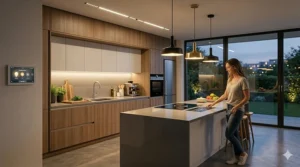
Energy Efficiency and Cost Savings
LED Technology and Power Consumption
All reviewed smart kitchen lighting systems utilize LED technology, delivering dramatic efficiency improvements versus incandescent or halogen alternatives. A traditional 60W incandescent bulb consumes 60 watts continuously while operating. A comparable smart LED light produces equivalent brightness using just 9-12 watts—an 80-85% reduction in electricity usage.
The LAMPAOUS CabiSmart six-bar kit, for example, generates 1000 lumens total while consuming only 12W. Equivalent fluorescent under-cabinet lighting would require 20-25W for similar output. Over a 27,000-hour lifespan (approximately 12 years at 6 hours daily use), this saves roughly 350-400 kWh. At average U.S. electricity rates of $0.14 per kWh, that’s $49-56 in reduced power costs over the product’s lifetime.
Smart features enhance these inherent LED efficiencies. Automated scheduling prevents lights from remaining on unnecessarily. Dimming capabilities reduce consumption during low-demand periods—a light operating at 50% brightness consumes approximately 50% less power. Motion sensor integration ensures lights activate only when the kitchen is occupied.
Return on Investment Calculations
Smart lighting requires higher upfront investment compared to basic LED fixtures, but the total cost of ownership often favors smart systems. Consider the LAMPAOUS six-bar kit at $119 versus comparable non-smart LED fixtures at $60. The $59 premium initially seems steep, but factor in several elements:
Energy savings: $49-56 over lifespan (calculated above)
Bulb replacement elimination: Smart LEDs last 3-5× longer than traditional bulbs, saving 2-4 replacement cycles at $15-30 each
Convenience value: Voice control and automation provide intangible benefits difficult to quantify but valuable in daily use
Home value enhancement: Smart home features increasingly influence property values and buyer preferences
Breaking even typically occurs within 3-4 years for actively used kitchen lighting. The remaining 8-9 years of the product’s lifespan represent pure savings and convenience benefits. Installation costs remain comparable—smart lights don’t require specialized wiring beyond what standard fixtures need.
Installation and Setup Guide
Preparing for Smart Kitchen Light Installation
Successful installation begins before unboxing any products. Start by evaluating your existing kitchen lighting infrastructure and electrical setup. Identify whether you’re replacing existing fixtures or adding supplemental lighting to bare surfaces.
For under-cabinet installations, measure available space precisely. Most cabinet lighting bars range from 9-24 inches in length—choose sizes that leave 2-3 inches of clearance at each end rather than running edge-to-edge. Clean mounting surfaces thoroughly with isopropyl alcohol to ensure adhesive strips bond properly for clip-free installations.
Verify your WiFi network meets requirements before installation. All reviewed products require 2.4GHz WiFi connectivity—the 5GHz band won’t work despite offering faster speeds. Test signal strength in your kitchen using smartphone WiFi analyzer apps. If signal strength falls below -70 dBm, consider adding a WiFi extender before installing smart lights to avoid frustrating connectivity issues.
Step-by-Step Installation Process
For plug-in under-cabinet systems like the LAMPAOUS and basic GE Cync configurations:
- Plan light bar placement, marking locations with painter’s tape
- Clean surfaces and attach mounting clips or adhesive strips
- Click light bars into mounting hardware
- Connect linking cables between adjacent bars
- Plug the controller box into the nearest outlet
- Download the manufacturer’s app and create an account
- Follow in-app instructions to connect lights to WiFi
- Test all functions before finalizing cable management
Hardwired installations require basic electrical knowledge. If you’re comfortable replacing traditional light fixtures, you can typically handle hardwired smart lights. Otherwise, hire a licensed electrician—improper electrical work creates fire hazards and may void homeowner insurance.
For pendant lights:
- Turn off power at the circuit breaker
- Remove existing fixture and verify power is off using a voltage tester
- Install mounting bracket according to manufacturer instructions
- Connect wires (match black to black, white to white, ground to ground)
- Secure fixture to mounting bracket
- Restore power and complete WiFi setup through the app
- Adjust hanging height to desired position (typically 30-36 inches above islands)
Troubleshooting Common Issues
Connectivity Problems and Solutions
WiFi connectivity represents the most common frustration with smart lighting. If lights fail to connect or frequently disconnect:
Check WiFi band: Ensure your router broadcasts a 2.4GHz network. Some modern routers combine 2.4GHz and 5GHz into a single network name, causing incompatibility. Create separate network names for each band through your router settings.
Reduce interference: Cordless phones, microwave ovens, baby monitors, and Bluetooth devices all operate on 2.4GHz frequencies and can interfere with smart lights. Position lights away from these devices or switch interfering devices to different locations.
Improve signal strength: Metal cabinets, concrete walls, and distance from routers attenuate WiFi signals. Add a WiFi extender positioned between your router and kitchen to boost signal strength. Mesh WiFi systems like Google Nest Wifi or Amazon Eero eliminate dead zones through distributed access points.
Voice Control Not Responding
When voice commands fail despite showing connected status in apps:
Verify device grouping: Check that lights appear in the correct room within your voice assistant app. Saying “Alexa, turn on kitchen lights” fails if lights are assigned to a different room or ungrouped.
Refresh device discovery: Voice assistants occasionally lose track of connected devices. Open your Alexa or Google Home app, navigate to devices, and run “Discover devices” to refresh the connection list.
Rename devices clearly: Avoid complex names that voice assistants struggle to interpret. “Kitchen Under-Cabinet Lights Zone 3” works better as “Kitchen Cabinet.” Use distinct names for different fixtures to avoid confusion—”Kitchen Island Pendant” and “Kitchen Sink Light” rather than “Kitchen Light 1” and “Kitchen Light 2.”
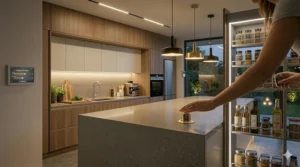
Comparison: Smart Kitchen Lighting vs. Traditional Lighting
| Feature | Smart Lighting | Traditional Lighting |
|---|---|---|
| Initial Cost | $60-$250 per fixture | $15-$80 per fixture |
| Installation Complexity | Moderate (WiFi setup required) | Simple (basic wiring only) |
| Control Options | App, voice, automation, manual | Manual switch only |
| Color Temperature | Adjustable (2000K-6500K) | Fixed single temperature |
| Dimming | Granular 1-100% control | Often requires special dimmer switches |
| Energy Monitoring | Available in some models | Not available |
| Lifespan | 25,000-50,000 hours | 1,000-25,000 hours (varies by type) |
| Scheduling | Full automation capabilities | Timer switches only (limited) |
| Remote Control | Yes, from anywhere | No, physical presence required |
Benefits vs. Traditional Kitchen Lighting
| Benefit | Smart Lighting | Traditional Lighting |
|---|---|---|
| Energy Efficiency | 80-90% more efficient | Standard efficiency |
| Convenience | Voice control, automation, remote access | Manual switch operation |
| Customization | Millions of colors, tunable whites | Single fixed color |
| Integration | Works with smart home ecosystems | Standalone operation only |
| Accessibility | Voice control aids mobility-limited users | Requires physical access to switches |
| Value Addition | Increases home resale value | Standard expectation |
| Maintenance | Rare (25,000+ hour lifespan) | Frequent bulb replacements |
How to Choose the Right Smart Kitchen Lighting System
1. Assess Your Kitchen Layout and Lighting Needs
Begin by evaluating where light is actually needed versus where it currently exists. Walk through typical kitchen activities at different times: morning coffee preparation, afternoon cooking, evening cleanup, midnight snack retrieval. Identify areas currently under-lit or over-bright.
Measure your available installation surfaces—cabinet undersides for under-cabinet lighting, ceiling mounting points for pendant lights, cabinet interiors for puck lights. This determines compatible product types and sizes before considering smart features.
2. Determine Your Smart Home Ecosystem
If you already use Amazon Alexa, Google Home, or Apple HomeKit, prioritize lights compatible with your existing ecosystem. The Globe Electric pendant works exclusively with Alexa but offers exceptional integration within that ecosystem. Most 2026 products support multiple platforms, but verify compatibility before purchasing.
Matter-compatible products (Govee, GE Cync) provide maximum flexibility and future-proofing. If you’re ecosystem-agnostic or may switch platforms, Matter certification should be a priority consideration.
3. Evaluate Essential Features
List must-have versus nice-to-have features. If you primarily want basic on/off control with scheduling, budget options like the LAMPAOUS three-bar kit provide excellent value. Users wanting color-changing capabilities for entertaining should invest in full RGB systems like the Govee pendant or GE Cync fixtures.
Consider whether you need individual light control or group control suffices. Kitchens with multiple work zones benefit from independently controllable segments, while compact kitchens operate efficiently with unified control.
4. Calculate Your Budget Realistically
Factor total system cost rather than per-fixture pricing. A $60 light requiring a $70 hub costs $130 total. Compare against $119 WiFi-direct systems that require no additional hardware. Balance upfront investment against long-term energy savings and replacement costs.
Remember to account for installation costs if hiring electricians. Plug-in systems eliminate professional installation fees, saving $100-200 for typical under-cabinet setups.
5. Consider Expandability and Scalability
Purchase systems you can expand gradually. The LAMPAOUS three-bar kit works perfectly for initial installations, with six-bar kits available as expansion needs arise. GE Cync’s linking capability allows progressive addition of bars and pucks to a unified system.
Avoid proprietary systems that lock you into single manufacturers. Matter compatibility, cross-brand integration, and standard fixtures (E26, E12 bases) provide flexibility for future changes.
6. Verify WiFi Requirements and Network Capacity
Most smart lights require continuous WiFi connectivity. If your kitchen has weak WiFi coverage, address network infrastructure before installing lights. A $30 WiFi extender prevents hundreds of dollars in smart light frustration.
Count existing WiFi-connected devices and project total after adding lights. If approaching your router’s connection limit (typically 20-30 devices), consider upgrading to a mesh WiFi system or using hub-based lighting that consumes single WiFi connections.
7. Read Recent Customer Reviews and Professional Testing
Customer reviews reveal real-world performance beyond manufacturer marketing. Focus on reviews from 30-90 days post-purchase—immediate reviews may reflect setup experiences rather than long-term reliability. Look for patterns in complaints: occasional defects are normal, but widespread connectivity issues or premature failures signal problematic products.
Professional reviews from sources like The Wirecutter, CNET, and specialized smart home publications provide comparative testing across multiple products, identifying best-in-class options for specific use cases.
✨ Ready to Transform Your Kitchen?
🏡 Upgrade your culinary space with cutting-edge smart lighting technology. These expert-recommended products combine style, functionality, and energy efficiency. Click any product to explore current deals and customer reviews!
The integration of smart pendant lights kitchen over islands creates focal points that serve both aesthetic and functional purposes. Combined with under-cabinet task lighting and accent fixtures, layered smart lighting schemes deliver professional results previously requiring expensive designer consultations. App controlled lighting provides granular control that traditional dimmers can’t match, while WiFi kitchen light fixtures eliminate complex wiring for whole-house automation systems.
Smart home integration extends beyond convenience into meaningful accessibility improvements. Research from the National Center for Biotechnology Information demonstrates how smart home technologies can sense, assess, and respond to security threats while maintaining resident safety. Voice control and automation features particularly benefit individuals with mobility limitations, visual impairments, or arthritis that makes operating traditional switches challenging.
Energy efficiency benefits compound over years of use, with LED smart lights consuming 80-90% less electricity than equivalent incandescent fixtures while lasting dramatically longer. The environmental impact extends beyond your electricity bill—reduced power consumption means less fossil fuel combustion at power plants, contributing to broader sustainability goals.
As you embark on your smart kitchen lighting journey, remember that you needn’t transform your entire kitchen overnight. Begin with a single zone—perhaps under-cabinet lighting where the impact is immediately obvious—then expand gradually as you discover which features genuinely improve your routines. The beauty of modern systems lies in their expandability; today’s three-bar kit can grow into tomorrow’s comprehensive smart kitchen ecosystem.
The kitchen has evolved from purely functional cooking space into the genuine heart of modern homes—where families gather, meals are shared, and memories are created. Smart lighting technology ensures this vital space adapts to every moment, from energizing morning coffee rituals to intimate dinner conversations to celebratory gatherings with friends. By thoughtfully selecting and implementing the right smart kitchen lighting system, you’re not just installing fixtures—you’re investing in countless well-lit moments yet to come.
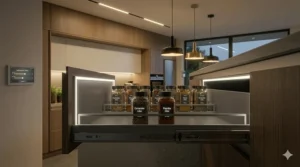
❓ FAQ: Smart Kitchen Lighting
❓ Can smart kitchen lighting work without WiFi?
❓ How long do smart LED kitchen lights last?
❓ Are smart kitchen lights secure from hackers?
❓ Can I control smart kitchen lights when away from home?
❓ Do smart lights work with existing dimmer switches?
Conclusion: Illuminating Your Kitchen’s Future
Smart kitchen lighting represents far more than technological novelty—it’s a fundamental reimagining of how we interact with one of our home’s most vital spaces. The seven systems reviewed here demonstrate the remarkable maturity this technology has achieved by 2026. From budget-conscious LAMPAOUS kits starting under $60 to feature-rich Govee pendants approaching $150, options exist for every kitchen size, aesthetic preference, and budget level.
The decision ultimately hinges on identifying which features genuinely enhance your daily kitchen experience versus those representing impressive but unused capabilities. For renters or those testing smart home waters, the LAMPAOUS three-bar kit delivers essential functionality without significant financial commitment. Homeowners planning long-term residence benefit from investing in premium Matter-compatible systems like GE Cync or Govee that ensure compatibility with future smart home standards.
Studies from Michigan State University’s Innovation Center show that smart homes allow consumers to create tailored ecosystems designed around their comfort and convenience, with ongoing advances helping customize in-home experiences for truly unique living spaces.
Voice control integration, particularly with Alexa compatible kitchen lights, has matured from gimmicky novelty to genuinely useful functionality. The ability to adjust lighting while your hands manage raw ingredients or hot cookware eliminates friction points that traditional switches cannot address. Scheduling automation shifts lighting from conscious decision to background element that anticipates your needs—brightening before your alarm sounds, dimming as bedtime approaches.
Recommended for You
- 7 Best Affordable Kitchen Lighting Fixtures Transform Your Space 2026
- 7 Best Pendant Light Spacing Kitchen Island Rules (2026 Guide)
- 15 Best Kitchen Lighting Ideas for Small Kitchen in 2026
Disclaimer: This article contains affiliate links. If you purchase products through these links, we may earn a small commission at no additional cost to you.
✨ Found this helpful? Share it with your friends! 💬🤗
