
In This Article
You know the routine. Door open, hand sweeping the wall for a switch that isn’t there, and a black sweater doing a flawless impression of a navy one. Motion sensor closet lights end that nonsense for roughly the price of a decent pizza. They do it without an electrician, a drill, or a landlord’s blessing.

Here’s the catch: the category is crowded. Search for a motion sensor closet light and you’ll scroll past dozens of nearly identical white bars, each promising “months” of runtime and “super bright” output. Most share the same anatomy: a PIR sensor, a small battery, a strip of LEDs, and an adhesive mount. The details separate the keepers from the drawer-fillers.
This guide cuts through the noise. Based on spec comparisons and aggregated customer-review sentiment gathered in October 2026, we ranked seven real products. They run from a budget battery closet light you can grab for pocket change to larger-capacity models built for walk-ins. You’ll also get a plain-English look at how a PIR sensor behaves, honest battery life math, adhesive mount tricks that actually hold, and a frank take on where an affordable auto-on closet light is smart versus a false economy.
One note on honesty: we’re analyzing published specs and review patterns, not claiming lab testing. Where the evidence is thin, we’ll say so. Prices appear as ranges because they shift constantly, so check current price before you buy.
What Are Motion Sensor Closet Lights? (And How Do They Work?)
Motion sensor closet lights are compact, usually battery-powered LED fixtures that switch on automatically when a built-in sensor detects movement, then switch off after a short delay. Most use a passive infrared sensor, mount with magnets or an adhesive plate, and need no wiring. That makes them ideal for closets, pantries, and cabinets.
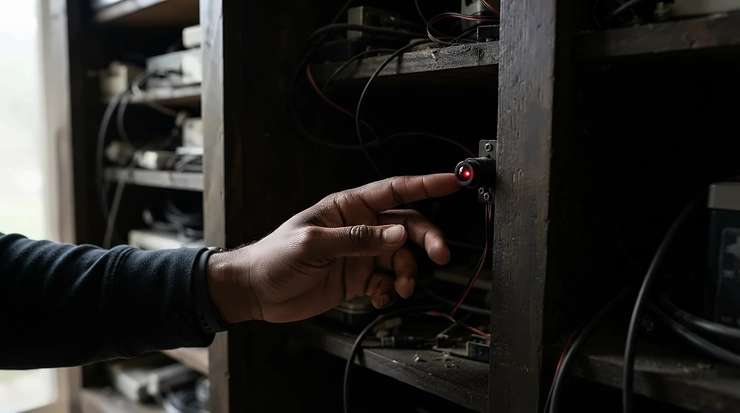
The sensing part is a PIR sensor, short for passive infrared. It doesn’t beam anything out. It watches for changes in the infrared radiation that warm bodies (you, the dog, your sleepy teenager) give off as they cross its field of view. Think of it as a very patient doorman who only reacts when someone moves, not when someone merely exists.
Most modern motion sensor closet lights pair that sensor with a second brain: an ambient light sensor. In bright rooms the light stays off, which saves battery life. In a dim closet it fires up, then holds for about 20 seconds after the last movement before shutting down. Many models add modes, such as always-on, night-only, and all-day motion, so one light can serve a bright dressing room or a dark hallway closet.
What the label rarely tells you is that the three pillars of a good motion sensor closet light are sensor behavior, battery capacity, and how it mounts. Brightness gets the marketing. Those three decide whether you’ll still like the light in March.
Quick Comparison: Motion Sensor Closet Lights at a Glance
| Product | Power Source | Sensor Notes | Price Range | Best For |
|---|---|---|---|---|
| MCGOR | USB-C rechargeable bars | About 10 ft range, 20-sec timer | $15-$25 (2-pack) | MCGOR suits first-time buyers |
| DiDiSky | 2200mAh USB-C | Motion plus light sensor | $15-$30 | DiDiSky suits battery-life shoppers |
| EZVALO | 1800mAh rechargeable | Rotatable sensor head | $20-$35 | EZVALO suits awkward door angles |
| BLS T401 | 4500mAh rechargeable | Constant-sense, light sensor | $20-$35 | BLS T401 suits low-traffic closets |
| LINEWAY | 4 AA batteries | Auto-off after 20 sec | Under $15 | LINEWAY suits swap-the-batteries fans |
| STAR-SPANGLED | 3 D cells | 120° and 16 ft (claimed) | $10-$20 | STAR-SPANGLED suits deep walk-ins |
| wobane | 1000mAh rechargeable pucks | Motion plus light sensor | $15-$25 (3-pack) | wobane suits tiny cabinets |
Looking at the table above, the real divide isn’t brightness. It’s rechargeable versus swappable batteries, and bar-style versus ceiling-puck style. A rechargeable bar like MCGOR is the lowest-effort pick for a standard closet, while a battery-swap ceiling light like LINEWAY makes more sense if you hate charging cables. Budget shoppers should note that the cheapest options trade away dimming and sensor flexibility.
💬 Just one click — help others make better buying decisions too!😊
Top 7 Motion Sensor Closet Lights: Expert Analysis
Each pick below is judged on what its specs mean in a real closet, what aggregated reviews report, and who it fits. Ratings and review notes come from published retailer listings and roundups, not from hands-on testing.
1. MCGOR Under Cabinet Lighting — the crowd-pleasing all-rounder
There’s a reason MCGOR keeps surfacing: it’s the default answer for anyone who wants a motion sensor closet light without a research project. The two-pack comes in roughly 10-inch and 14.7-inch bar lengths. It’s rechargeable over USB-C, with five brightness levels and magnetic bars that snap onto included adhesive metal plates.
Roundups cite battery capacity of roughly 1800 to 2200mAh depending on bar length. Motion mode shuts off about 20 seconds after the last movement, with detection out to around 10 feet. In practice, 10 feet covers a reach-in or a standard walk-in, but it won’t light the far corner of a long galley closet from the door.
On paper, dimmability is the sleeper feature. You can dial it down for a 6 a.m. bedroom closet and crank it up for hunting a black sock. Reviewers consistently describe the motion detection as responsive, and one widely shared shopper account says there’s no waving around to trigger it. Aggregated roundup data puts real-world battery life at roughly a week to six weeks in motion mode, depending on traffic.
Pros:
- ✅ Five brightness levels for any closet mood
- ✅ Magnet plus adhesive mount installs in minutes
- ✅ USB-C recharging, no loose batteries
Cons:
- ❌ Sensor head can’t be rotated or aimed
- ❌ Bar length may overwhelm tiny shelves
Typically around $15-$25 for a two-pack; excellent value for most closets.
2. DiDiSky Motion Sensor Light — biggest battery in the budget bracket
If battery life is your obsession, DiDiSky deserves a look. One roundup flags its 2200mAh USB-C battery as the largest in its class, and it pairs that with a motion sensor plus an ambient light sensor.
Here’s what that means: bigger capacity usually translates to longer gaps between charges. Compared with a 1000mAh puck light, a 2200mAh cell stores more than double the energy. In a busy family closet, that can mean charging every month or two instead of every few weeks. That’s an estimate from capacity, not a measured result.
The light sensor is the quiet hero. It keeps the light dark when the room is bright, so the battery isn’t burning on daytime false triggers. A fair caution: review volume for DiDiSky looks thinner than for category leaders, so treat this pick as spec-driven and skim recent reviews before ordering.
Pros:
- ✅ Large 2200mAh USB-C battery
- ✅ Light sensor avoids daytime waste
- ✅ Works well as a budget battery closet light
Cons:
- ❌ Fewer verifiable reviews than leaders
- ❌ Brightness details less documented
Likely in the $15-$30 range; strong value if the reviews check out.
3. EZVALO 13-Inch Closet Lights — rotatable sensor for awkward door angles
Most motion sensor closet lights have a fixed sensor. EZVALO gives you a rotatable sensor head, and in tricky closets that’s a bigger deal than any lumen count.
A PIR sensor detects movement across its detection zones better than movement straight toward it. If your light sits on a side wall but you approach from the door, a fixed sensor may react late. Aiming the sensor head fixes that. The 13-inch bar runs on an 1800mAh battery, and the EZVALO line offers three sensor modes: All-Day Motion, Night Motion, and Always-On.
Roundups praise the aim-able sensor and the night mode, which suits bedroom closets where a full-brightness blast at 2 a.m. isn’t welcome. Evidence on long-term battery life is thinner, so keep expectations in the same band as other 1800mAh bars.
Pros:
- ✅ Rotatable sensor head fixes angle problems
- ✅ Three modes cover day and night use
- ✅ Slim bar fits under shelves
Cons:
- ❌ 1800mAh trails the biggest budget cells
- ❌ Pricier than basic two-packs
Roughly $20-$35; worth the premium if your closet layout is awkward.
4. BLS T401 LED Closet Light — the runtime champion on paper
The BLS T401 swings for the fences: a 4500mAh rechargeable battery, 200 lumens, and a “Constant-Sense” motion sensor with a built-in light sensor. The manufacturer advertises up to 180 days between charges.
Treat that as a best-case number. The claim assumes a low-traffic closet, and a closet opened a dozen times a day will drain the cell faster. Even so, 4500mAh is about double a typical bar, so in a guest-room closet or a seasonal-clothes closet, “charge it twice a year” isn’t absurd. The 200-lumen output is also bright enough for deeper closets.
A word of caution on reviews. At least one deal-forum commenter has questioned how organic the review counts are on some BLS listings. Read recent verified reviews with healthy skepticism, and favor photos and long-term updates over star averages.
Pros:
- ✅ Huge 4500mAh rechargeable battery
- ✅ 200 lumens suits deeper closets
- ✅ Light sensor saves power
Cons:
- ❌ Runtime claim is best-case, not typical
- ❌ Review authenticity worth double-checking
Typically in the $20-$35 range; great for low-traffic spaces.
5. LINEWAY Motion Sensor Ceiling Light — swap-the-batteries simplicity
LINEWAY is the anti-charging-cable pick. It’s a 5.9-inch ceiling-style light with 48 LEDs, powered by four AA batteries, with an AUTO/ON switch. In AUTO mode it lights when you approach and goes dark after 20 seconds without motion.
The manufacturer says four AAs last about three months at 8-10 activations a day. That’s a vendor claim, but the number is plausible for a typical bedroom closet. The 6000K color temperature is cool daylight white, which is excellent for telling navy from black and a bit clinical for ambiance.
A ceiling-puck design lights a walk-in more evenly than a wall bar, since the light falls from the center. Retail listings show generally positive averages with modest review counts, so the signal is encouraging but not overwhelming. Budget a few dollars per battery set as an ongoing cost.
Pros:
- ✅ Swap AAs in seconds, no charging
- ✅ Centered ceiling light covers walk-ins
- ✅ Simple AUTO/ON switch
Cons:
- ❌ Ongoing battery cost over time
- ❌ 6000K can feel harsh
Usually under $15 before batteries; a smart affordable auto-on closet light for tight budgets.

6. STAR-SPANGLED 6.3″ Motion Sensor Ceiling Light — wide-angle coverage for deep spaces
STAR-SPANGLED targets bigger spaces. The listing claims detection across 120 degrees out to about 16 feet in dark or low-light conditions, with a 20-second shutoff and an anti-glare panel. It runs on three D-size batteries, with AA-to-D adapters included.
Why that matters: D cells hold far more energy than AAs, so the swap interval can be long, though the listing doesn’t give a verified runtime. The 16-foot range suits a long walk-in, pantry, or garage storage nook where shorter-range lights leave dead zones.
The catch is mounting. This model ships with expansion screw sets, so it’s less renter-friendly than an adhesive mount. Retail listings show decent but not spectacular averages, around four stars on a small sample.
Pros:
- ✅ 120° coverage reaches far corners
- ✅ D cells promise long swap intervals
- ✅ Anti-glare panel softens the light
Cons:
- ❌ Screw mounting suits renters poorly
- ❌ D batteries cost more than AAs
Around $10-$20 before batteries; best for larger spaces.
7. wobane Rechargeable Puck Lights — the tiny-closet budget workhorse
wobane sells a three-pack of puck lights, each with 8 warm-white LEDs producing about 90 lumens, a 1000mAh rechargeable battery, a motion plus light sensor, and magnet-or-adhesive mounting. For shoe racks, pantry shelves, and cabinets, that’s a smart format.
Warm white flatters fabrics and skin tones, and three pucks let you light different tiers. Ninety lumens is modest, so one puck won’t light a big walk-in. A retail mirror listing shows about 4.2 out of 5 across more than 1,600 reviews. Shopper themes include “dim but adequate,” small magnets, and a reminder to charge before mounting.
Pros:
- ✅ Warm, flattering light output
- ✅ Three pucks cover multiple shelves
- ✅ Magnet and adhesive mount options
Cons:
- ❌ 90 lumens won’t fill big closets
- ❌ Smaller 1000mAh battery
Roughly $15-$25 for the three-pack; the best budget battery closet light for tight spaces.
How to Choose Motion Sensor Closet Lights: 7 Steps
The best motion sensor closet lights match your closet, not the spec sheet. Work through these seven steps in order:
- Measure the closet first. A 3-foot reach-in needs a different light than an 8-foot walk-in. Long closets favor 14-inch bars or a ceiling puck.
- Pick your power style. Rechargeable means a cable and a reminder every few weeks. AA or D cells mean no charging but a recurring cost.
- Check sensor behavior. Look for the detection range, the angle, the auto-off timer, and whether there’s an ambient light sensor to prevent daytime triggering.
- Match brightness to depth. Around 90 lumens suits small cabinets, while 180-250 lumens suits full closets.
- Choose the color temperature. Cool white (around 6000K) shows true colors, and warm white feels cozier.
- Plan the adhesive mount. Confirm the surface is smooth and clean, and decide whether you want a magnet, an adhesive plate, or screws.
- Read recent reviews, not averages. Look for long-term battery life reports and notes about sensor misfires.
✨ Ready to stop fumbling in the dark?
🔍 Take your closet to the next level with these carefully selected motion sensor closet lights. Click on any highlighted product to check current pricing and availability. A few minutes of setup could save you years of squinting at sock colors!

PIR Sensor Explained: Why Your Closet Light Sometimes Ignores You
If a motion sensor closet light feels moody, the PIR sensor is usually the reason. Inside, a pyroelectric element is split into two halves. When you walk by, your body heat hits one half first, then the other, and that differential signal says “motion.” A faceted Fresnel lens divides the field of view into zones, which is why a PIR sensor responds more reliably to movement crossing zones than to someone walking straight at it.
That explains a lot of “it didn’t turn on” complaints. A bar mounted at the back of a closet, facing the door, may see you late because you’re approaching head-on. Mounted on a side wall or tilted slightly, it catches you earlier. One reviewer’s tip for a similar light is to mount it with the sensor facing toward you, and that advice generalizes well.
PIR sensors have known weaknesses. Sources note that direct sunlight and heat sources such as heaters can interfere, and that these sensors generally can’t distinguish between types of movement. Some aren’t pet-tolerant either, so a cat on a shelf can trigger the light. In a closet, the practical risks are an unusual mount position and a door left ajar toward a sunny window.
The practical lesson: place the PIR sensor where you cross its zones, keep it away from heat sources, and use a model with a light sensor so daylight doesn’t waste the battery.
Battery Life: What the Numbers Really Mean
Battery life claims in this category are slippery. The mAh figure tells you how much energy the cell holds, but runtime depends on how often the light triggers and for how long. A rechargeable light running in motion mode sips power. The same light in always-on mode burns it. One rechargeable ceiling light advertises 8-12 hours always-on versus roughly 35-65 days in motion mode, which tells you everything about how mode choice swings runtime.
| Power Type | Typical Capacity | Reported / Claimed Runtime | Maintenance Pattern | Best For |
|---|---|---|---|---|
| Small rechargeable puck (wobane class) | About 1000mAh | A few weeks (estimate) | Charge every few weeks | Tiny cabinets |
| Rechargeable bar (MCGOR, EZVALO, DiDiSky) | 1800-2200mAh | About 7 to 45 days in motion mode (roundups) | Monthly-ish charging | Standard closets |
| High-capacity rechargeable (BLS T401) | About 4500mAh | Up to ~180 days (manufacturer claim) | Rare charging | Low-traffic closets |
| 4 AA ceiling (LINEWAY) | 4 AA cells | About 3 months at 8-10 activations/day (manufacturer claim) | Quarterly battery swap | Charging-averse users |
The pattern is clear: capacity buys you time, but traffic decides how much. A kid’s closet that opens twenty times a day behaves very differently from a guest closet. Quoted ranges as wide as 7 to 45 days exist because real households vary that much. Choose a bigger battery for busier closets, and pick swap-friendly AAs if you’d rather avoid remembering to charge anything.
Adhesive Mount vs Magnet vs Screws: What Actually Stays Put
A great light on the floor is a bad light. Most motion sensor closet lights ship with a magnetic bar that attaches to an adhesive metal plate, so your adhesive mount is really the weak link, not the light.
Shopper accounts show both sides. One reviewer reports the adhesive came loose from a plaster ceiling after about a month, dropping the light onto a wooden staircase. Another notes the adhesive is quite strong, so choose a spot where peeling it off won’t damage paint. Taken together, ceilings and textured walls are tough, while smooth wood, laminate, and painted shelf undersides are friendlier.
Here’s how to improve your odds. Clean the surface with isopropyl alcohol and let it dry. Press the plate firmly for a minute, and give the adhesive time to cure before sticking the light on. Prefer the underside of a shelf or a side wall over a ceiling, so gravity isn’t working against the adhesive mount. If you’re a renter, test a small corner first and plan removal with slow, gentle peeling and a little heat.
Screws, like those that ship with STAR-SPANGLED, are the most permanent mounting option. They hold best but cost you the renter-friendly no-damage advantage. For most people, a well-prepped adhesive mount hits the sweet spot.
Budget Battery Closet Light vs Hardwired Fixtures
A budget battery closet light wins on speed, cost, and flexibility. A hardwired fixture wins on permanence and brightness. For most people living in a normal home, the choice isn’t close.
Hardwired closet lighting involves electrical code rules about fixture types and clearances. Guidance summarized by InspectApedia notes that codes limit which fixtures can go in closets and how close they can sit to stored items. That means an electrician, planning, and often permits.
| Factor | Budget Battery Closet Light | Hardwired Fixture |
|---|---|---|
| Installation | Peel, stick, done in minutes | Electrician and code compliance |
| Upfront cost | Roughly $10-$35 | Considerably higher, with labor |
| Maintenance | Recharge or swap batteries | Nearly none |
| Brightness | 90-250 lumens typical | Usually brighter |
| Renter-friendly | Yes | No |
| Best For | MCGOR, wobane, LINEWAY | Owners remodeling a closet |
Looking at the comparison, the ongoing cost of a battery light is attention, not money. If you own your home and are already opening walls, hardwiring may be worth considering. If you want light by tonight, a battery option like MCGOR beats waiting on a contractor.
Affordable Auto-On Closet Light: Where Cheap Is Smart (and Where It Isn’t)
An affordable auto-on closet light is one of the best dollars-per-benefit upgrades in a home. Run the numbers: a two-pack around $20 lights two closets, so you’re paying roughly $10 per closet. Electricity use is trivial, and a rechargeable model has no ongoing battery cost at all.
Where cheap pays off: standard bedroom closets, pantries, shoe cabinets, and linen closets. A basic affordable auto-on closet light with a PIR sensor and light sensor does the job. A budget battery closet light like wobane or MCGOR delivers 90-plus lumens exactly where you need it.
Where cheap stumbles: unknown brands with inflated review counts, lights without an ambient light sensor, and bargain units with tiny batteries that need constant recharging. A battery that dies every week quickly erases savings in annoyance. Cost per month of hassle matters.
As a rule of thumb, spend a little more for a documented battery capacity, a decent sensor, and reviews that mention months of use. A slightly pricier DiDiSky or BLS T401 may beat the cheapest pack in total ownership cost. Value isn’t the lowest price tag, it’s the fewest annoyances per year.
Closet Light Safety: What Applies to Battery-Powered Lights?
Closets have special lighting rules because of fire risk. Exposed bulbs near clothing have long been a hazard, and InterNACHI notes that open incandescent fixtures in clothes closets have been prohibited for years and that some LED luminaires are specifically listed for closet storage spaces. A longtime electrical inspector explained in EC&M that the National Electrical Code ties permitted closet fixtures to specific clearances from storage space, with figures such as 6 or 12 inches depending on fixture type.
Those rules target permanently installed luminaires. A stick-on, low-voltage, battery-powered LED bar isn’t a wired fixture, so we can’t give a code verdict on it, and local rules vary. Instead, use common sense: choose enclosed LED designs with no exposed bulbs, keep lights off garments and away from fabric contact, and don’t bury a light under stacked clothes.
For rechargeables, use the included cable, don’t charge a swollen or damaged unit, and don’t leave cells baking in a hot spot. If you’re doing real electrical work, check local codes and hire a licensed electrician. If you’re adding stick-on lighting, the practical approach is clearance, ventilation, and tidy placement.
Practical Setup Guide: Install in 10 Minutes, Dial In Over 30 Days
Day 0: charge and test. Several reviewers note that rechargeable lights need charging before mounting. Top it up, then trigger the PIR sensor in your hands to confirm it works.
Mounting. Pick a spot with a smooth, clean surface. Position the sensor so you cross its zones when entering, and test with the door half closed. Press the adhesive mount firmly before attaching the light.
Mode selection. Use Night Motion for bedrooms where daytime lighting is fine. Use All-Day Motion for interior closets with no windows. Use Always-On only for emergencies or long tasks, since it drains battery life fast.
Maintenance schedule.
- Week 2: re-check that the adhesive plate hasn’t shifted.
- Monthly: wipe dust off the sensor lens and LEDs.
- Every 4-8 weeks: recharge (or replace batteries) based on how often the closet is used.
Common first-30-day mistakes. Mounting too high so the sensor misses movement, facing the sensor at the wall, and trusting the label’s runtime claim without watching real use. If the light flickers or stays on, check for a nearby heat source or a door gap letting in sunlight.
Real-World Scenarios: Three Closets, Three Budgets
Scenario 1: The renter with a reach-in closet and a $20 budget. You need no drilling and easy removal. Choose MCGOR: dimmable bars, magnet plus adhesive mount, and enough range for a small closet. Plan removal gently when you move out.
Scenario 2: The family walk-in used 15 times a day. Heavy traffic eats batteries. Choose DiDiSky for its larger cell, or LINEWAY if swapping AAs beats charging. Either way, a light sensor keeps daytime false triggers from draining the power.
Scenario 3: The deep walk-in or garage storage nook. Detection range matters. Choose STAR-SPANGLED for 120° coverage and long reach, accepting screw mounting.
Scenario 4: The tiny shoe cabinet. Choose wobane, a three-pack of warm pucks.
A quick decision tree: if you rent, choose adhesive and rechargeable. If your closet is rarely opened, choose BLS T401 for its big battery. If your sensor angle is awkward, choose EZVALO for its rotatable head. If you hate charging, choose AA or D cells.
Common Mistakes When Buying Motion Sensor Closet Lights
1. Shopping on lumens alone. A bright light with a bad sensor is worse than a modest one that reliably turns on.
2. Ignoring the auto-off timer. Twenty seconds is common, but a timer that’s too short leaves you in the dark while you’re reaching for a high shelf.
3. Mounting the sensor facing the wrong way. A PIR sensor needs to see you cross its zones.
4. Trusting runtime claims at face value. Always-on versus motion mode can change runtime by orders of magnitude.
5. Putting exposed bulbs near clothes. Fire risk is real, as InterNACHI points out for older fixtures. Stick with enclosed LED designs.
6. Trusting star averages. Look for recent, detailed reviews that mention months of use.

FAQ: Motion Sensor Closet Lights
❓ Why does my motion sensor closet light stay on too long?
❓ Can I use motion sensor closet lights in a rental?
❓ Are battery-powered closet lights safe around clothes?
❓ What's the best setup for a walk-in closet?
❓ Will my cat trigger a PIR sensor closet light?
Conclusion
Motion sensor closet lights are the rare home upgrade that’s cheap, fast, and noticeably better the same evening. The right pick comes down to a few honest questions: how big is the closet, how often is it opened, and do you prefer charging or swapping batteries?
For most people, MCGOR is the safest all-rounder. DiDiSky and BLS T401 lean toward battery-life shoppers, EZVALO fixes awkward sensor angles, LINEWAY and STAR-SPANGLED suit ceiling-style coverage, and wobane rescues tiny cabinets as a budget battery closet light. Whatever you choose, remember the three pillars: a well-placed PIR sensor, realistic battery life expectations, and an adhesive mount that’s properly prepped.
An affordable auto-on closet light won’t transform your home, but it will stop the daily sock lottery. Start with one closet, learn how it behaves, and expand from there.
✨ Don’t Miss These Exclusive Deals!
🔍 Take your closet to the next level with these carefully selected motion sensor closet lights. Click on any highlighted product to check current pricing and availability. A brighter, easier morning routine is just a few clicks away!
Recommended for You
- Dimmable Bedside Table Lamp For Reading In Bed: 7 Smart Picks (2026)
- Plug-In Pendant Light For Bedside: 7 Best Easy Picks 2026
- Swing Arm Wall Lamp For Headboard: 7 Best Picks 2026
Disclaimer: This article contains affiliate links. As an Amazon Associate, I earn from qualifying purchases. If you purchase products through these links, we may earn a small commission at no additional cost to you.
✨ Found this helpful? Share it with your friends! 💬🤗
