
In This Article
Walk into most American living rooms after dark and you’ll find the same crime scene: one sad overhead fixture doing all the work, throwing flat light down onto furniture that deserves better. LED floor lamps fix that problem without an electrician, a ladder, or a weekend lost to home renovation. Plug one in, flip a switch, and suddenly a dead corner has a job again.
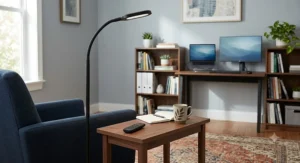
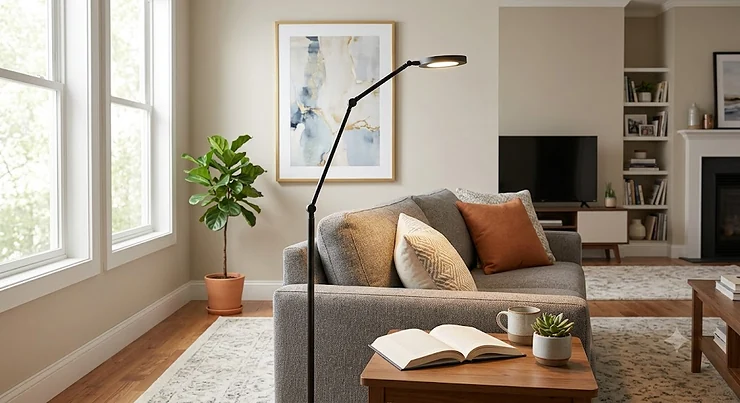
LED floor lamps are freestanding light fixtures that use light-emitting diode bulbs instead of incandescent or CFL bulbs, delivering the same (or better) brightness while sipping a fraction of the electricity. According to the U.S. Department of Energy, LED bulbs use at least 75% less energy than incandescent lighting and last far longer — which is exactly why floor lamps built around LED technology have become the default choice rather than the upgrade option.
This guide skips the marketing fluff and gets into what actually matters: real products, real specs translated into plain English, and honest analysis of who should buy what. We researched seven current models spanning budget torchieres to premium smart fixtures, covering everyone from renters who need one plug-in solution to smart-home enthusiasts who want their lamp talking to Alexa. Whether you’re chasing a dimmable floor lamp for late-night reading, a floor lamp with USB port for your nightstand-adjacent reading chair, or a fully connected smart floor lamp that syncs with your other gear, there’s a real, buyable option below — with honest pros, honest cons, and zero invented five-star reviews.
By the end, you’ll know exactly which lamp matches your room, your budget, and your patience for assembly instructions. Let’s get into it.
Quick Comparison Table: LED Floor Lamps at a Glance
Before the deep dives, here’s the shortcut version for anyone who just wants the highlights.
| Lamp | Standout Feature | Price Range | Best For |
|---|---|---|---|
| Brightech Sky LED Torchiere | 2,000-lumen output | Budget-to-mid | Whole-room brightness |
| Brightech Maxwell Charger | USB ports + outlet + shelving | Mid-range | Charging clutter fixes |
| SUNMORY 69″ Dimmable LED Floor Lamp | Stepless dimming, remote | Budget-to-mid | Flexible mood lighting |
| Govee Lyra RGBIC Floor Lamp | Music sync, 16M colors, Matter | Mid-to-premium | Gaming rooms, ambiance |
| Philips Hue Signe Gradient | Full Hue ecosystem integration | Premium | Smart-home households |
| Ikea Ranarp Floor Lamp | Classic steel design, low cost | Budget | Renters, minimalists |
| OUTON LED Shelf Floor Lamp | Wireless charging + USB-C + shelves | Mid-range | Bedside multitasking |
Looking at the spread above, the gap between the cheapest and priciest options isn’t really about brightness — it’s about how much smart-home and charging infrastructure gets bundled into the base. Budget shoppers can get genuinely bright, genuinely reliable light for well under $100, while premium buyers are really paying for ecosystem lock-in and app-based control. Notably, three of the seven models here double as charging stations, reflecting how much floor lamp design has quietly merged with “furniture that also solves your dead-phone problem.”
💬 Just one click — help others make better buying decisions too!😊
Top 7 LED Floor Lamps: Expert Analysis
1. Brightech Sky LED Torchiere — brightest all-purpose room light
The standout here is simple: this thing throws 2,000 lumens into a room, which is roughly the output of a 150-watt incandescent bulb, but from an LED head that barely warms up. That matters if you’ve got a room with zero overhead lighting — a common headache in older East Coast homes with plaster ceilings that were never wired for fixtures.
The disc-shaped LED head pivots to bounce light off the ceiling for ambient wash or angle down for reading, and touch controls let you dial brightness from candle-soft to task-bright without a remote to misplace. At roughly six feet tall, it’s designed to disappear visually while doing the heavy lifting other lamps can’t.
Based on the spec comparison against other torchiere-style lamps in this category, the Brightech Sky earns its reputation less through gimmicks and more through raw, dependable output — this is the lamp for people who tried a $20 lamp from a big-box store and were disappointed by how little light it actually produced. Reviewers consistently report that the lamp’s height puts the LED disc near eye level for taller users, so positioning it behind seating or angling the head helps avoid glare.
Pros:
- ✅ Genuinely bright enough to replace overhead lighting
- ✅ Touch dimmer covers mood lighting to task lighting
- ✅ Slim pole footprint barely intrudes on floor space
Cons:
- ❌ Tall users may find the light head at eye level
- ❌ Fixed cool-white tone isn’t adjustable to warm light
Expect a price in the $60-$90 range depending on finish and current promotions — for the lumen output alone, that’s a strong value pick for anyone lighting a genuinely dark room.

2. Brightech Maxwell Charger — built-in USB ports and outlet
What stands out immediately is the multitasking: this is a floor lamp, a corner shelf, and a charging station in one footprint, which is exactly why it shows up repeatedly in searches for a floor lamp with USB port. The shelf tiers hold books, plants, or a speaker while the built-in ports keep phones topped off within arm’s reach of the couch.
The USB charging ports and electric outlet mean you’re not hunting for a free wall socket behind furniture — a small annoyance that adds up if your living room has exactly one accessible outlet, which describes most American apartments built before 2000. The lamp uses a standard LED-compatible socket, so you can swap in a warmer or cooler bulb as your taste (or the season) changes.
What most buyers overlook about this model is that it solves two separate problems — lack of display storage and lack of charging access — without adding visual clutter, since everything lives inside one slim frame. Reviewers frequently mention the shelving as an unexpected favorite feature, using it for photo frames, small plants, or a stack of paperbacks that would otherwise clutter a side table.
Pros:
- ✅ Two-tier shelving plus lamp in one footprint
- ✅ USB ports eliminate hunting for wall outlets
- ✅ Neutral MDF frame matches most existing décor
Cons:
- ❌ Shelves have a modest weight limit for heavier décor
- ❌ Assembly instructions can be fiddly on first attempt
Pricing typically lands in the $70-$110 range depending on finish (black or brown), making it a smart mid-tier pick for anyone whose apartment has too few outlets and too little shelf space.
3. SUNMORY 69″ Dimmable LED Floor Lamp with Remote — stepless brightness from a couch-side remote
The headline feature is control: stepless dimming from roughly 5% to 100% brightness, plus adjustable color temperature between 3000K (warm) and 6000K (daylight), all from a handheld remote. That’s a genuinely useful spread for a dimmable floor lamp — you’re not locked into three preset brightness levels like older dimmer-switch lamps.
At 69 inches tall with a 32W LED engine rated around 3,000 lumens, this torchiere-style lamp covers a full living room corner without needing a second light source. The remote control means you can adjust brightness from the couch without getting up, which sounds minor until you’ve actually done it during a movie night.
Based on the spec comparison with fixed-brightness torchieres, the real advantage here is flexibility across different times of day — warm and dim for evening wind-down, cool and bright for reading or hosting. Reviewers highlight the stepless dial as smoother than lamps that jump between three or four fixed brightness settings, avoiding that annoying “too dim, too bright, nothing in between” problem.
Pros:
- ✅ True stepless dimming, not just preset levels
- ✅ Adjustable color temperature for day or night use
- ✅ Remote control avoids getting up to adjust settings
Cons:
- ❌ Remote is an extra item that can get lost
- ❌ No smart-home or app connectivity included
Look for this one in the $50-$80 range, which is a compelling price for the level of dimming control on offer — arguably the best value pick on this list for anyone who prioritizes lighting flexibility over smart features.
4. Govee Lyra RGBIC Floor Lamp — color-changing smart lighting with music sync
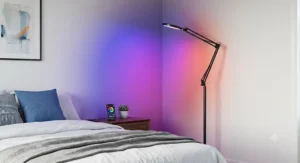
This is the lamp for people who want their lighting to do more than illuminate — it wants to perform. The RGBIC LED strip inside produces multiple colors simultaneously (not just one color at a time), and a built-in microphone syncs the light show to whatever music is playing in the room.
Compatibility is the other headline: Govee Lyra works with SmartThings, Amazon Alexa, Google Assistant, and the newer Matter smart-home standard, putting it in the smart floor lamps category without requiring a proprietary hub for basic voice control. The companion app unlocks scheduling, scene presets, and access to roughly 16 million color combinations — more than any human eye can meaningfully distinguish, but useful for matching a very specific vibe.
Here’s what to weigh: this lamp is built for atmosphere first and task lighting second. Reviewers describe it as a favorite for gaming setups and home bars where color and mood matter more than reading-level brightness. Compared to traditional torchiere lamps, expect this one to shine (literally) at parties and fall a little short as your only light source for detailed work.
Pros:
- ✅ Multiple simultaneous colors via RGBIC LED strip
- ✅ Works across Alexa, Google Assistant, and Matter
- ✅ Music-reactive modes for parties and gaming
Cons:
- ❌ Less effective as pure task/reading lighting
- ❌ App setup adds a learning curve for non-tech users
Expect a price in the $90-$140 range depending on size and current promotions — a fair ask for buyers who specifically want tech-integrated lighting rather than a traditional lamp with a smart bulb screwed in.
5. Philips Hue Signe Gradient Floor Lamp — deepest smart-home ecosystem integration
The Philips Hue Signe earns its premium price through ecosystem depth rather than raw specs. Connected to a Hue Bridge, it becomes part of a system capable of controlling up to 50 lights and accessories, syncing color gradients across a room, and automating scenes tied to time of day, presence, or even TV content through Hue Sync.
The gradient technology itself is the standout: rather than one uniform color, the lamp casts a smooth transition of tones along its length, creating a layered look that single-color smart bulbs can’t replicate. It supports the Matter standard as well, meaning it plays reasonably nicely with non-Hue smart-home setups, though the full feature set is reserved for the Hue app and Bridge.
What the spec sheet won’t tell you, but long-time smart-home users note, is that Hue’s reliability and firmware support outlasts many cheaper smart-lighting competitors — a real consideration for a purchase you might keep for a decade. This is the pick for households already invested in Hue or Apple HomeKit, not a first smart-lamp purchase for someone testing the waters.
Pros:
- ✅ Rich gradient lighting effect, not flat single-color
- ✅ Deep integration with the broader Hue ecosystem
- ✅ Strong long-term firmware and app support
Cons:
- ❌ Full functionality requires a separate Hue Bridge purchase
- ❌ Premium pricing well above standard smart floor lamps
Budget for the $200-$280 range before accessories — steep, but the value case holds for anyone already running a Hue household who wants gradient lighting done right.
6. Ikea Ranarp Floor Lamp — budget-friendly classic that just works
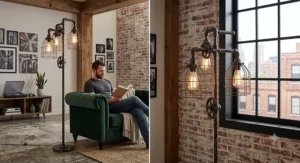
Sometimes the standout feature is restraint. The Ikea Ranarp skips smart features, USB ports, and remote controls entirely, focusing instead on a sturdy steel base, brass-toned joints, and a fabric-wrapped cord that looks intentional rather than accidental. It’s proof that “LED floor lamp” doesn’t have to mean “gadget.”
It uses a standard E26 bulb socket, meaning you choose your own LED bulb for brightness and color temperature rather than being locked into a fixed output — a detail that gives budget-conscious buyers real control over their energy-efficient standing lamp setup without paying for features they won’t use.
Reviewers consistently praise the design as more premium-looking than the price suggests, with the fabric cord specifically called out as an unexpectedly nice touch rather than an afterthought. Based on the spec comparison with pricier “designer” arc lamps, the Ranarp delivers similar aesthetic payoff — industrial-meets-warm — at a fraction of the investment, making it a favorite for first apartments and minimalist living rooms alike.
Pros:
- ✅ Sturdy, adjustable steel design at a low price
- ✅ Bring-your-own-bulb flexibility for brightness/tone
- ✅ Understated look that suits most décor styles
Cons:
- ❌ No dimming, USB, or smart features included
- ❌ Bulb purchased separately adds a small extra cost
Typically priced under $50, this is the pick for renters and minimalists who want dependable, energy-efficient light without paying for bells and whistles they’ll never use.
7. OUTON LED Shelf Floor Lamp with Wireless Charger — tech-integrated multitasker for tight spaces
The standout combination: a 3-in-1 wood-column shelf lamp built around a wireless charging pad, plus USB and USB-C ports and an AC outlet, all stacked into a slim column that also displays books or plants. It’s a strong answer for anyone specifically shopping the phrase “floor lamp with USB port” who also wants shelving.
The lamp includes adjustable color temperature (typically three settings) via a standard LED-compatible fixture, and the wireless charging pad handles Qi-compatible phones without a cable in sight. Because the frame doubles as a display column, it works especially well as a nightstand replacement in small bedrooms where floor space is scarce and every piece of furniture needs to pull double duty.
What most buyers overlook here is how much visual clutter this single piece eliminates — no charging brick, no nightstand, no separate lamp, no wall wart cables snaking across the floor. Reviewers report the shelving as sturdy enough for everyday items like a Kindle, glasses, or a small plant, and the wireless charging as reliable once the phone is positioned correctly on the pad.
Pros:
- ✅ Wireless charging pad plus USB and USB-C ports
- ✅ Doubles as bedside shelving and nightstand
- ✅ Adjustable color temperature for bedroom use
Cons:
- ❌ Wireless charging requires precise phone placement
- ❌ Column design takes more floor footprint than a slim pole
Expect a price in the $60-$100 range — genuinely strong value for anyone consolidating a nightstand, charger, and lamp into a single modern convenience feature-packed piece.
Practical Usage Guide: Setup, Maintenance & Optimization Tricks
Getting an LED floor lamp home is the easy part. Getting the most out of it takes a little know-how that Amazon listings conveniently skip. Start with placement: corners and the space beside seating benefit most from a torchiere-style upward-throwing lamp, while reading chairs need a lamp positioned slightly behind and above shoulder height to avoid glare bouncing off a page or screen.
During first setup, check the bulb’s color temperature before committing to a spot — 2700K-3000K reads as warm and cozy (ideal for living rooms and bedrooms), while 5000K-6500K reads as crisp daylight (better suited to home offices and craft spaces). If your lamp allows adjustable temperature, experiment for a few nights before settling on a default.
Maintenance is minimal but not zero. Dust the shade and bulb monthly — accumulated dust can measurably dim output over time, especially on fabric shades. If your lamp has USB or wireless charging features, wipe the charging pad occasionally, since a dirty surface can interfere with contact-based charging. For smart lamps, keep firmware updated through the companion app; skipped updates are the most common cause of dropped Wi-Fi connections months after purchase.
The most common first-30-days mistake: buyers plug in a smart lamp, get frustrated by a clunky app pairing process, and abandon the smart features entirely. Give the app setup 10-15 focused minutes rather than troubleshooting mid-distraction — most connectivity issues trace back to being on the wrong Wi-Fi band (most smart lamps need 2.4GHz, not 5GHz).
✨ Don’t Miss These Exclusive Deals!
🔍 Take your lighting setup to the next level with these carefully selected picks. Click on any highlighted lamp above to check current pricing and availability — small upgrades like these make a genuinely noticeable difference in how a room feels every evening.
Real-World Scenarios: Which LED Floor Lamp Actually Fits Your Life
Picture three different households, because “best floor lamp” genuinely depends on who’s asking. If you’re a college student in a shared apartment with one weak overhead bulb and zero budget for an electrician, the Brightech Sky LED Torchiere solves the actual problem — real brightness, low cost, no smart-home learning curve required.
If you’re a remote worker who charges three devices daily and has exactly one outlet within reach of the couch, either the Brightech Maxwell Charger or the OUTON LED Shelf Floor Lamp earns its keep by consolidating lamp, shelf, and charger into one purchase — saving both money and counter space compared to buying each separately.
If you’re already living the smart-home life — Alexa on the counter, Hue bulbs in the kitchen — the Philips Hue Signe Gradient or Govee Lyra RGBIC Floor Lamp slot naturally into existing routines, letting you group the lamp with other lights for scenes and schedules rather than operating it as an island. The Signe suits households prioritizing polish and long-term reliability; the Lyra suits those who want louder, more playful effects (and don’t mind a shorter feature lifespan trade-off that comes with newer, less established smart ecosystems).
Problem → Solution: Common LED Floor Lamp Headaches, Solved
Problem: My room still feels dim even with the lamp on. This usually traces back to lumen output, not lamp placement. Check the bulb or fixture rating — anything under 800 lumens will struggle in a room over 150 square feet. The Brightech Sky‘s 2,000-lumen output exists precisely to solve this.
Problem: The smart lamp keeps disconnecting from Wi-Fi. Nine times out of ten, this is a band mismatch — most budget smart lamps only support 2.4GHz networks. Split your router’s bands if they’re currently combined under one network name.
Problem: My phone won’t charge on the wireless pad. Wireless charging requires closer alignment than most buyers expect. Remove thick cases and center the phone directly over the coil, usually marked with a small icon.
Problem: The light feels harsh at night. Swap to a warmer color temperature (2700-3000K) for evening use, or choose a lamp with adjustable CCT like the SUNMORY 69″ Dimmable LED Floor Lamp so you’re not stuck with one fixed tone.
Problem: I don’t have enough outlets for a lamp plus charger plus everything else. This is exactly the gap models like the Brightech Maxwell Charger were built to close — outlet, USB ports, and lighting from a single wall connection.
How to Choose LED Floor Lamps: A 7-Step Framework
What is the best way to pick LED floor lamps? Match brightness (lumens) to room size, prioritize dimming and color temperature control for flexibility, and decide upfront whether you need smart or charging features before comparing price. Here’s the fuller breakdown:
- Measure your room, not just your corner. Rooms over 150 square feet generally need 1,500+ lumens from a single floor lamp to feel adequately lit.
- Decide warm vs. cool light before shopping. Living rooms and bedrooms usually favor 2700-3000K; home offices benefit from 4000K+.
- Prioritize dimming if you use one room for multiple activities. A stepless dimmer beats a fixed-brightness bulb for anyone reading, watching TV, and hosting in the same space.
- Check for genuine ENERGY STAR-qualified components where available — per ENERGY STAR guidance, qualified LED products must meet strict efficiency and lifetime testing standards, which is a useful shorthand for reliability.
- Match smart features to your existing ecosystem, not the other way around — a Hue lamp is wasted without a Hue household.
- Factor in charging needs before buying furniture separately — a shelf lamp with USB ports can replace a nightstand and charger in one purchase.
- Budget for the bulb, not just the fixture, if your chosen lamp uses a standard E26 socket rather than an integrated LED engine.
Dimmable Floor Lamps vs Fixed-Brightness Models
The case for dimmable floor lamps comes down to how few rooms in a modern home serve just one purpose. A living room hosts movie nights, homework, dinner parties, and quiet reading — four different lighting needs from one fixture. Fixed-brightness lamps force a compromise; dimmable models like the SUNMORY 69″ Dimmable LED Floor Lamp let the room adapt instead.
The trade-off is modest but real: dimmable fixtures and bulbs typically cost a bit more than fixed-output equivalents, and stepless dimmers (which allow smooth adjustment) command a premium over three- or four-setting click dimmers. For a lamp that’s used daily across varied activities, that premium tends to pay for itself in convenience within the first few months. For a lamp destined for a closet-adjacent hallway that’s flipped on and off without much thought, a fixed-brightness option like the Ikea Ranarp is perfectly reasonable and saves a few dollars without sacrificing anything you’d actually use.
Smart Floor Lamps: What “Smart” Actually Buys You
“Smart” gets thrown around loosely in lighting marketing, so here’s the honest breakdown. At minimum, a smart floor lamp offers app-based or voice-based control — turning it on, adjusting brightness, or scheduling it without touching a physical switch. At the higher end, models like the Govee Lyra RGBIC Floor Lamp and Philips Hue Signe Gradient add color control, multi-lamp grouping, and integration with broader home-automation routines.
The genuine value shows up in specific situations: automating lights to turn on before you arrive home, dimming everything at once for movie night without walking to each lamp, or syncing color to music or a TV signal. If none of those scenarios sound appealing, a smart floor lamp is paying for a feature set you won’t use — the plain dimmable or fixed models on this list will serve you just as well for less money. As the modern lighting-trends conversation increasingly frames it, integrated, LED, and smart lamps aren’t just about producing light anymore; they’re about producing a controllable, personalized atmosphere, which is either genuinely useful or genuinely unnecessary depending entirely on your habits.
Floor Lamp with USB Port: Is the Convenience Worth It?
A floor lamp with USB port solves a specific, common problem: not enough outlets near the couch or bed. Rather than running an extension cord across the floor (a trip hazard, and against most rental lease terms), a lamp like the Brightech Maxwell Charger or OUTON LED Shelf Floor Lamp handles both lighting and charging from the same plug.
The math favors this approach in small apartments especially — one wall outlet now powers a lamp, charges two devices, and in some models runs a wireless charging pad simultaneously. The honest caveat: built-in USB ports are typically standard-speed rather than the fastest fast-charging standards on the market, so heavy power users charging a laptop might still want a dedicated charger. For phones, tablets, and e-readers, though, the convenience trade-off is squarely in your favor.
Energy Efficient Standing Lamps: The Real Cost-Per-Year Math
Every lamp on this list qualifies as an energy efficient standing lamp simply by using LED rather than incandescent lighting, but the efficiency gap is worth quantifying rather than taking on faith. According to the Department of Energy, LED bulbs use roughly 75% less energy and can last 25 times longer than traditional incandescent bulbs — meaning a lamp run four hours nightly could cost just a few dollars a year in electricity versus considerably more for an equivalent incandescent setup.
The long-term math gets even more favorable when you factor in replacement bulbs. An incandescent bulb rated for 1,000 hours needs replacing multiple times over the lifespan of a single LED bulb rated for 25,000+ hours — meaning the LED premium at checkout is typically recovered within the first year of ownership through lower electricity bills and fewer bulb purchases. For deeper technical grounding on how the technology achieves this, Wikipedia’s overview of LED technology explains the semiconductor process that produces light with minimal wasted heat — the core reason LEDs sip power compared to filament-based bulbs.
Tech-Integrated Lighting & Modern Convenience Features
Tech-integrated lighting has quietly become the norm rather than the novelty. Beyond basic on/off switches, today’s models routinely bundle wireless charging, USB-C ports, voice assistant compatibility, and app-based scheduling into what used to be a purely mechanical object. The OUTON LED Shelf Floor Lamp and Govee Lyra RGBIC Floor Lamp both exemplify this shift — one focused on charging convenience, the other on ambiance and connectivity.
The genuinely useful modern convenience features tend to be the boring ones: a USB port that eliminates hunting for outlets, a dimmer that removes guesswork, an app that remembers your preferred evening settings so you’re not re-adjusting nightly. Flashier features — color-cycling effects, music sync — earn their keep in specific rooms (game rooms, home bars) but matter less in a reading nook or home office. When comparing tech-integrated options, weigh which conveniences you’ll actually use weekly against which ones sounded exciting in a product listing but would go untouched after month one.
Common Mistakes When Buying LED Floor Lamps
The most frequent misstep is buying on brightness alone without checking color temperature — a lamp rated at 3,000 lumens in a harsh 6500K daylight tone can feel clinical rather than cozy in a living room. Second most common: skipping the height check. A 65-inch torchiere in a room with 8-foot ceilings can feel proportionally enormous, while the same lamp in a room with vaulted ceilings might look undersized.
Buyers also frequently underestimate assembly time for shelf-style lamps with multiple tiers, USB modules, and wiring channels — budget 20-30 minutes rather than the “5-minute setup” some listings imply. Finally, smart-lamp shoppers often skip verifying Wi-Fi band compatibility before purchase, leading to returns that were entirely avoidable with a five-minute router check beforehand.
Safety, Certifications & Regulations Guide
LED floor lamps sold in the U.S. should carry UL or ETL certification, indicating the fixture passed independent electrical safety testing — a detail worth confirming on the product listing before purchase, especially for lesser-known brands. The Consumer Product Safety Commission maintains general guidance on electrical fixture safety, including cord placement and overload risks, and its electrical safety resources are worth a skim if you’re setting up lighting in a home with kids or pets prone to chewing cords.
Practically, that means keeping cords away from high-traffic walkways, never running a floor lamp’s cord under a rug (a fire-risk practice that also traps heat), and avoiding “octopus” outlet situations where a single wall socket powers a lamp, a charger, and several other devices simultaneously through cheap adapters. Weighted, wide-footprint bases — a feature on the Ikea Ranarp and both Brightech models here — also matter more than they get credit for in households with curious toddlers or enthusiastic dogs.

Frequently Asked Questions
❓ Are LED floor lamps worth the higher upfront cost?
❓ What brightness (lumens) do I need for a living room floor lamp?
❓ Can I use a smart bulb in any LED floor lamp instead of buying a smart lamp?
❓ Do floor lamps with USB ports slow down phone charging?
❓ How long do LED floor lamp bulbs actually last?
Conclusion
There’s no single “best” LED floor lamp — there’s only the best match for your room, your routine, and how much tech you actually want managing your evenings. Budget shoppers chasing pure brightness land well with the Brightech Sky LED Torchiere; anyone drowning in charging cables should look hard at the Brightech Maxwell Charger or OUTON LED Shelf Floor Lamp; smart-home households already get the most mileage from the Philips Hue Signe Gradient or Govee Lyra RGBIC Floor Lamp.
What matters more than any single spec sheet is being honest with yourself about how you’ll actually use the lamp six months from now — not how impressive the feature list sounds on day one. A dimmable floor lamp you actually adjust nightly beats a color-cycling smart lamp gathering dust on its default setting. Match the lamp to the life, not the listing, and check current price and availability before you commit, since these details shift often.
Recommended for You
- 7 Tall Floor Lamps for Living Room Spaces That Actually Deliver (2026)
- 7 Best Floor Lamps for Living Room in 2026: Ultimate Buying Guide
- 7 Track Lighting Ideas Living Room Owners Love in 2026
Disclaimer: This article contains affiliate links. As an Amazon Associate, I earn from qualifying purchases. If you purchase products through these links, we may earn a small commission at no additional cost to you.
✨ Found this helpful? Share it with your friends! 💬🤗
